


{{product.productLabel}} {{product.model}}
{{#if product.featureValues}}{{product.productPrice.formattedPrice}} {{#if product.productPrice.priceType === "PRICE_RANGE" }} - {{product.productPrice.formattedPriceMax}} {{/if}}
{{#each product.specData:i}}
{{name}}: {{value}}
{{#i!=(product.specData.length-1)}}
{{/end}}
{{/each}}
{{{product.idpText}}}
{{product.productLabel}} {{product.model}}
{{#if product.featureValues}}{{product.productPrice.formattedPrice}} {{#if product.productPrice.priceType === "PRICE_RANGE" }} - {{product.productPrice.formattedPriceMax}} {{/if}}
{{#each product.specData:i}}
{{name}}: {{value}}
{{#i!=(product.specData.length-1)}}
{{/end}}
{{/each}}
{{{product.idpText}}}
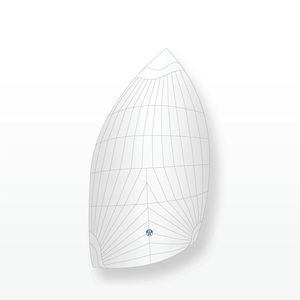

... Nylon or Polyester spinnaker fabrics Color choices available for nylon spinnaker fabric Stainless steel corner rings with strap reinforcement Adjustable Dyneema leech luff and foot cords High Modulus Internal Luff ...
North Sails Sailmaking
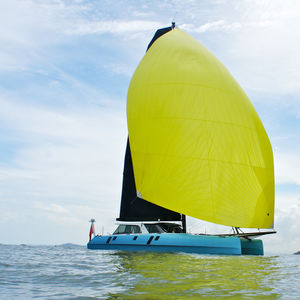

Sometimes referred to as "code zeros" or "code sails," the category of reaching sails gets confusing quickly as the term can apply to a broad range of sails. To simplify and clear up any confusion, Quantum developed its line of reaching sails around the ...
Quantum Sails
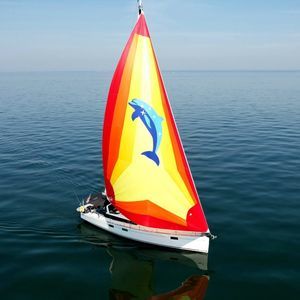

... Doyle Sails has been developing and refining cruising spinnakers since the 1980's. Our aim is to provide cruising spinnakers which offer better all-around performance and ease of handling. The All-Purpose Asymmetric ...
Doyle
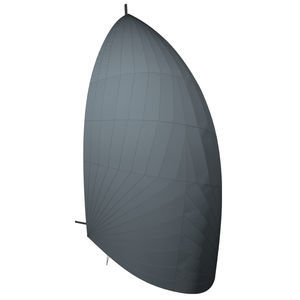

... Club Racing Choosing your new sail Choosing a new sail or even an entire sail wardrobe very often comes down to a priority of performance, durability, and price. When talking performance, the essence is the shape stability of the sail, whereas the ...
... International regattas and Grand Prix Racing Choosing your new sail Choosing a new sail or even an entire sail wardrobe very often comes down to a priority of performance, durability, and price. When talking performance, the essence is the shape stability ...

... to your sailing with a spinnaker or gennaker. The terminology around gennaker and spinnaker can often get confusing, especially between different languages. We offer traditional spinnaker for open reach ...

... Meet us at BOOT 2026/ Hall 10, Stand F41
CREATING NEW DIMENSION THE ALL-NEW PARASAILOR The New Generation Parasailor Higher performance, greater stability, increased safety and more sailing enjoyment than ever - these are the characteristics ...

... The fondamental conditions required to build cruising sails are: strength, manageability and lasting. A lot of attention is given on details: bigger and stronger patches, long tested achievements. The sewings are pre-assembled with double-sided adhesive ...
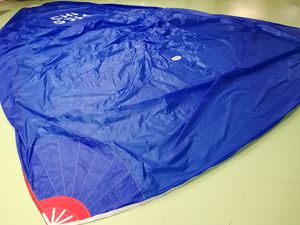
... The fondamental conditions required to build cruising sails are: strength, manageability and lasting. A lot of attention is given on details: bigger and stronger patches, long tested achievements. The sewings are pre-assembled with double-sided adhesive ...
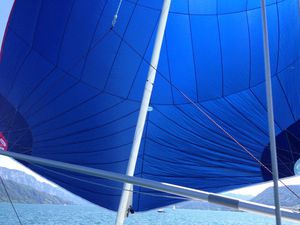
... The Zadro sails had won a lot of very important races so the vocation for racing is very deep rooted in our firm. We use the best available materials to join correctly your request with the best material. Fybers like Pentex – Kevlar – Mylar – Spectra ...
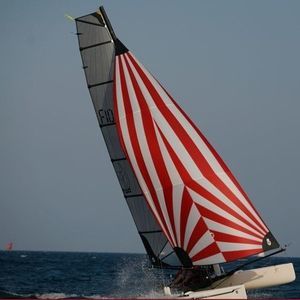

... Description
Flat
spinnaker designed for F18 catamarans. Flatter than previous generation to improve pointing and reaching in light winds; enables upwind sailing with wind below 5 knots and helps keep the
spinnaker ...
Forward Sailing
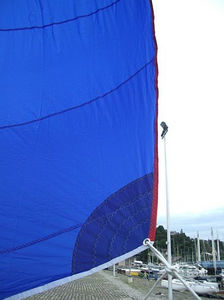
... Fabric: blue spi Anti UV treated thread Sails are cut according to 470 rules ...
Forward Sailing
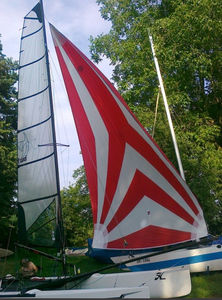
... Designed for Leisure sailing Nice cut and design with Patch for firling. Deliver in bag ...
Forward Sailing


... Fabric: blue spi Anti UV treated thread Sails are cut according to 470 rules ...
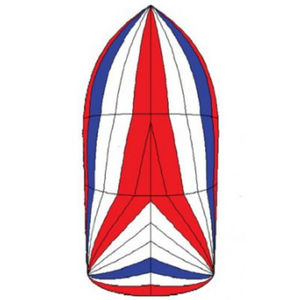

... - High tenacity Nylon 0.75 oz - Sewing triple point with anti UV thread - Tear drop corner reinforcement system - Port/starboard tapping - Stainless eyelet - Spi sail bag --> Information : This reference is available within a 30 working day leadtime. - ...
Spinnaker One
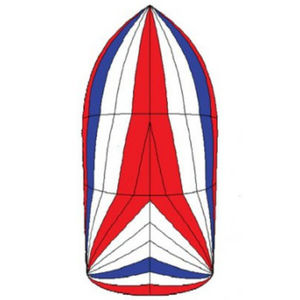
... - High tenacity Nylon 0.75 oz - Sewing triple point with anti UV thread - Tear drop corner reinforcement system - Port/starboard tapping - Stainless eyelet - Spi sail bag --> Information : This reference is available within a 30 working day leadtime. - ...
Spinnaker One
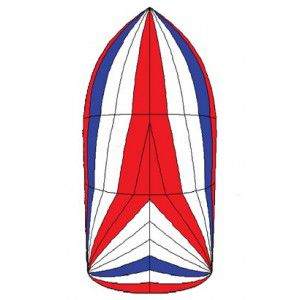
... - High tenacity Nylon 0.75 oz - Sewing triple point with anti UV thread - Tear drop corner reinforcement system - Port/starboard tapping - Stainless eyelet - Spi sail bag - Luff : 9.20 m - Foot : 5.20 m - Leech : 9.20 m - Sail's surface : ...
Spinnaker One
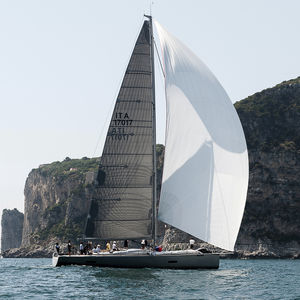

... Red Line Spinnakers Ullman Sails Red Line Spinnakers are designed to be fast, stable and easy to fly on the racecourse. Every sail in our Red Line Series is optimized for smoother, aerodynamic flow that generates power ...
Ullman Sails
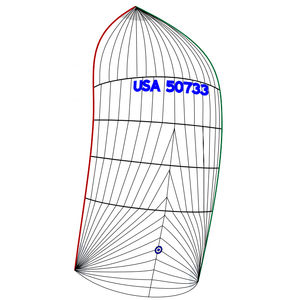

... Our new Vector All Purpose spinnakers are optimized for use in a variety of conditions. Our new Vector VMG spinnakers are optimized for use in light air VMG sailing. Our new Vector running spinnakers ...
Neilpryde Sails
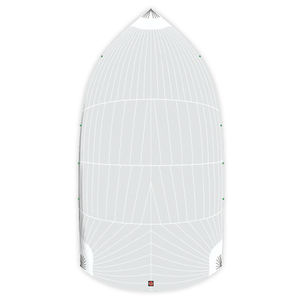

DELTA Voiles
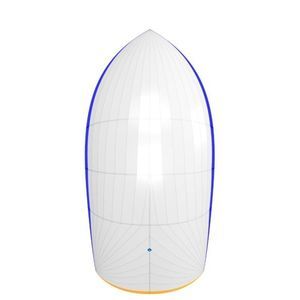

... Light weight spinnaker adapted to reaching in light winds. Head : head ring Clew : webbing straps Sail Bag. ...
Incidence Sails
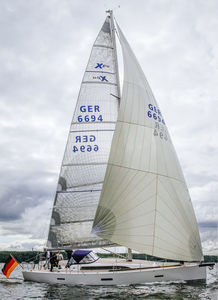

... The Code Zero is a cross between a genoa and an asymmetrical spinnaker that is used for sailing close to the wind in light air. Code Zero was initially an attempt to circumvent a rating rule by making a large genoa for close reaching ...
UK-Halsey International
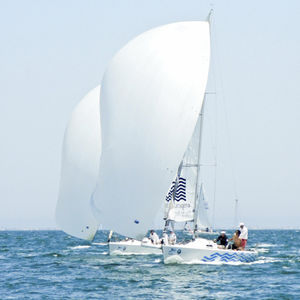

... Gennaker J 80 Availability: In stock €2,200.00 + VAT Fabric: Triradial nylon Supplied with Class Rotalty and sailbag ...
Olimpic Sails


NENUPHAR


... cruising specification yacht spinnakers for over 100 years. Our experience in designing and manufacturing spinnakers of the utmost quality is unrivalled in the sailmaking world. The Radial Head Spinnaker The ...


Lidgard Sails A1 Gennakers are performance light air sails. They often have a tighter luff that enables the sail to stay set in light breeze and rolling swells. Constructed from .5 ounce nylon cloth to keep the sail light and easily flown. An A1 Gennaker ...
Lidgard Sailmakers
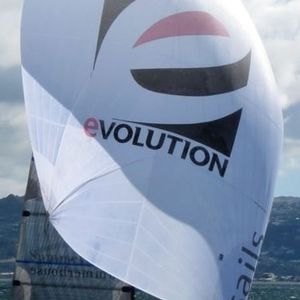

... a full, powerful sail designed for running in moderate breeze. It has the longest luff and largest girths of all of our spinnakers, allowing the sail to project to windward when sailing deep angles. It is usually made of a light or ...
Evolution Sails
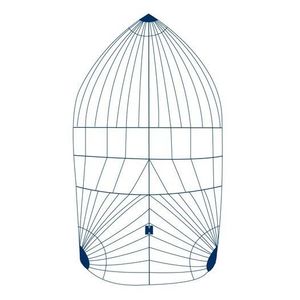

... Coloured leech tapes to simplify packing Sail number Low stretch luff line on asymmetrics Launcher bag SYMMETRICAL SPINNAKER S1 (LIGHT RUNNING) When you are looking to maximum performance downwind in light winds an Hyde Sails ...
Hydesails
the best suppliers