
- Home page
- buying guide
- sailboat mast
sailboat mast
sailboat mast: A technical guide

4 Criteria to choose your sailboat mast
Stiffness weight ratio
Rigidity directly influences sail shape retention and overall vessel stability while reducing the center of gravity height significantly.
Rigging system compatibility
Integration with standing and running rigging determines the ease of mast tuning and the efficiency of load distribution across.
Marine corrosion resistance
Material choice dictates maintenance intervals and total lifecycle costs, particularly in high-salinity environments found in transatlantic offshore passages.
Certification compliance
Adherence to international maritime standards ensures structural reliability for commercial insurance coverage and long-term safety for vessel operators.
Available technologies and advantages
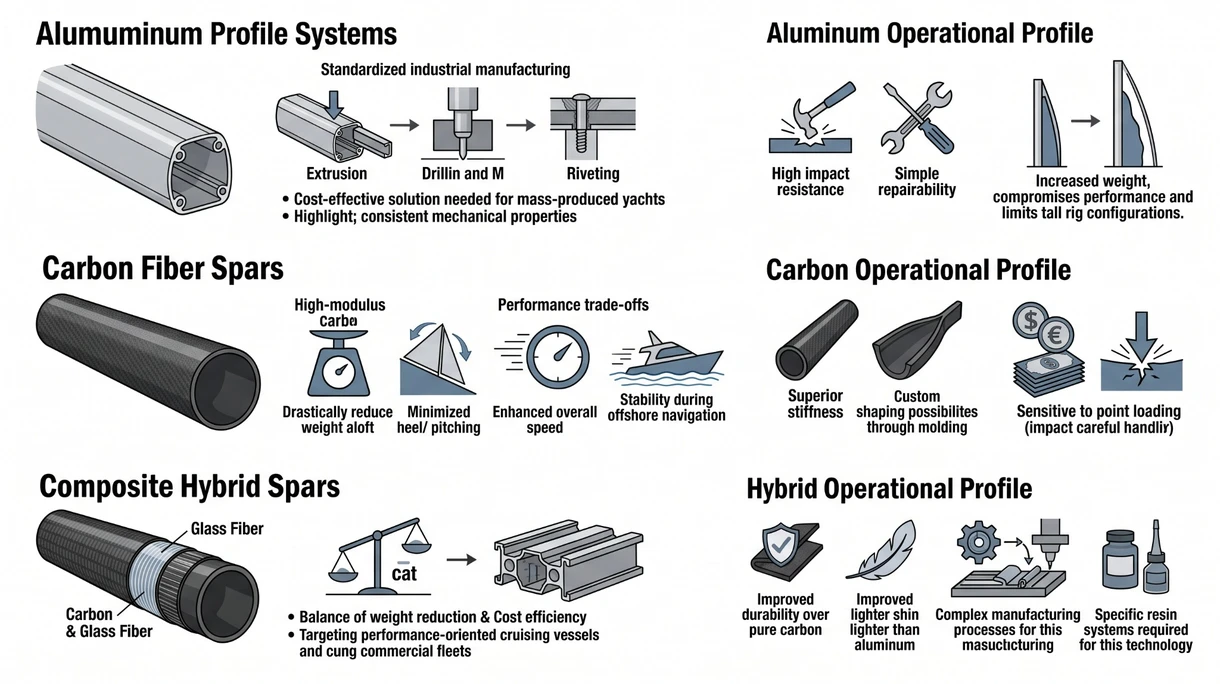
Aluminum Profile Systems
These profiles offer a cost-effective solution for mass-produced yachts, providing consistent mechanical properties through standardized industrial manufacturing processes.
Aluminum Operational Profile
Advantages include high impact resistance and simple repairability, though increased weight compromises performance and limits tall rig configurations.
Carbon Fiber Spars
High-modulus carbon masts minimize heel and pitching by drastically reducing weight aloft, which enhances overall speed and stability during offshore navigation.
Carbon Operational Profile
Benefit from superior stiffness and custom shaping possibilities, but higher procurement costs and sensitivity to point loading require careful handling.
Composite Hybrid Spars
Hybrid masts combine carbon and glass fibers to balance weight reduction with cost efficiency for performance-oriented cruising vessels and commercial fleets.
Hybrid Operational Profile
These provide improved durability over pure carbon while remaining lighter than aluminum, though they require complex manufacturing and specific resin systems.
6 expert tips
Prioritize high-modulus carbon fiber for large racing yachts to maximize speed while ensuring long-term structural integrity and stability.
Integrate hydraulic tensioning systems to allow for precise rig adjustment and improved handling during varied offshore weather conditions.
Evaluate the total cost of ownership by including long-term maintenance cycles and potential rigging replacement costs in calculations.
Analyze the mast section profile to ensure it aligns with the specific aerodynamic requirements and sail plan specifications.
Select hardware and internal cabling solutions that allow for easy access and rapid technical service during intensive sailing.
Always verify the technical certification to ensure compliance with local building safety standards and long-term durability.
Innovations and Trends
Integrated fiber optic sensors allow for real-time rig load monitoring to prevent structural fatigue and optimize sailing performance.
Advanced recyclable thermoplastic resins are emerging to address environmental regulations while maintaining the mechanical strength of composite masts.
Aerodynamic wing-mast profiles reduce turbulence and drag, significantly increasing the propulsion efficiency of modern high-performance sailing vessels.
Graphene-enhanced carbon composites provide extreme durability and weight reduction, pushing the boundaries of traditional spar engineering and longevity.
*Prices are pre-tax. They exclude delivery charges and customs duties and do not include additional charges for installation or activation options. Prices are indicative only and may vary by country, with changes to the cost of raw materials and exchange rates.
About NauticExpo
NauticExpo is a marketplace that offers B2B players a complete experience, from product sourcing to purchase. NauticExpo is an entity of VirtualExpo Group.
Are you a buyer?
Are you a supplier?