
- Home page
- buying guide
- inboard engine
inboard engine
inboard engine: A technical guide
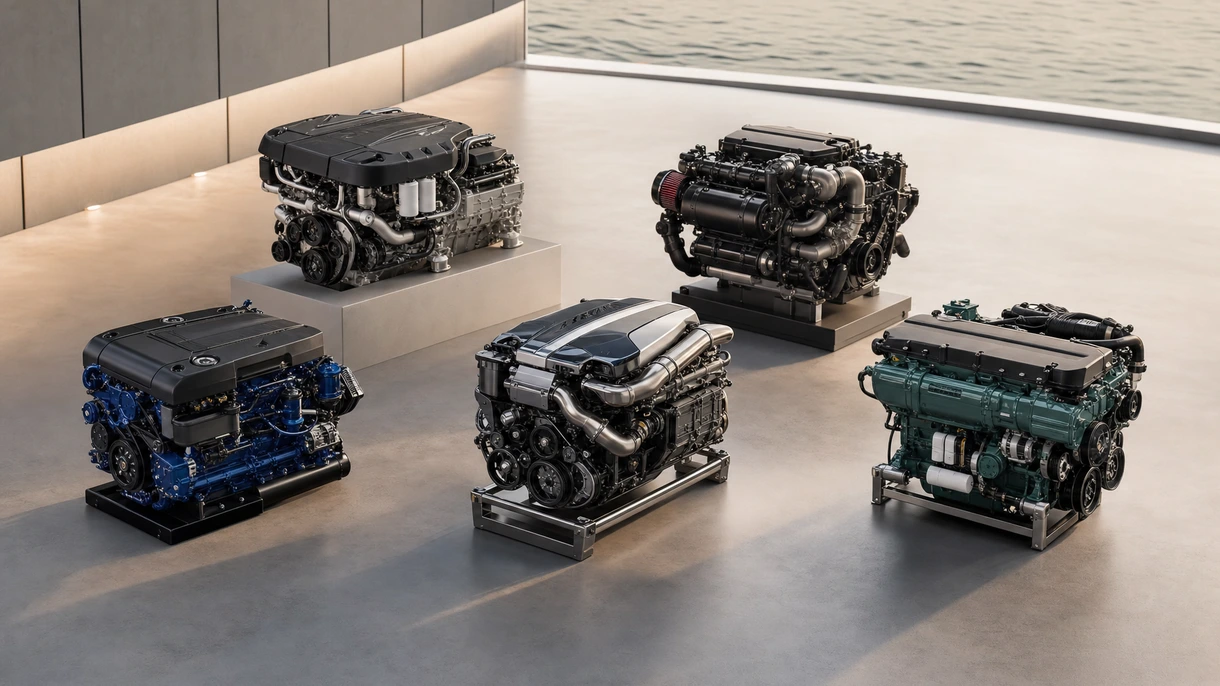
4 Criteria to choose your inboard engine
Power-to-weight ratio.
High displacement efficiency ensures maximum vessel speed while maintaining critical stability and payload capacity for commercial hull designs.
Specific fuel consumption.
Precise fuel mapping optimizes operational expenditure over long-haul transit cycles, directly impacting the bottom line for commercial fleet operators.
Maintenance intervals.
Extended service windows reduce dry-docking frequency and maximize vessel availability, ensuring consistent revenue generation for heavy-duty professional maritime applications.
Emissions regulatory compliance.
Adherence to international maritime standards prevents future operational restrictions in strictly regulated coastal zones and protected harbor environments.
Available technologies and advantages
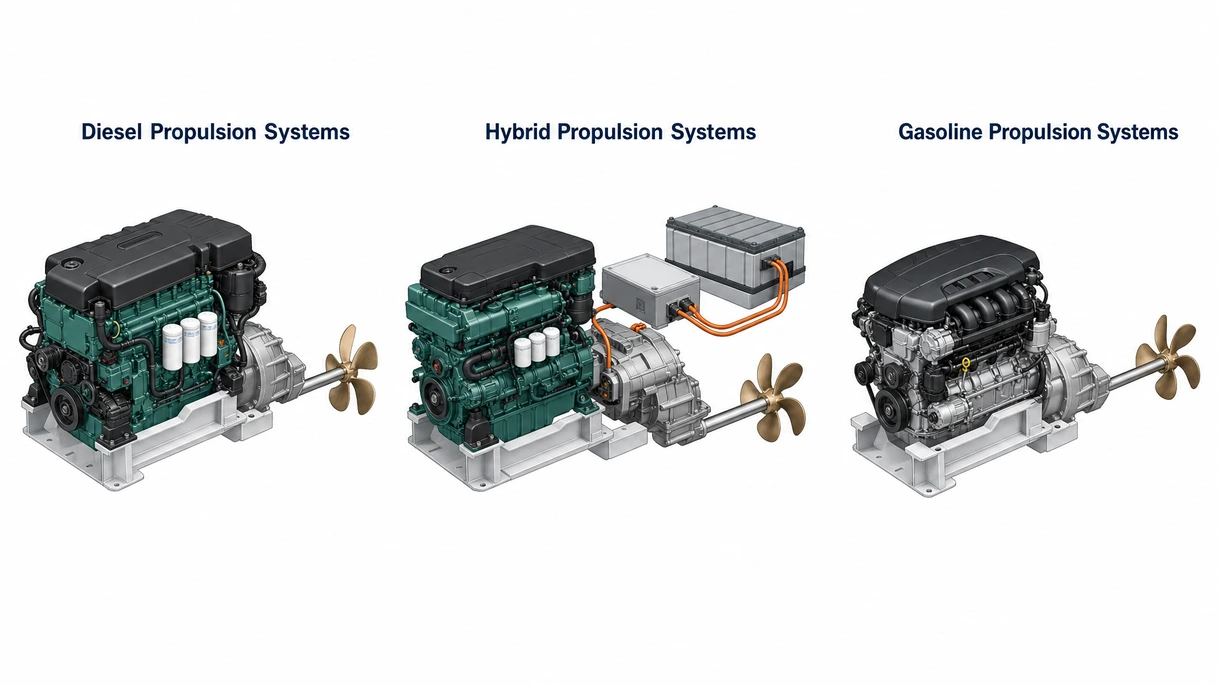
Diesel Propulsion Systems.
High-torque diesel units provide superior thermal efficiency and durability for long-range cruising and heavy commercial displacement hulls requiring continuous duty cycles.
Operational Trade-offs.
Advantages include high energy density and reliability, though they face strict emission limits and require heavy after-treatment systems.
Hybrid Propulsion Systems.
Integrating internal combustion with electric motors enables silent harbor maneuvering and peak shaving, significantly reducing fuel consumption during low-speed operations.
Operational Trade-offs.
These offer silent operation and lower local emissions but involve higher initial capital expenditure and complex battery thermal management.
Gasoline Propulsion Systems.
Utilizing gasoline or alternative fuels, these engines offer higher power density and lower weight for high-speed recreational or patrol craft.
Operational Trade-offs.
They provide excellent acceleration and lower weight-to-power ratios, yet suffer from higher fuel costs and safety risks regarding volatility.
6 expert tips
Verify total cost of ownership by calculating fuel burn and scheduled maintenance costs over the projected five year operating lifecycle.
Prioritize engines with global service networks to ensure rapid parts availability and technician support across international maritime transit routes.
Select propulsion units offering integrated digital monitoring for real-time performance analytics and proactive failure prevention in demanding sea conditions.
Evaluate the vibration and noise signatures to ensure compliance with passenger comfort standards on luxury yachts or commercial ferries.
Compare power curves against specific hull resistance data to achieve optimal cruise efficiency and prevent engine overloading during operation.
Always verify the technical certification to ensure compliance with local building safety standards and long-term durability.
Innovations and Trends
Proton exchange membrane technology provides zero-emission propulsion, meeting stringent environmental mandates for coastal shipping and professional passenger ferries.
Advanced after-treatment systems reduce nitrogen oxide emissions by ninety percent, ensuring compliance with international maritime organization tier three standards.
Edge computing algorithms analyze sensor data to forecast component failures, reducing unplanned downtime for high-utilization commercial vessel fleets.
Engine compatibility with hydrotreated vegetable oil allows immediate decarbonization of existing fleets without requiring significant mechanical hardware modifications.
*Prices are pre-tax. They exclude delivery charges and customs duties and do not include additional charges for installation or activation options. Prices are indicative only and may vary by country, with changes to the cost of raw materials and exchange rates.
About NauticExpo
NauticExpo is a marketplace that offers B2B players a complete experience, from product sourcing to purchase. NauticExpo is an entity of VirtualExpo Group.
Are you a buyer?
Are you a supplier?