
- Home page
- buying guide
- displacement hull yacht
displacement hull yacht
displacement hull yacht: A technical guide
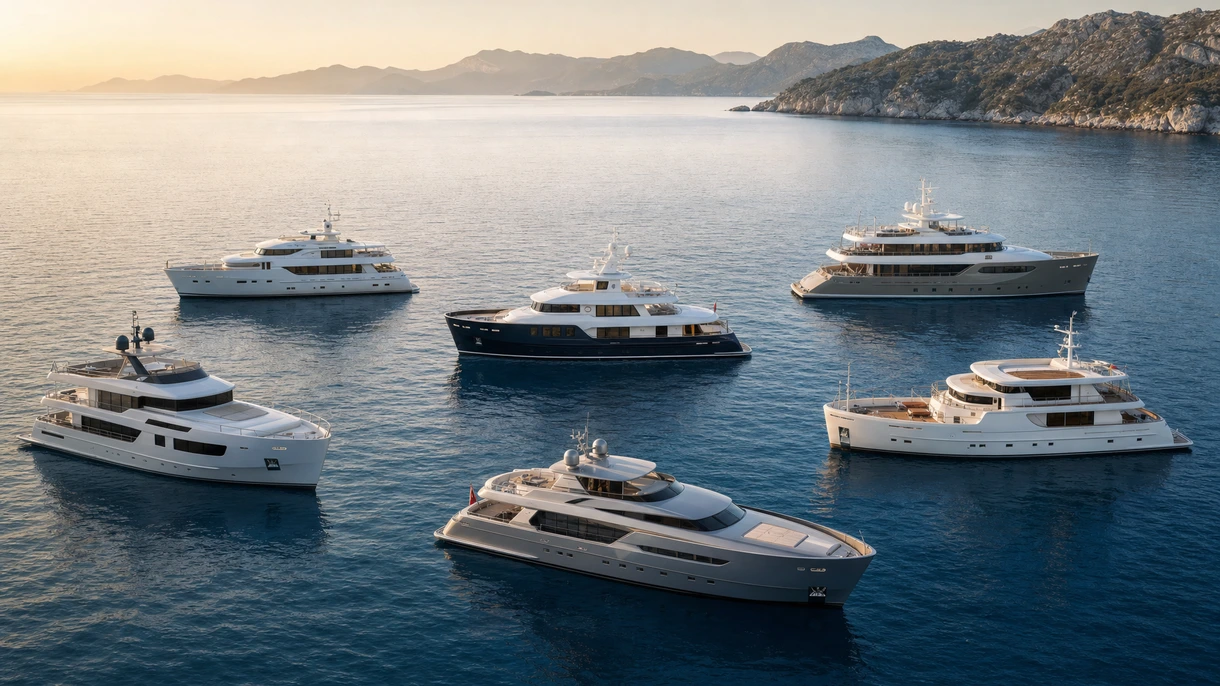
4 Criteria to choose your displacement hull yacht
Fuel efficiency at cruise
Specific fuel consumption per nautical mile at displacement speed ensures long-range transoceanic capability and operational cost control.
Hull form stability
Optimized prismatic coefficients and tank-tested hull geometry provide superior motion comfort and safety during adverse offshore conditions.
Structural load capacity
High displacement hulls allow for significant fuel, water, and luxury provisioning storage without compromising the intended waterline.
Transoceanic range capability
Sufficient internal tankage volume combined with slow-speed efficiency facilitates non-stop ocean crossings between global maritime hubs.
Available technologies and advantages
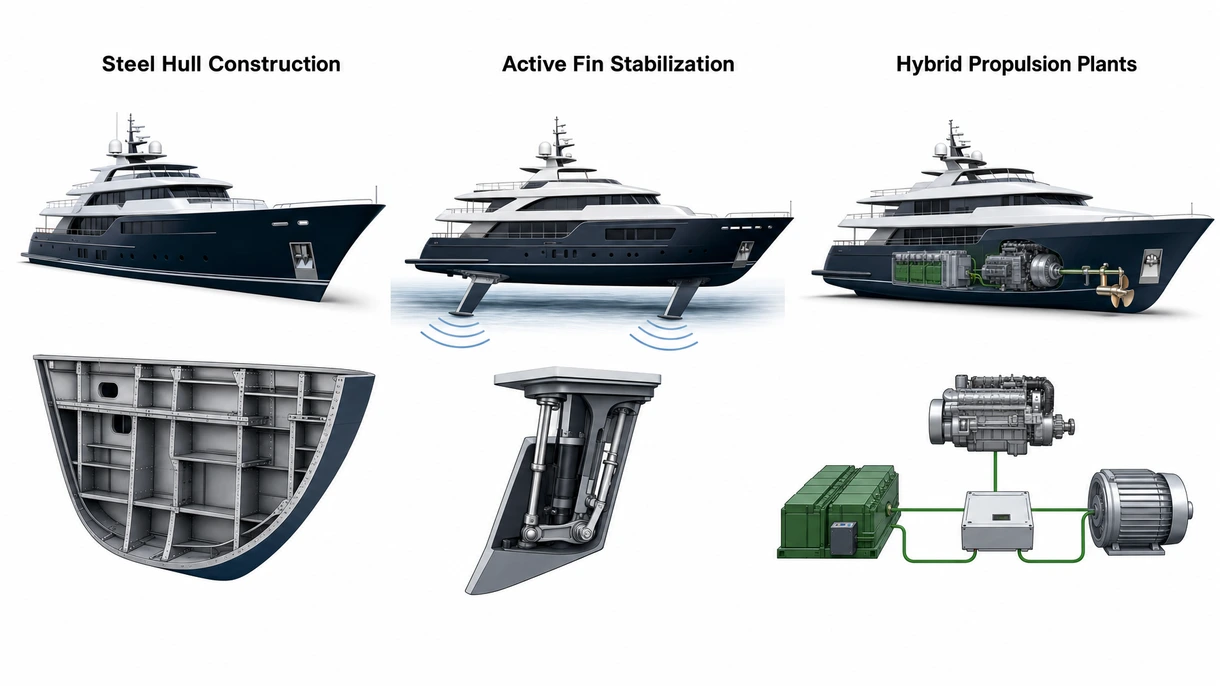
Steel hull construction
Steel offers superior puncture resistance and global repairability compared to aluminum, providing essential durability for long-range cruising in remote or icy waters.
Operational trade-offs
Steel provides structural rigidity but increases total displacement, requiring more powerful engines and careful corrosion management than lighter aluminum builds.
Active fin stabilization
Active fin stabilizers offer superior roll reduction at anchor compared to gyro systems, though they increase hydrodynamic drag during high-sea state transits.
Stabilization trade-offs
External fins provide immediate response to wave motion but are vulnerable to underwater debris and require significant hydraulic or electrical power.
Hybrid propulsion plants
Hybrid diesel-electric systems provide greater efficiency at low speeds than conventional mechanical drives, despite the increased complexity of integrated power management.
Efficiency trade-offs
Silent operation improves onboard comfort during night passages, though initial capital expenditure and battery weight remain significant operational hurdles for owners.
6 expert tips
Prioritize vessels with Bureau Veritas or ABS ice class notation to ensure structural integrity for high latitude exploration.
Evaluate the specific fuel consumption curves to confirm that the vessel achieves peak efficiency at the intended cruising speed.
Insist on redundant propulsion and steering systems to mitigate the risk of mechanical failure during remote transoceanic crossings.
Select hull designs featuring bulbous bows to reduce wave-making resistance and improve the overall efficiency of the yacht.
Assess the accessibility of engine room components to reduce long-term maintenance costs and simplify technical repairs during voyages.
Always verify the technical certification to ensure compliance with local building safety standards and long-term durability.
Innovations and Trends
Implementation of large-scale batteries enables zero-emission harbor maneuvers and silent overnight anchoring without running secondary generators.
Advanced underwater wings convert waste energy into forward thrust, significantly reducing fuel consumption during long-range maritime transit.
Artificial intelligence systems analyze sea states to maintain the most efficient displacement speed across varying maritime conditions.
Methanol-ready engine configurations provide a pathway for shipyards to meet tightening international carbon intensity indicators and regulations.
*Prices are pre-tax. They exclude delivery charges and customs duties and do not include additional charges for installation or activation options. Prices are indicative only and may vary by country, with changes to the cost of raw materials and exchange rates.
About NauticExpo
NauticExpo is a marketplace that offers B2B players a complete experience, from product sourcing to purchase. NauticExpo is an entity of VirtualExpo Group.
Are you a buyer?
Are you a supplier?