
- Home page
- buying guide
- VHF radio
VHF radio
VHF radio: A technical guide
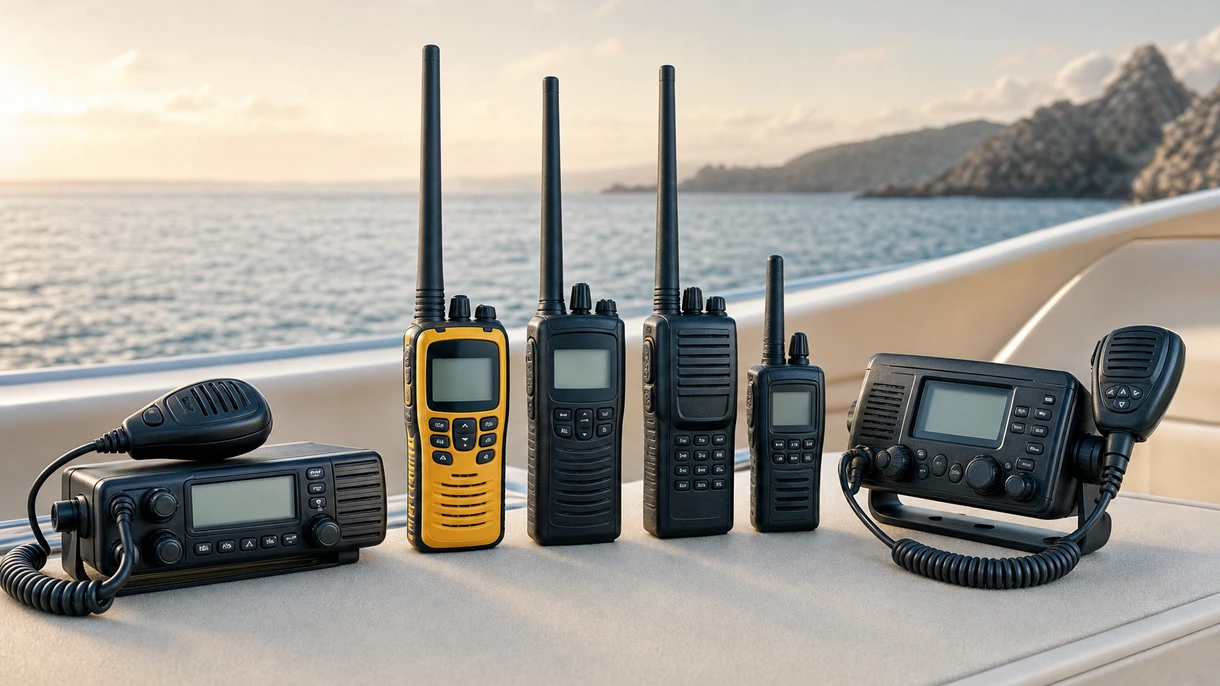
4 Criteria to choose your VHF radio
Regulatory DSC Compliance
Ensures legal adherence and automated distress signaling essential for commercial safety certificates and international voyage requirements across jurisdictions.
Network Protocol Integration
Facilitates seamless data sharing between radio units, chartplotters, and AIS receivers for improved situational maritime awareness and control.
Environmental Protection Rating
Guarantees hardware longevity against salt spray and water ingress, minimizing replacement cycles in demanding offshore and coastal environments.
Operational Interface Ergonomics
Optimizes crew response times during emergencies through intuitive menu structures and tactile controls designed for use with gloves.
Available technologies and advantages
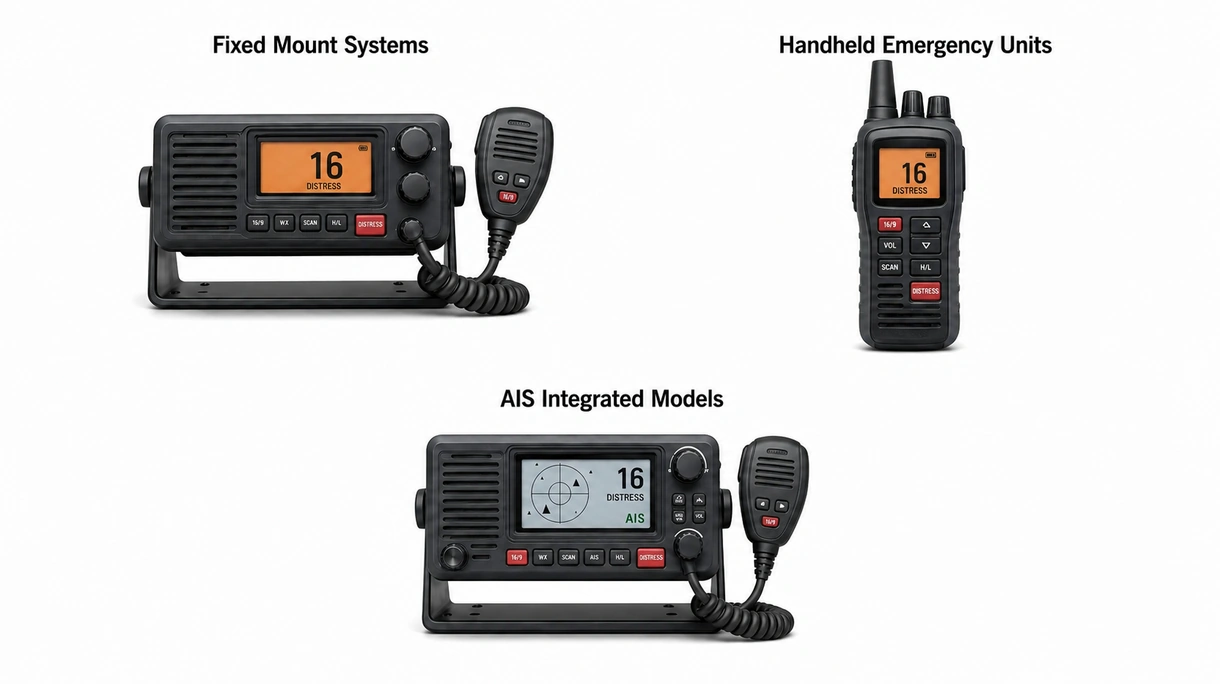
Fixed Mount Systems
Fixed-power units designed for vessels requiring continuous monitoring and robust transmission capabilities for deep-sea or coastal operations. These systems offer superior reliability but demand significant space and professional installation.
Fixed Systems Analysis
Fixed systems provide maximum range and reliability for bridge operations but require permanent installation and external power sources. These units offer the best performance-to-cost ratio for commercial vessels.
Handheld Emergency Units
Portable ruggedized radios featuring specialized batteries for survival craft use, meeting stringent international maritime safety regulations and requirements. While essential for lifeboats, they lack the long-range transmission power and networking features.
Handheld Emergency Analysis
Handheld units ensure survival craft communication and portability during evacuations but suffer from limited battery life and range. They represent a critical regulatory safety redundancy for deep-sea crew protection.
AIS Integrated Models
Hybrid systems combining communication and tracking to reduce bridge clutter and simplify antenna installations on professional commercial hulls. Integrating these functions saves installation costs but creates a single point of failure.
Integrated Model Analysis
Integrated models simplify bridge layout and installation work but combine two critical safety functions into a single device. This integration improves data flow while increasing the potential impact of hardware failure.
6 expert tips
Prioritize high-performance DSC units for all commercial vessels to ensure full compliance with international maritime safety regulations.
Select hardware featuring internal GPS receivers to maintain emergency positioning even if primary navigation networks fail during transit.
Mandate high waterproof ratings for all bridge and deck equipment to prevent hardware failure during extreme weather.
Evaluate multi-station compatibility to allow centralized control from both the main bridge and secondary external deck positions.
Budget for professional antenna calibration to maximize transmission range and prevent damage to internal radio power electronic modules.
Always verify the technical certification to ensure compliance with local building safety standards and long-term durability.
Innovations and Trends
Within VHF units reduce hardware footprint while providing real-time collision avoidance data for navigators.
Allow remote radio control and messaging via secure wireless protocols from any location onboard.
Capture recent transmissions automatically to ensure critical instructions are never missed during high-stress operations.
Alerts fleet managers to hardware performance degradation before critical communication failures occur at sea.
*Prices are pre-tax. They exclude delivery charges and customs duties and do not include additional charges for installation or activation options. Prices are indicative only and may vary by country, with changes to the cost of raw materials and exchange rates.
About NauticExpo
NauticExpo is a marketplace that offers B2B players a complete experience, from product sourcing to purchase. NauticExpo is an entity of VirtualExpo Group.
Are you a buyer?
Are you a supplier?