
- Home page
- buying guide
- racing sailboat
racing sailboat
racing sailboat: A technical guide

4 Criteria to choose your racing sailboat
Strength-to-Weight Performance
Utilizing advanced carbon composites ensures structural integrity while maximizing speed through reduced displacement and optimized hull hydrodynamics.
Hydrodynamic Appendage Efficiency
Foil design and keel profiles determine lift-to-drag ratios, which are essential for achieving competitive VMG in diverse sea states.
Rigging Stiffness Control
High-modulus carbon masts minimize forestay sag, allowing precise sail shape control and superior upwind performance in variable wind ranges.
Rating Rule Compliance
Design optimization must align with IRC or ORC regulations to ensure favorable handicap results during international offshore racing campaigns.
Available technologies and advantages
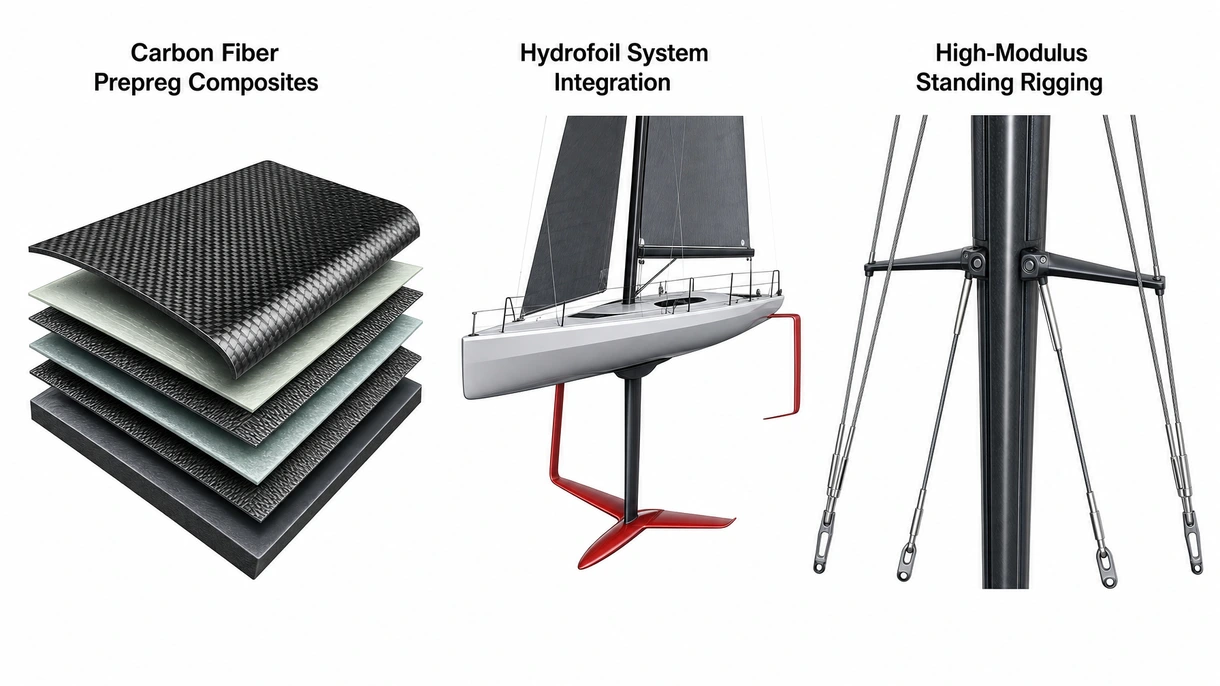
Carbon Fiber Prepreg Composites
Prepreg offers superior resin-to-fiber ratios compared to infusion, providing unmatched stiffness and weight savings for hulls. Advantages include precision, though autoclave requirements increase production complexity.
Hydrofoil System Integration
Retractable foils generate dynamic lift, significantly reducing wetted surface area and increasing top-end speeds. Operational trade-offs involve increased structural loads and complex mechanical maintenance schedules.
High-Modulus Standing Rigging
Synthetic stays like carbon solid rigging outperform stainless steel by reducing weight aloft and minimizing pitch. These systems require frequent professional inspections and have limited fatigue lifespans.
6 expert tips
Prioritize structural ultrasound testing to verify laminate consolidation and identify potential delamination before finalizing any secondhand racing yacht acquisition.
Evaluate the sail wardrobe inventory based on cloth age and shape retention rather than just the total number of sails.
Verify keel attachment engineering to ensure the grounding safety factors meet the latest offshore category zero structural safety requirements.
Analyze data logging systems to ensure compatibility with high-end performance software used for technical VMG optimization and routing.
Consult naval architects regarding rating to understand how potential hull modifications will impact the boat competitive IRC certificate.
Always verify the technical certification to ensure compliance with local building safety standards and long-term durability.
Innovations and Trends
Bio-based resins and recyclable fibers reduce environmental impact while maintaining the high structural stiffness required for racing yachts.
Embedded sensors monitor hull and rig stress levels to prevent catastrophic failures during high-load offshore racing conditions.
Advanced flight control software optimizes foil pitch and rake, maximizing aerodynamic lift while ensuring stable platform height.
Lightweight electric drives replace diesel engines to meet safety regulations while reducing total boat weight and emissions.
*Prices are pre-tax. They exclude delivery charges and customs duties and do not include additional charges for installation or activation options. Prices are indicative only and may vary by country, with changes to the cost of raw materials and exchange rates.
About NauticExpo
NauticExpo is a marketplace that offers B2B players a complete experience, from product sourcing to purchase. NauticExpo is an entity of VirtualExpo Group.
Are you a buyer?
Are you a supplier?