
- Home page
- buying guide
- travel lift
travel lift
travel lift: A technical guide
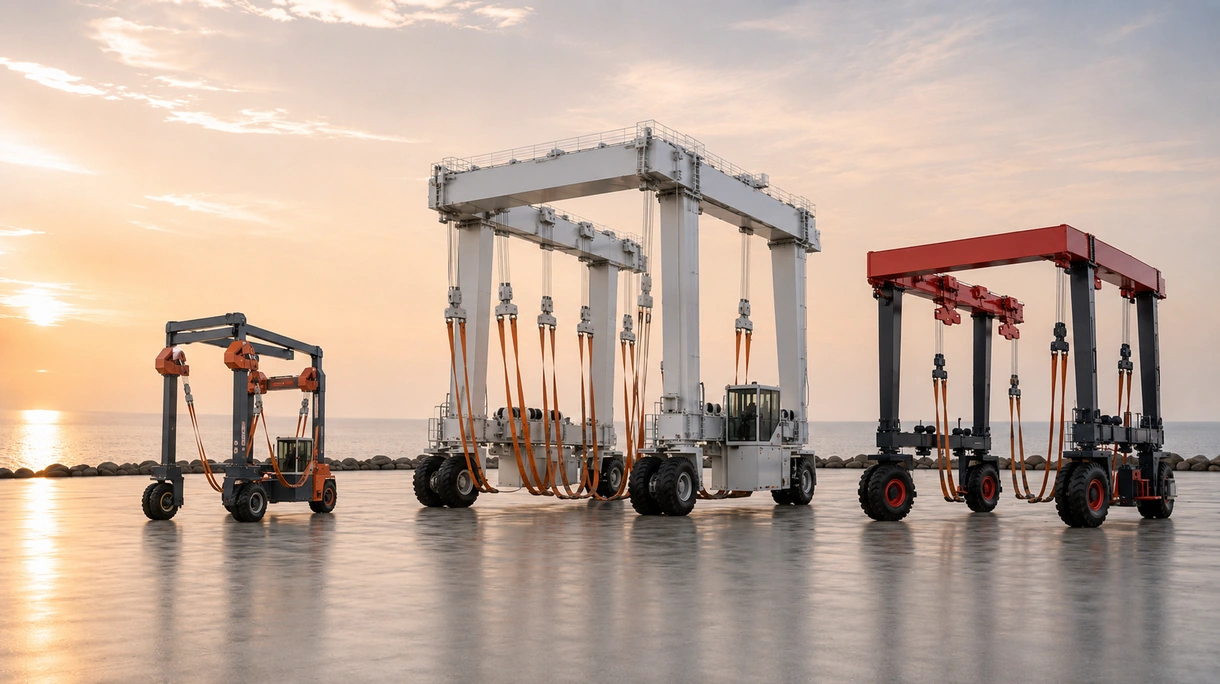
4 Criteria to choose your travel lift
Effective lift capacity rating
Heavy-duty shipyard operations require certified load ratings that include dynamic factors of safety for diverse hull displacement profiles.
Inside clear width dimensions
Beam measurements dictate fleet versatility, ensuring the hoist accommodates modern wide-beam catamarans and full-displacement motor yachts efficiently.
Sling positioning precision control
Multi-point hydraulic sling adjustments prevent structural hull stress and protect delicate onboard sensors during high-frequency lifting cycles.
Corrosion resistant structural integrity
High-corrosion marine grade coatings and stainless steel hydraulic fittings are essential for longevity in high-salinity coastal shipyard environments.
Available technologies and advantages
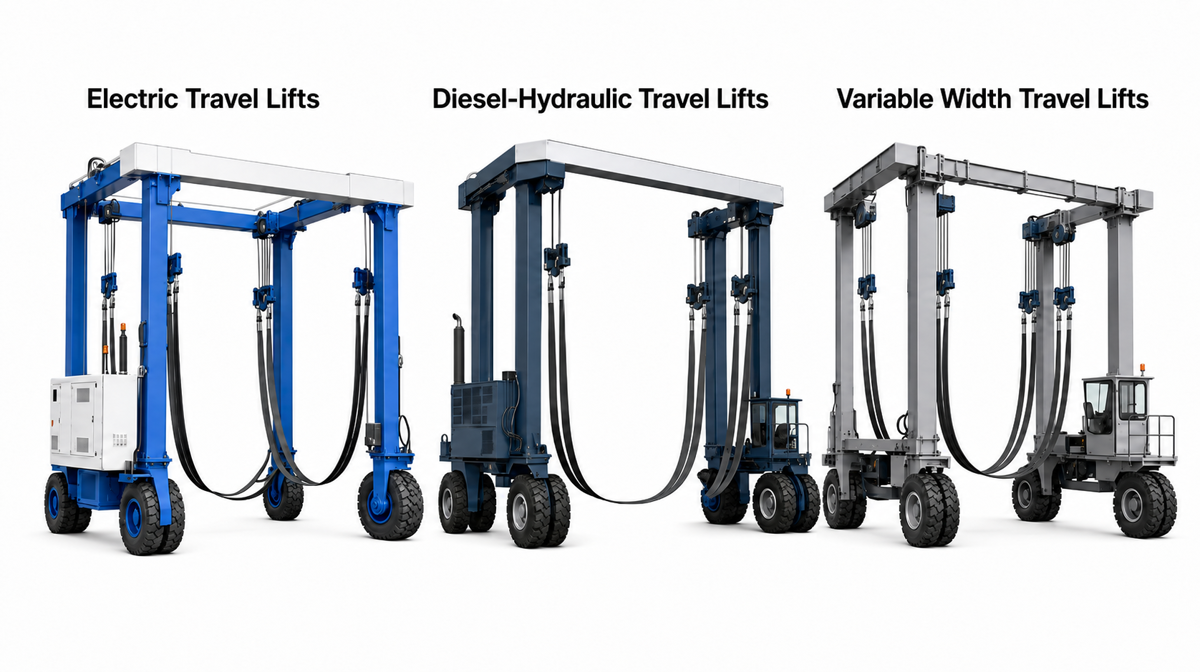
Electric Mobile Boat Hoists
Replacing hydraulic systems with AC motors, these units eliminate fluid spill risks while providing silent operation and higher energy efficiency. While reducing environmental liability, they require significant initial investment in lithium battery banks or localized charging infrastructure.
Diesel-Hydraulic Travel Lifts
The industry standard utilizes high-torque diesel engines to drive hydraulic winches, offering proven reliability for high-tonnage lifting operations. These systems provide exceptional power density for heavy vessels but necessitate rigorous maintenance of hydraulic lines to prevent terminal pollution.
Variable Width Amphibious Hoists
Engineering these units with telescopic crossbeams allows shipyards to adjust the span for diverse vessel types from sailboats to catamarans. This versatility maximizes land-use efficiency although mechanical complexity increases total cost of ownership and requires specialized technician training.
6 expert tips
Always verify the technical certification to ensure compliance with local building safety standards and long-term durability.
Prioritize travel lifts with remote diagnostic telemetry to minimize downtime through predictive maintenance and rapid remote engineering support.
Select omnidirectional electronic steering systems to maximize yard storage density and improve maneuverability within confined marina footprints.
Evaluate the total cost of ownership by calculating fuel consumption and hydraulic fluid replacement cycles over a decade.
Invest in customizable sling sets with protective covers to prevent gelcoat abrasions and accommodate varied keel configurations safely.
Confirm the availability of local authorized service technicians to ensure rapid response for critical components during peak season.
Innovations and Trends
*Prices are pre-tax. They exclude delivery charges and customs duties and do not include additional charges for installation or activation options. Prices are indicative only and may vary by country, with changes to the cost of raw materials and exchange rates.
About NauticExpo
NauticExpo is a marketplace that offers B2B players a complete experience, from product sourcing to purchase. NauticExpo is an entity of VirtualExpo Group.
Are you a buyer?
Are you a supplier?