
- Home page
- buying guide
- teak deck inflatable boat
teak deck inflatable boat
teak deck inflatable boat: A technical guide
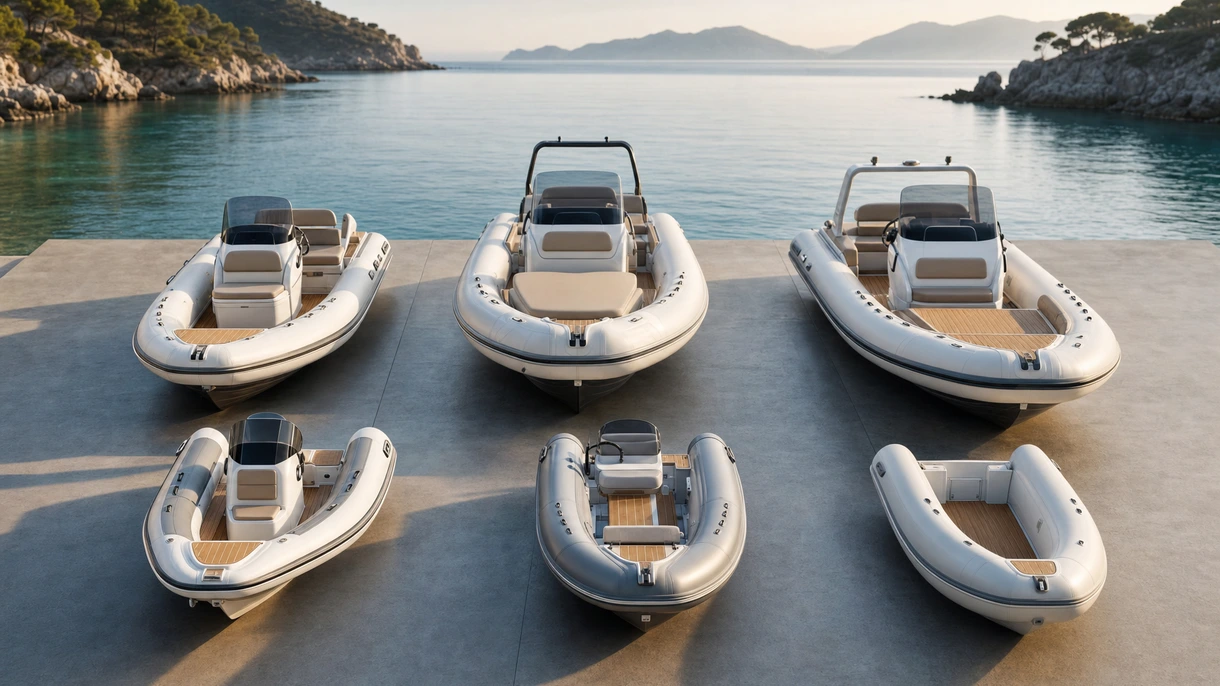
4 Criteria to choose your teak deck inflatable boat
Adhesion and bonding integrity
Structural bonding between synthetic teak and PVC or Hypalon must resist high shear loads during heavy-duty maritime tender operations.
UV and thermal stability
Materials must maintain dimensional stability and color fastness under constant exposure to high-index solar radiation in Mediterranean or Caribbean.
Weight to buoyancy ratio
Integrated decking adds mass, requiring precise engineering to maintain the vessel’s essential payload capacity and rapid planing performance efficiency.
Maintenance and cleaning requirements
Non-porous surface structures should facilitate rapid cleaning of salt deposits and fuel spills without degrading the specialized adhesive layers.
Available technologies and advantages
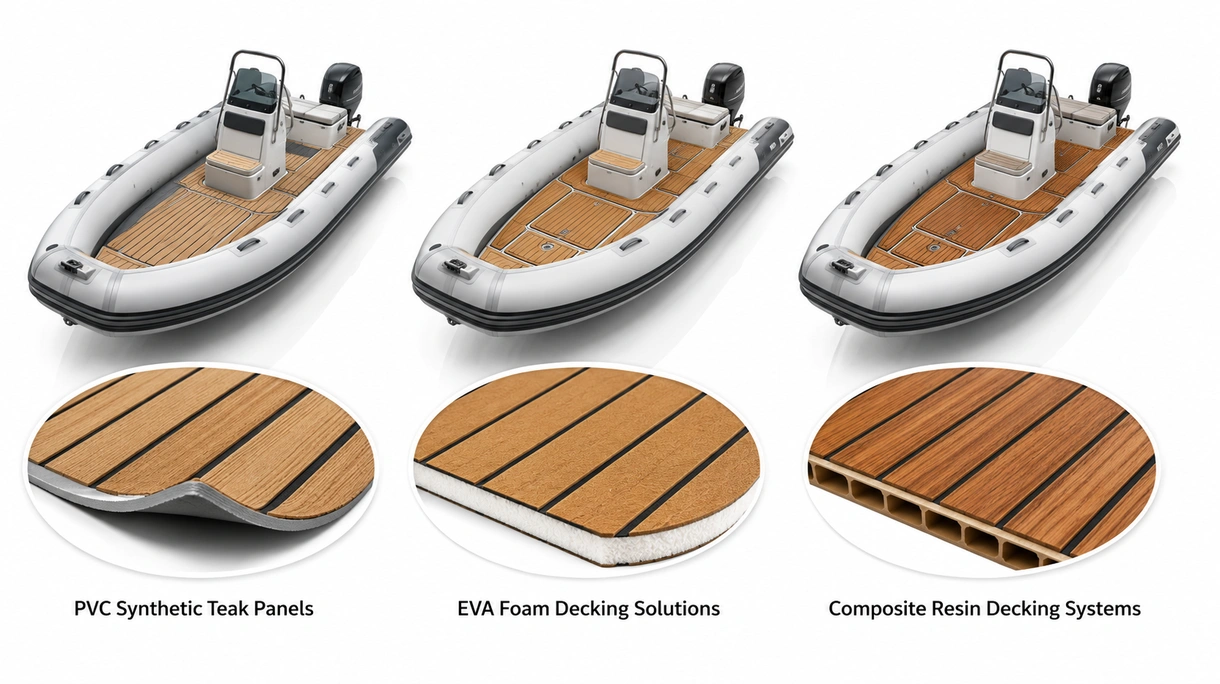
PVC Synthetic Teak Panels
Flexible vinyl composites heat-welded to the tube substrate, offering a cost-effective solution for high-volume manufacturing of standard professional or recreational inflatable boats.
Operational performance trade-offs
These panels provide excellent grip and low weight but exhibit lower thermal resistance compared to advanced polymers, potentially warping under extreme heat exposure.
EVA Foam Decking Solutions
Closed-cell ethylene-vinyl acetate sheets CNC-cut for precise fitting, used primarily on rigid inflatable boats for enhanced shock absorption and lightweight performance.
Operational performance trade-offs
This material delivers superior comfort and weight savings but suffers from lower durability under heavy mechanical abrasion compared to solid composite alternatives.
Composite Resin Decking Systems
Fiber-reinforced resin panels that mimic natural wood grain, bonded directly to the internal floor structure to provide maximum structural rigidity and deck longevity.
Operational performance trade-offs
This solution offers the highest puncture resistance and longevity in professional fleets, yet significantly increases total vessel weight and initial acquisition cost.
6 expert tips
Ensure the deck bonding process meets ISO standards for structural integrity during high-speed maritime maneuvers in heavy sea states.
Prioritize materials with certified anti-slip ratings to maintain operator safety during professional boarding operations in wet conditions.
Assess the thermal conductivity of synthetic surfaces to prevent deck overheating during extended exposure in tropical maritime climates.
Select deck patterns that allow easy access to internal hull compartments for critical maintenance of onboard electrical systems.
Evaluate the resistance of the inflatable tube fabric to the specific chemical cleansers used for synthetic teak maintenance.
Always verify the technical certification to ensure compliance with local building safety standards and long-term durability.
Innovations and Trends
Transitioning to sustainable deck materials reduces environmental impact while maintaining the same mechanical performance as virgin plastic polymers.
New chemical formulations in synthetic teak lower surface temperatures by fifteen percent, improving comfort for barefoot professional crew.
Replaceable deck sections allow shipyards to perform rapid repairs on high-wear areas without replacing the entire boat floor.
Embeddable sensors within the decking monitor hull vibrations and pressure fluctuations to provide real-time data for fleet managers.
*Prices are pre-tax. They exclude delivery charges and customs duties and do not include additional charges for installation or activation options. Prices are indicative only and may vary by country, with changes to the cost of raw materials and exchange rates.
About NauticExpo
NauticExpo is a marketplace that offers B2B players a complete experience, from product sourcing to purchase. NauticExpo is an entity of VirtualExpo Group.
Are you a buyer?
Are you a supplier?