
- Home page
- buying guide
- professional boat
professional boat
professional boat: A technical guide
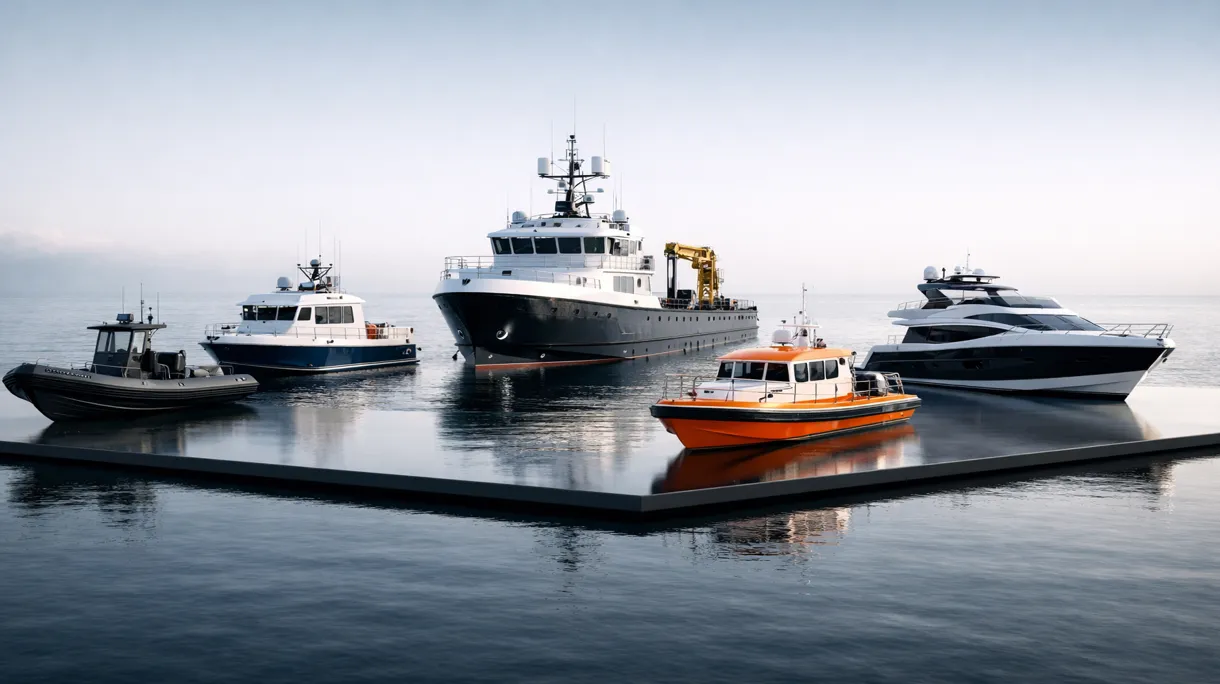
4 Criteria to choose your professional boat
Operational duty cycle efficiency
Maximizing engine hours between maintenance intervals ensures vessel uptime for commercial contracts and reduces overall lifecycle operating costs.
Hull structural integrity standards
Robust scantlings and certified welding ensure the vessel withstands heavy sea states and rigorous daily commercial operations without failure.
Payload and deck capacity
Optimizing the ratio between vessel weight and cargo capability determines the profitability of transport missions and heavy equipment deployment.
Regulatory compliance certification
Meeting specific IMO or Coast Guard standards is mandatory for legal commercial operation and ensures high resale asset value.
Available technologies and advantages
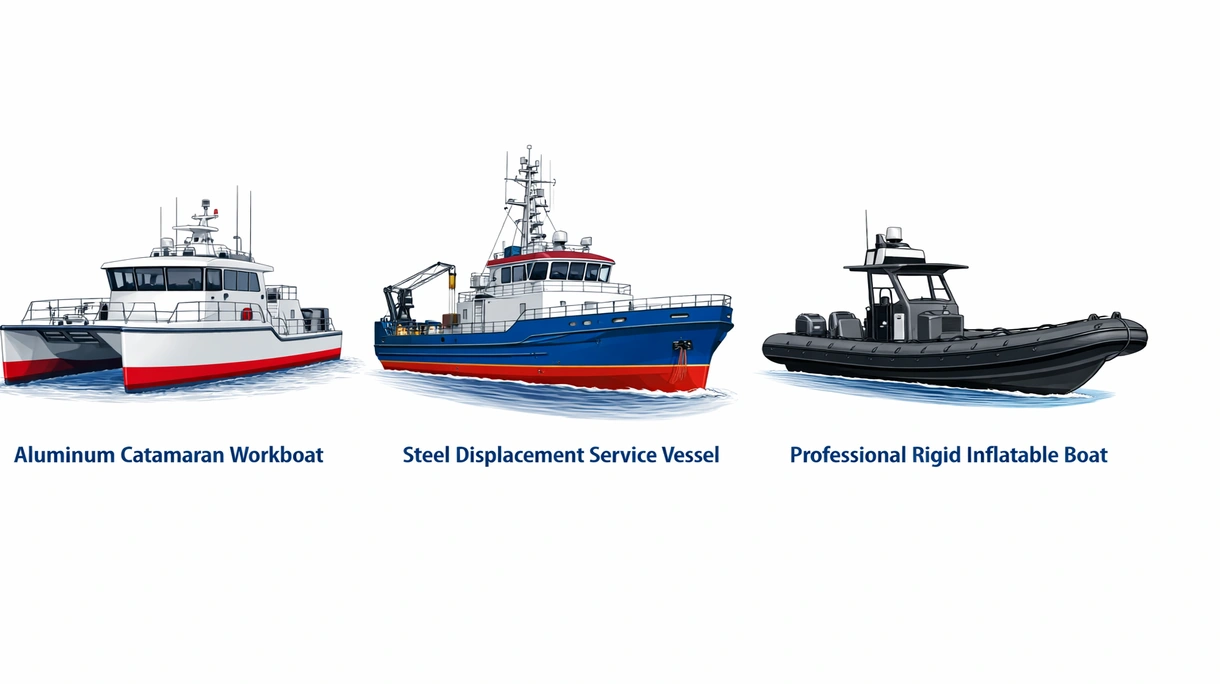
Aluminum Catamaran Workboats
These vessels offer superior stability and shallow draft compared to monohulls, though aluminum requires strict galvanic corrosion monitoring protocols. High initial cost is balanced by fuel efficiency and deck space, yet they face structural fatigue limits in extreme conditions.
Steel Displacement Service Vessels
Steel provides unmatched impact resistance and repairability in remote ports compared to composite hulls, despite significantly higher maintenance needs. Exceptional durability and weight capacity come at the cost of higher fuel consumption and slower transit speeds for crews.
Professional Rigid Inflatable Boats
Professional RIBs excel in boarding operations and high-speed interception compared to rigid craft, utilizing heavy-duty Hypalon tubes for protection. Rapid deployment and safety benefits are countered by tube vulnerability and limited deck hardware mounting options for equipment.
6 expert tips
Prioritize hulls with verifiable classification society certifications to ensure structural reliability and facilitate international maritime insurance coverage approvals.
Select propulsion systems with established global service networks to minimize downtime during critical engine repairs or parts replacement.
Evaluate total cost of ownership by including projected fuel consumption and scheduled maintenance costs over a ten-year cycle.
Optimize the bridge layout for ergonomic operation to reduce crew fatigue during extended offshore shifts and heavy weather transit.
Ensure the deck configuration supports modular equipment installation to allow for diverse mission profiles and future operational flexibility.
Verify the technical certification to ensure compliance with local building safety standards and long-term durability.
Innovations and Trends
Systems reduce fuel consumption and comply with strict emission control area regulations in busy ports.
Sensors predict machinery failure, significantly lowering unscheduled downtime for fleet operators and reducing maintenance costs.
Eliminate biocides while maintaining hydrodynamic efficiency to meet evolving environmental protection agency maritime standards.
Allow shipyards to produce critical components on-demand, reducing lead times for emergency repairs.
*Prices are pre-tax. They exclude delivery charges and customs duties and do not include additional charges for installation or activation options. Prices are indicative only and may vary by country, with changes to the cost of raw materials and exchange rates.
About NauticExpo
NauticExpo is a marketplace that offers B2B players a complete experience, from product sourcing to purchase. NauticExpo is an entity of VirtualExpo Group.
Are you a buyer?
Are you a supplier?