
- Home page
- buying guide
- floating dock
floating dock
floating dock: A technical guide
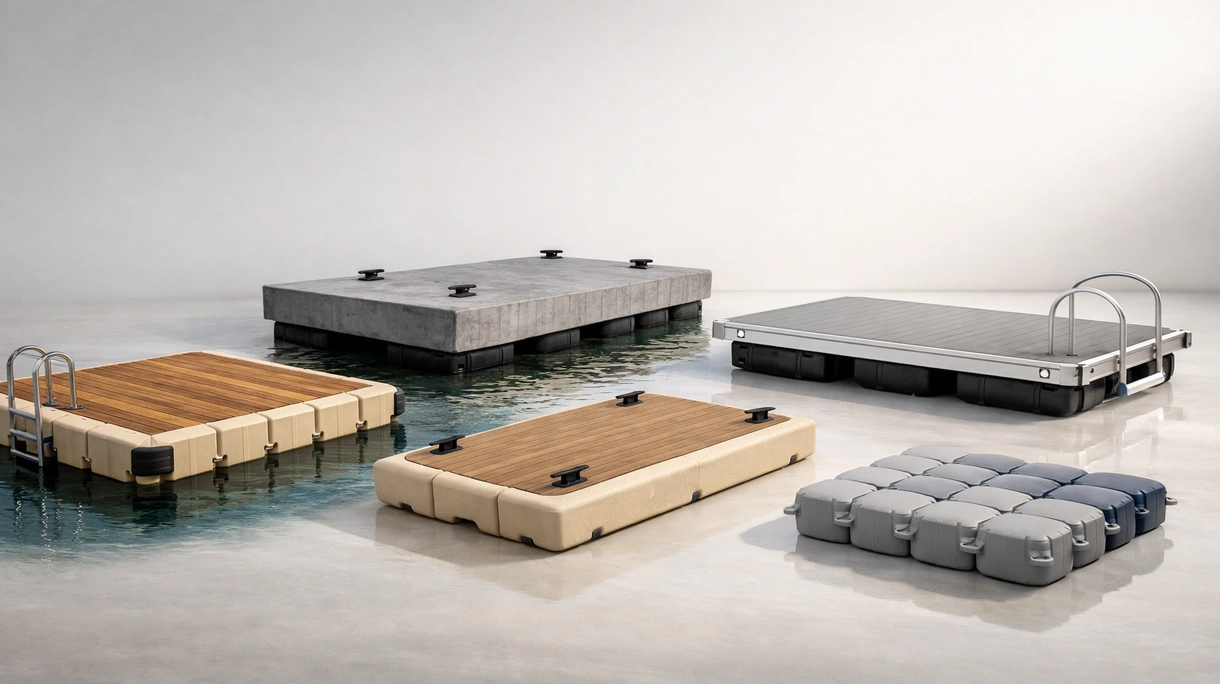
4 Criteria to choose your floating dock
Hydrostatic Stability and Buoyancy
Ensuring uniform load distribution across the deck surface prevents list or trim issues during heavy equipment transfers or boarding.
Environmental Loading Resistance
Structures must withstand specific significant wave heights and extreme tidal surges to protect high-value moored assets and infrastructure integrity.
Material Durability and Corrosion
Selecting UV-stabilized or marine-grade alloys ensures long-term resistance to salt spray and electrolysis in demanding saline coastal environments.
Connection Modular Adaptability
Robust mechanical linkages allow for rapid reconfiguration of berthing layouts to accommodate changing vessel sizes and fleet operational requirements.
Available technologies and advantages
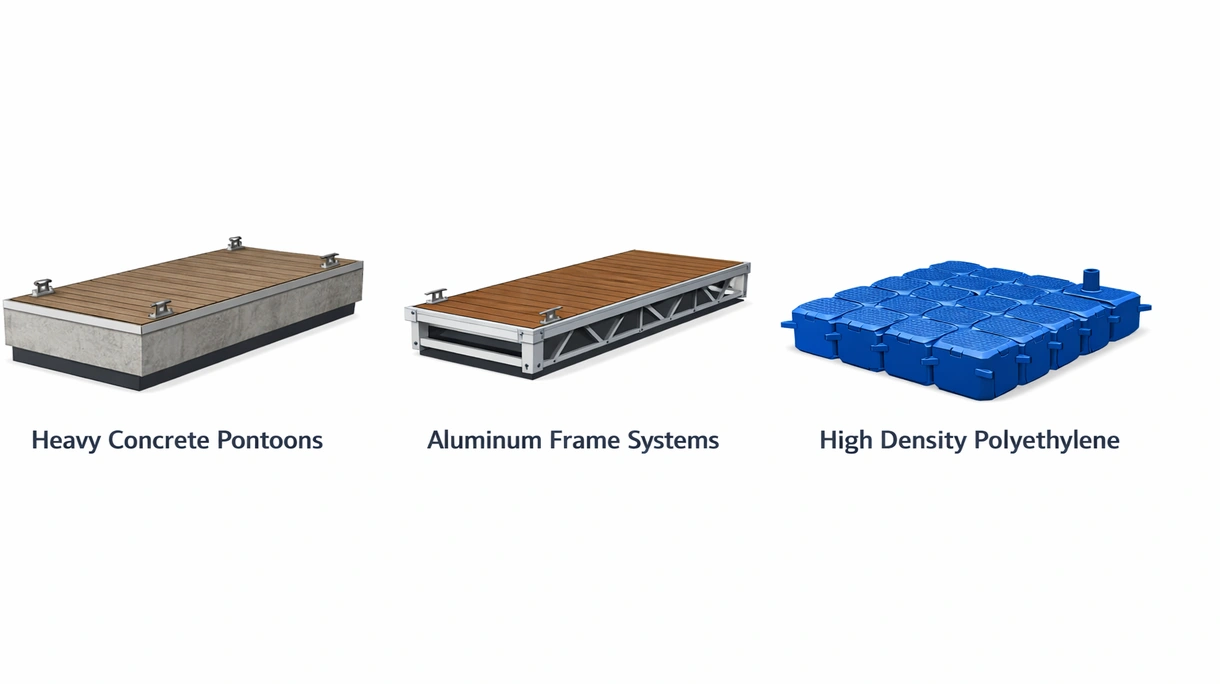
Heavy Concrete Pontoons
These reinforced units offer massive inertia and multi-decade lifespans. They provide superior stability but require heavy lifting equipment for installation.
Aluminum Frame Systems
Lightweight marine-grade structures support various deckings with excellent corrosion resistance. They offer high flexibility yet lack mass for high-energy wave environments.
High Density Polyethylene
Modular blocks allow for rapid tool-free assembly and impact resistance. Their low structural weight limits applications to small vessel docking requirements.
6 expert tips
Prioritize heavy-duty concrete systems for deep-water berthing to ensure maximum structural longevity and minimal maintenance costs over several decades.
Verify that all mechanical connectors and hinge assemblies are composed of marine-grade stainless steel to prevent catastrophic fatigue failure.
Ensure the design accounts for local peak wind speeds and tidal ranges to maintain safe operational access during storms.
Evaluate the modularity of the pontoon system to allow for cost-effective future expansion as fleet vessel sizes inevitably increase.
Select anti-slip decking materials that meet international maritime safety standards to reduce liability and improve crew safety during operations.
Always verify the technical certification to ensure compliance with local building safety standards and long-term durability.
Innovations and Trends
*Prices are pre-tax. They exclude delivery charges and customs duties and do not include additional charges for installation or activation options. Prices are indicative only and may vary by country, with changes to the cost of raw materials and exchange rates.
About NauticExpo
NauticExpo is a marketplace that offers B2B players a complete experience, from product sourcing to purchase. NauticExpo is an entity of VirtualExpo Group.
Are you a buyer?
Are you a supplier?