
- Home page
- buying guide
- lifting keel sailboat
lifting keel sailboat
lifting keel sailboat: A technical guide
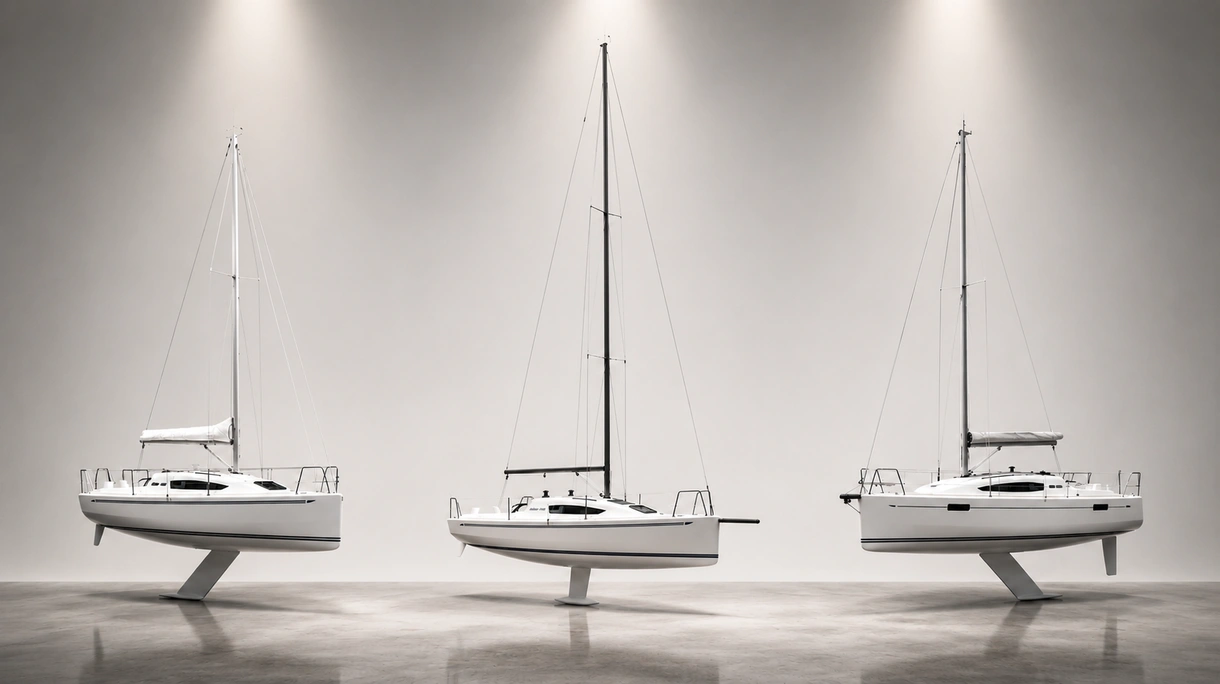
4 Criteria to choose your lifting keel sailboat
Keel Box Structural Integrity
Essential for absorbing grounding stresses and maintaining hull watertightness under extreme hydrodynamic loads during blue-water passage making.
Lifting Mechanism Reliability
Hydraulic or mechanical systems must ensure consistent operation to prevent draft-related grounding risks in restricted littoral waters.
Hydrodynamic Lift Efficiency
Profile optimization is critical for maintaining upwind performance comparable to fixed-keel yachts while minimizing parasitic drag at speed.
Maintenance Access Requirements
Internal keel trunks must allow simplified inspections of pins and seals to reduce long-term operational costs and downtime.
Available technologies and advantages
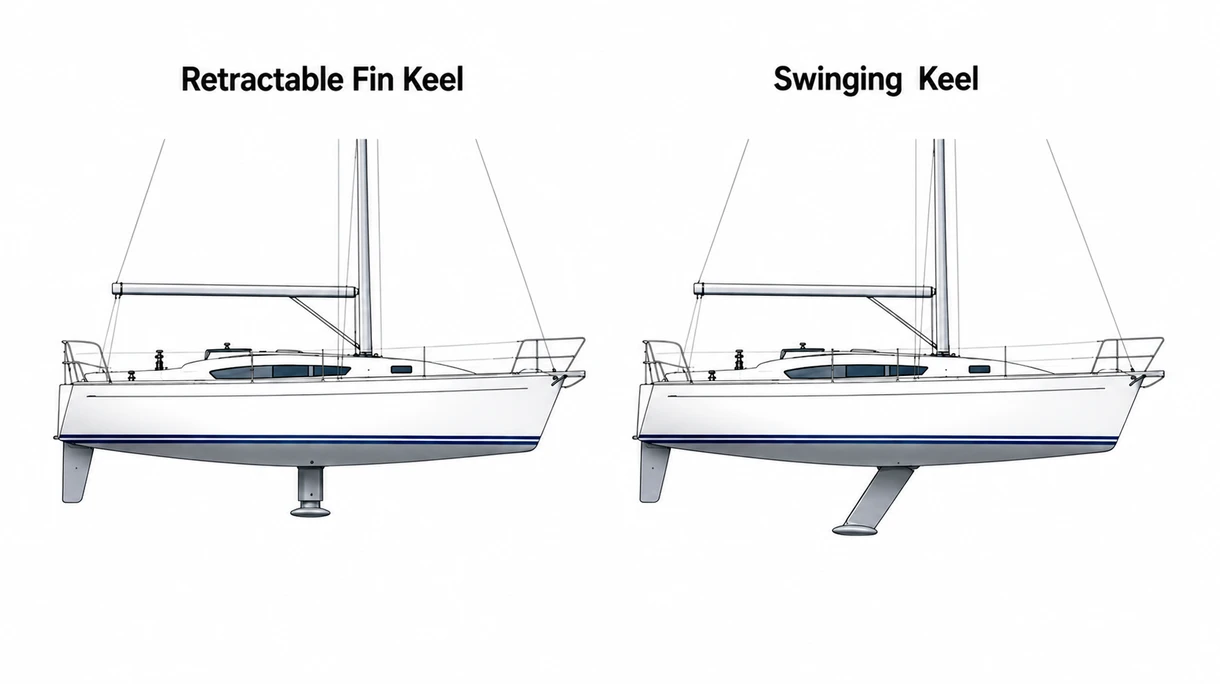
Vertical Telescopic Keel
This technology utilizes heavy-duty internal rams to lift a bulb vertically into a central trunk without rotating or swinging aft during maneuvers.
Operational Trade-offs
Advantages include high stability and performance while limitations involve a massive internal trunk and high maintenance requirements for hydraulic seals.
Swinging Pivot Keel
This mechanism rotates around a horizontal axis to retract the foil into a shallow recess or against the hull for coastal navigation.
Operational Trade-offs
Benefits include automatic grounding protection and lower draft, but trade-offs focus on lateral loading stress and complex pivot pin maintenance.
Retractable Fin Keel
High-aspect ratio foils retract vertically to provide maximum performance and versatility for deep-water racing and shallow-water anchoring operations.
Operational Trade-offs
Strategic benefits include minimized drag and superior windward ability while limitations involve complex internal winch systems and reduced cabin floor space.
6 expert tips
Prioritize high-grade stainless steel or duplex pins to prevent galvanic corrosion and ensure mechanical longevity in saline environments.
Verify the manufacturer provides redundant manual overrides for hydraulic lifting systems to ensure safety during total electrical failure.
Request comprehensive finite element analysis reports to validate keel box structural reinforcement against catastrophic lateral impact scenarios.
Evaluate the impact of the internal keel trunk on interior logistics and cargo capacity for long-range cruising requirements.
Assess the availability of specialized shipyard facilities capable of servicing complex lifting mechanisms within your primary operating regions.
Always verify the technical certification to ensure compliance with local building safety standards and long-term durability.
Innovations and Trends
These systems integrate with keel controls to adjust depth dynamically based on real-time sonar and chart data.
Advanced materials for keel trunks reduce overall displacement while improving structural rigidity and long-term fatigue resistance.
Electro-mechanical systems replace hydraulic fluids to minimize environmental contamination risks and simplify onboard maintenance for technical crews.
Keel trunks utilize the internal surface area to regulate onboard propulsion engine temperatures efficiently through passive heat exchange.
*Prices are pre-tax. They exclude delivery charges and customs duties and do not include additional charges for installation or activation options. Prices are indicative only and may vary by country, with changes to the cost of raw materials and exchange rates.
About NauticExpo
NauticExpo is a marketplace that offers B2B players a complete experience, from product sourcing to purchase. NauticExpo is an entity of VirtualExpo Group.
Are you a buyer?
Are you a supplier?