
- Home page
- buying guide
- catamaran ship
catamaran ship
catamaran ship: A technical guide
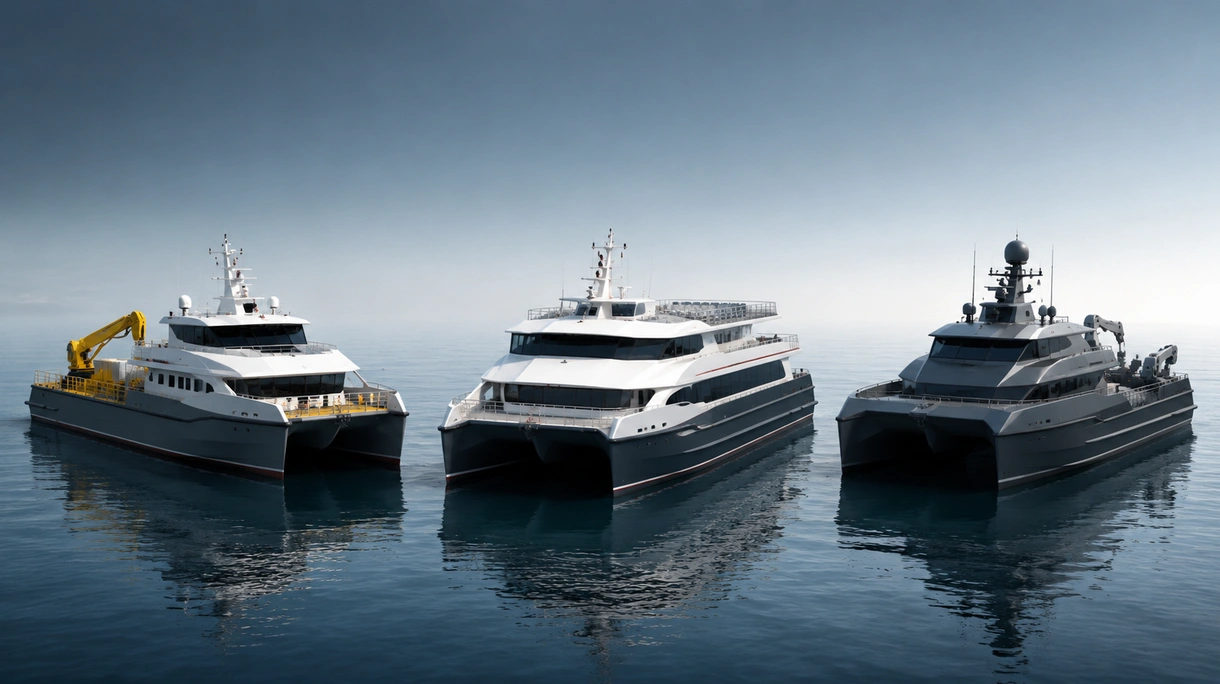
4 Criteria to choose your catamaran ship
Transverse stability and safety
Dual hulls provide superior initial stability and wider work platforms compared to monohulls, critical for heavy lifting and passenger comfort.
Fuel efficiency and range
Reduced wetted surface area and slender hull forms minimize drag, significantly lowering fuel consumption and extending operational range between bunkering.
Shallow draft accessibility
Even distribution of displacement allows navigation in tidal ports and restricted coastal waters inaccessible to deep keeled monohull vessel designs.
Deck space optimization
Broad rectangular deck configurations maximize cargo capacity or cabin volume, providing superior logistical efficiency for commercial or luxury operations.
Available technologies and advantages
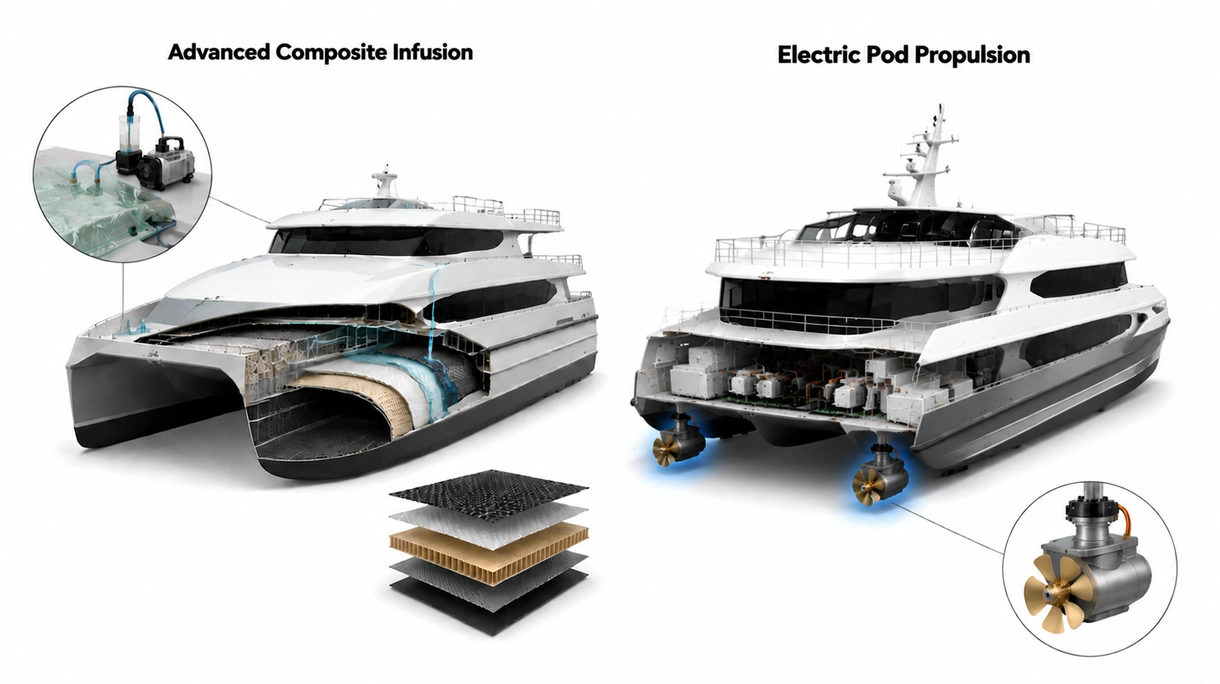
Advanced Composite Infusion
Vacuum infusion ensures consistent resin to fiber ratios, outperforming hand layup by reducing weight while maintaining high structural rigidity required for high performance multihulls. High initial tooling costs and repair complexity are balanced by significant gains in fuel efficiency and structural longevity.
Electric Pod Propulsion
Integrated pods eliminate shaft lines, offering omnidirectional maneuverability and higher torque compared to traditional inboard diesel setups in catamaran configurations. Increased battery weight and specialized maintenance requirements must be weighed against the benefit of silent, emission free harbor operations.
6 expert tips
Prioritize shipyards offering verified computational fluid dynamics data to ensure hull efficiency aligns with specific sea state operational requirements.
Mandate independent classification society oversight throughout construction to guarantee international safety standards and long term resale value for the asset.
Assess the hull material choice based on lifecycle maintenance costs, weighing aluminum durability against the weight savings of carbon.
Evaluate redundancy systems for main propulsion and steering to minimize downtime during remote offshore operations and ensure crew safety.
Optimize the deck layout for specialized equipment integration by consulting with engineering teams during the initial naval architecture phase.
Always verify the technical certification to ensure compliance with local building safety standards and long term durability.
Innovations and Trends
Implementation of hydrogen fuel cells reduces carbon footprints, addressing tightening emissions regulations in sensitive coastal zones.
Integration of artificial intelligence sensors improves situational awareness and operational safety, significantly reducing human error during complex harbor maneuvering.
Dynamic hydrofoils lift hulls at speed, reducing drag by forty percent and dramatically lowering fuel consumption for high speed ferries.
Transitioning to thermoplastic resins allows for future hull recycling, meeting evolving European environmental mandates regarding end of life vessel disposal.
*Prices are pre-tax. They exclude delivery charges and customs duties and do not include additional charges for installation or activation options. Prices are indicative only and may vary by country, with changes to the cost of raw materials and exchange rates.
About NauticExpo
NauticExpo is a marketplace that offers B2B players a complete experience, from product sourcing to purchase. NauticExpo is an entity of VirtualExpo Group.
Are you a buyer?
Are you a supplier?