
- Home page
- buying guide
- cruise ship
cruise ship
cruise ship: A technical guide

4 Criteria to choose your cruise ship
Energy Efficiency Index (EEDI)
This metric determines long-term fuel expenditure and regulatory compliance with International Maritime Organization carbon intensity reduction mandates for ships.
Passenger Capacity Ratio
Optimizing the balance between gross tonnage and guest count ensures maximum revenue per berth while maintaining required comfort.
Tier III NOx Compliance
Strict adherence to international emission standards ensures vessel access to protected coastal waters and reduces future expensive engine retrofits.
Hull Hydrodynamic Optimization
Advanced hull designs minimize drag, directly lowering operational fuel costs and enhancing the overall environmental sustainability of the fleet.
Available technologies and advantages
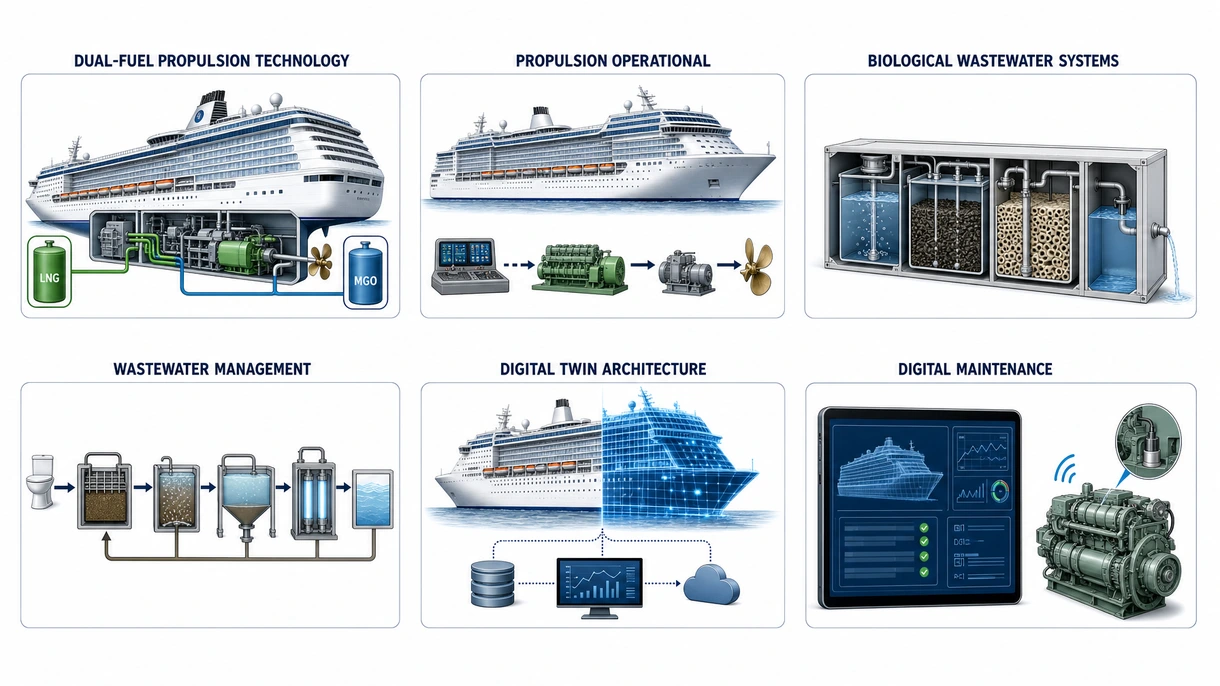
Dual-Fuel Propulsion Technology
Comparing LNG with MDO systems reveals superior carbon reduction in gas modes despite higher initial capital expenditure requirements for shipyards.
Propulsion Operational Trade-offs
Advantages include significant sulfur reduction while limitations involve massive cryogenic tank space. Managers must balance fuel savings against reduced cabin inventory.
Biological Wastewater Systems
Moving bed biofilm reactors outperform traditional physical-chemical systems in effluent quality and compliance with stringent Alaska or Baltic discharge regulations.
Wastewater Management Trade-offs
These systems provide superior environmental protection but demand higher electrical loads. Technical managers must trade energy efficiency for strict regulatory compliance.
Digital Twin Architecture
Real-time sensor data mapping against virtual models allows for predictive maintenance schedules that prevent unplanned downtime during peak sailing seasons.
Digital Maintenance Trade-offs
Benefits include increased vessel uptime while limitations involve high integration costs. Managers must trade capital for long-term reduction in emergency repairs.
6 expert tips
Prioritize vessels equipped with shore-power connectivity to ensure compliance with tightening harbor emission regulations and reduce local pollution.
Select hull coatings with low-friction polymer technology to decrease fuel consumption and extend intervals between expensive dry-dock maintenance sessions.
Evaluate propulsion redundancy levels to guarantee passenger safety and avoid massive financial losses resulting from mechanical failures at sea.
Verify all HVAC systems utilize heat recovery loops to maximize thermal efficiency and lower the total energy demand footprint.
Invest in modular cabin designs to allow for rapid interior refits and maintain market competitiveness throughout the vessel lifecycle.
Always verify the technical certification to ensure compliance with local building safety standards and long-term durability.
Innovations and Trends
Hydrogen fuel cell integration provides zero-emission auxiliary power during port stays, significantly improving local air quality and regulatory standing.
Carbon capture and storage prototypes target fifty percent emission reductions, meeting upcoming maritime decarbonization targets for aging commercial fleets.
AI-driven route optimization analyzes bathymetry and weather to reduce propulsion energy requirements by approximately ten percent per voyage.
Bio-mimetic hull textures replicate shark skin properties to mitigate biofouling and decrease hydrodynamic resistance during high-speed transit operations.
*Prices are pre-tax. They exclude delivery charges and customs duties and do not include additional charges for installation or activation options. Prices are indicative only and may vary by country, with changes to the cost of raw materials and exchange rates.
About NauticExpo
NauticExpo is a marketplace that offers B2B players a complete experience, from product sourcing to purchase. NauticExpo is an entity of VirtualExpo Group.
Are you a buyer?
Are you a supplier?