
- Home page
- buying guide
- water-cooled engine
water-cooled engine
water-cooled engine: A technical guide
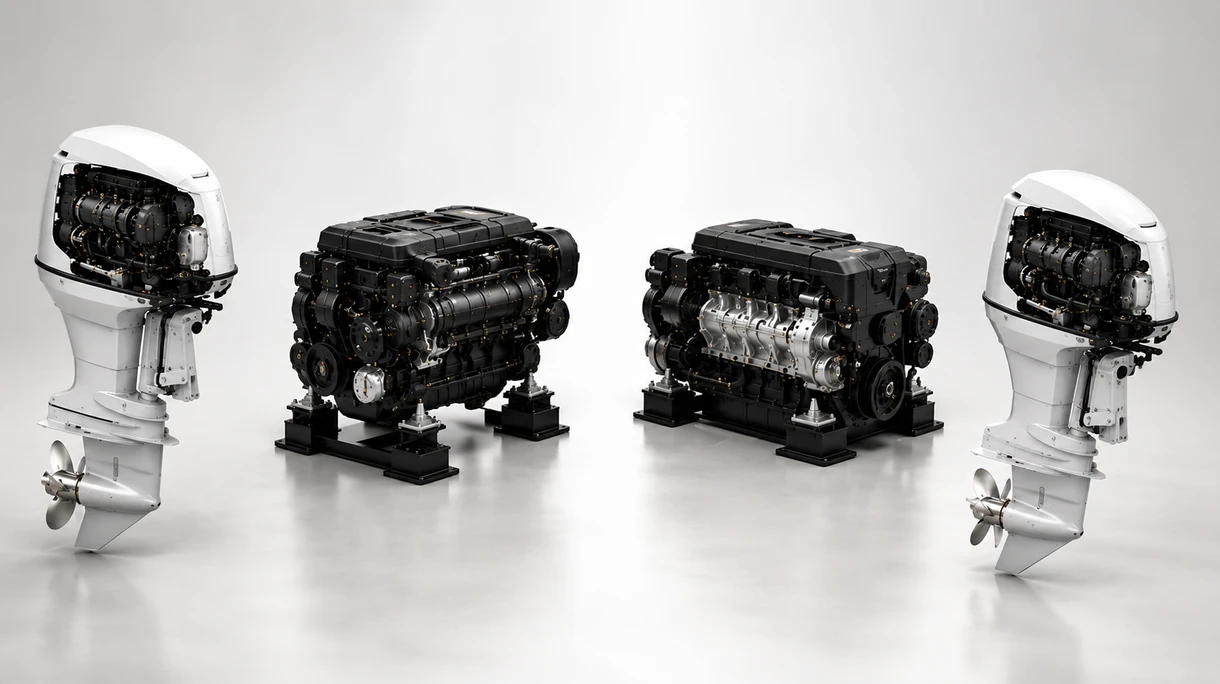
4 Criteria to choose your water-cooled engine
Heat exchanger thermal efficiency.
Ensures thermal stability during sustained high-load operations in varied seawater temperatures to prevent catastrophic thermal runaway or failure.
Marine grade corrosion resistance.
Evaluates material durability against galvanic corrosion and salt spray exposure, critical for maintaining cooling circuit integrity in harsh environments.
Emissions regulation Tier compliance.
Guarantees adherence to stringent IMO and EPA emissions standards, ensuring long-term vessel access to regulated European and American ports.
Serviceable maintenance access footprint.
Determines the ease of cleaning raw water strainers and replacing impellers within the restricted spatial constraints of engine rooms.
Available technologies and advantages
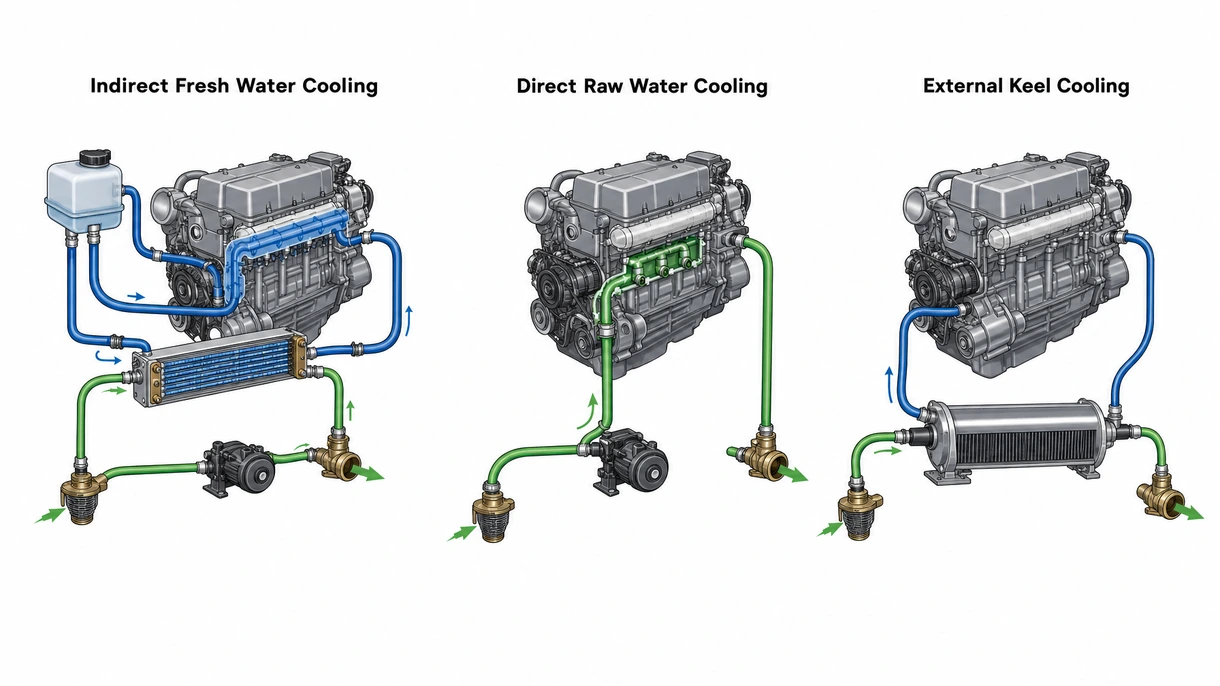
Indirect Fresh Water Cooling.
This system utilizes a secondary heat exchanger to separate internal coolant from raw water. It prevents internal corrosion while requiring more complex plumbing and periodic zinc anode replacement.
Direct Raw Water Cooling.
Raw seawater circulates directly through the engine block for simplified cooling. While cost-effective, it leads to significant mineral scaling and accelerated metal fatigue in high-salinity environments.
External Keel Cooling.
Heat exchangers are mounted outside the hull to dissipate heat via direct contact. It eliminates raw water intake issues but increases hull drag and complicates external maintenance.
6 expert tips
Verify that the selected engine provides detailed heat rejection data to ensure matching with existing vessel cooling plumbing infrastructure.
Prioritize units featuring modular heat exchangers to simplify cleaning and reduce downtime during scheduled overhaul periods in busy shipyards.
Ensure the raw water pump is easily accessible for rapid impeller replacement to prevent overheating during critical vessel maneuvering.
Assess the availability of local technical support and genuine spare parts across major European and American maritime logistics hubs.
Select models with integrated electronic monitoring systems that provide real-time alerts for coolant temperature and pressure fluctuations across circuits.
Always verify the technical certification to ensure compliance with local building safety standards and long-term durability.
Innovations and Trends
Variable speed raw water pumps optimize thermal management while reducing parasitic power loss for improved overall vessel energy efficiency.
Advanced ceramic coatings on internal cooling passages provide superior protection against cavitation and scale buildup in aggressive maritime environments.
Hybrid cooling configurations enable efficient heat recovery systems to provide onboard domestic hot water without additional energy consumption requirements.
Digital twin monitoring platforms utilize sensor data to predict cooling system failures before they impact propulsion availability or safety.
*Prices are pre-tax. They exclude delivery charges and customs duties and do not include additional charges for installation or activation options. Prices are indicative only and may vary by country, with changes to the cost of raw materials and exchange rates.
About NauticExpo
NauticExpo is a marketplace that offers B2B players a complete experience, from product sourcing to purchase. NauticExpo is an entity of VirtualExpo Group.
Are you a buyer?
Are you a supplier?