
- Home page
- buying guide
- cruising mega-yacht
cruising mega-yacht
cruising mega-yacht: A technical guide
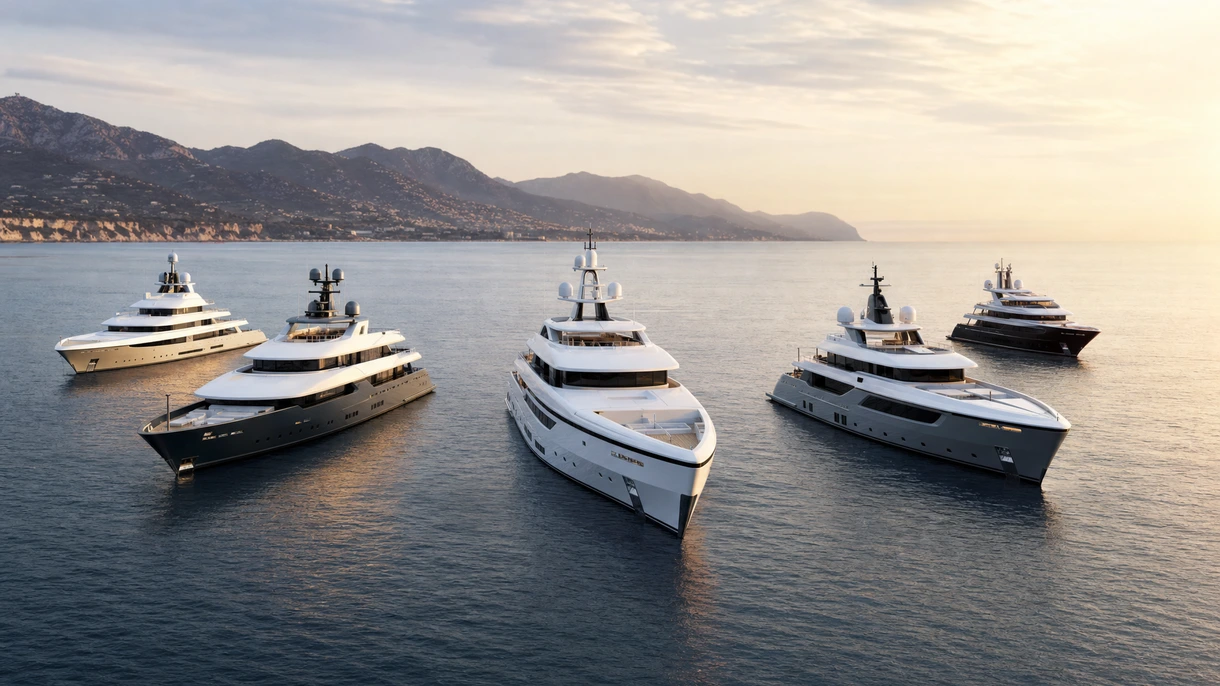
4 Criteria to choose your cruising mega-yacht
Propulsion Efficiency and Range
Optimizing transoceanic range through hull efficiency and fuel consumption minimizes operational costs and increases charter flexibility during peak seasons.
Technical Maintenance Accessibility
Engine room layout must prioritize rapid component access to reduce downtime and facilitate mandatory Lloyd’s or ABS classification surveys.
Tier Three Regulatory Compliance
Strict adherence to IMO Tier Three regulations ensures unrestricted access to Emission Control Areas and enhances long-term asset resale value.
Hull Structural Integrity
Superior steel or aluminum scantlings verified by classification societies guarantee safety in heavy seas and ensure long-term structural durability.
Available technologies and advantages
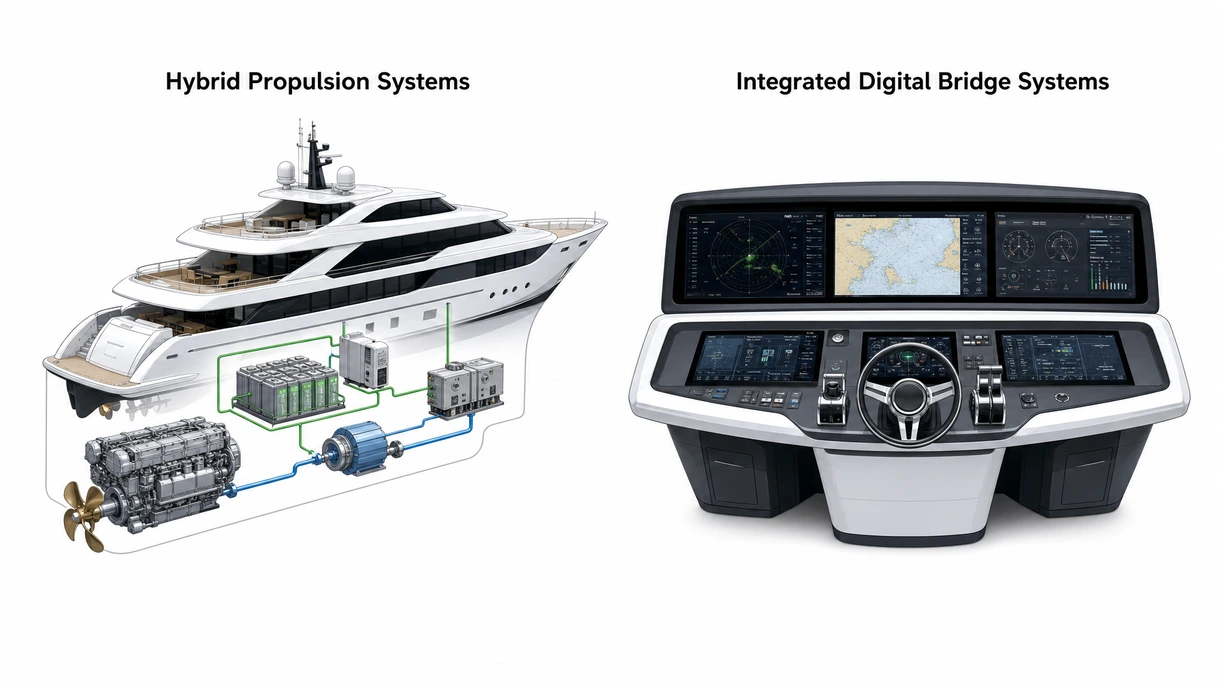
Hybrid Propulsion Systems
Variable-speed generators combined with battery arrays offer silent operation and lower emissions compared to traditional fixed-speed diesel mechanical systems by optimizing engine load profiles. Advantages: Lower fuel consumption and reduced noise. Limitations: High initial costs and battery weight. Trade-off: Silent operation versus space.
Dynamic Fin Stabilizer Systems
Retractable fins provide high roll reduction at cruising speeds while gyroscopic units deliver superior stabilization at zero speed without creating additional external hull drag. Advantages: Increased comfort and safety. Limitations: Maintenance complexity and power draw. Trade-off: Speed performance versus stationary stability.
Integrated Digital Bridge Systems
Solid-state radar and electronic charts provide higher resolution and faster processing than analog magnetron systems for safer navigation in congested or restricted commercial waterways. Advantages: Enhanced situational awareness. Limitations: High cyber-security risk and crew training needs. Trade-off: Automation versus manual fallback.
6 expert tips
Prioritize shipyards with proven build slots and robust warranties to mitigate financial risks during complex multi-year construction phases.
Always verify the technical certification to ensure compliance with local building safety standards and long-term durability.
Conduct comprehensive sea trials with independent surveyors to verify speed performance and vibration levels against contractual design specifications.
Evaluate the global service network of engine manufacturers to ensure rapid parts delivery and technical support in remote destinations.
Integrate advanced water treatment systems to meet strict environmental discharge standards while maintaining high-capacity fresh water production.
Contract specialized legal counsel to manage complex maritime tax structures and international flag state registration for operational cost optimization.
Innovations and Trends
Hydrogen fuel cell integration provides zero-emission power for hotel loads, significantly reducing the vessel's carbon footprint during harbor stays.
Sustainable teak alternatives and recycled aluminum hulls address increasing environmental regulations and ESG requirements from professional ship owners.
Artificial intelligence navigation assistants utilize thermal imaging and sonar to automate collision avoidance and underwater hazard detection in real-time.
Advanced hull coatings utilizing graphene technology reduce biofouling and hydrodynamic drag, leading to measurable fuel savings and efficiency.
*Prices are pre-tax. They exclude delivery charges and customs duties and do not include additional charges for installation or activation options. Prices are indicative only and may vary by country, with changes to the cost of raw materials and exchange rates.
About NauticExpo
NauticExpo is a marketplace that offers B2B players a complete experience, from product sourcing to purchase. NauticExpo is an entity of VirtualExpo Group.
Are you a buyer?
Are you a supplier?