
- Home page
- buying guide
- flybridge yacht
flybridge yacht
flybridge yacht: A technical guide
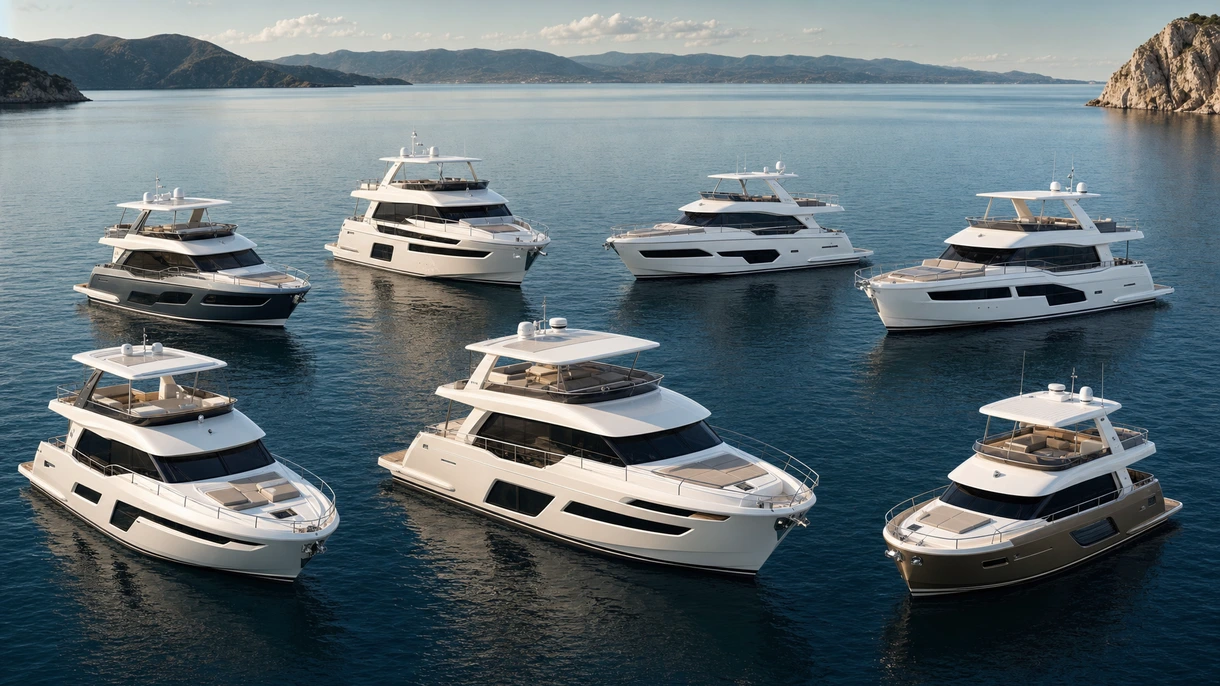
4 Criteria to choose your flybridge yacht
Structural stability metacentric height
High center of gravity requires advanced hull geometry and gyro-stabilization to ensure safety during elevated bridge maneuvers and transit.
Bridge ergonomics and visibility
Command station layout must allow unobstructed sightlines and integrated digital switching for safe docking and complex navigational management.
Propulsion efficiency cruising range
Weight distribution from flybridge structures demands optimized torque curves and fuel management systems to maintain cruising range targets.
Deck space utilization ratio
Effective square footage allocation between technical zones and guest areas directly impacts the vessel charter value and operational utility.
Available technologies and advantages
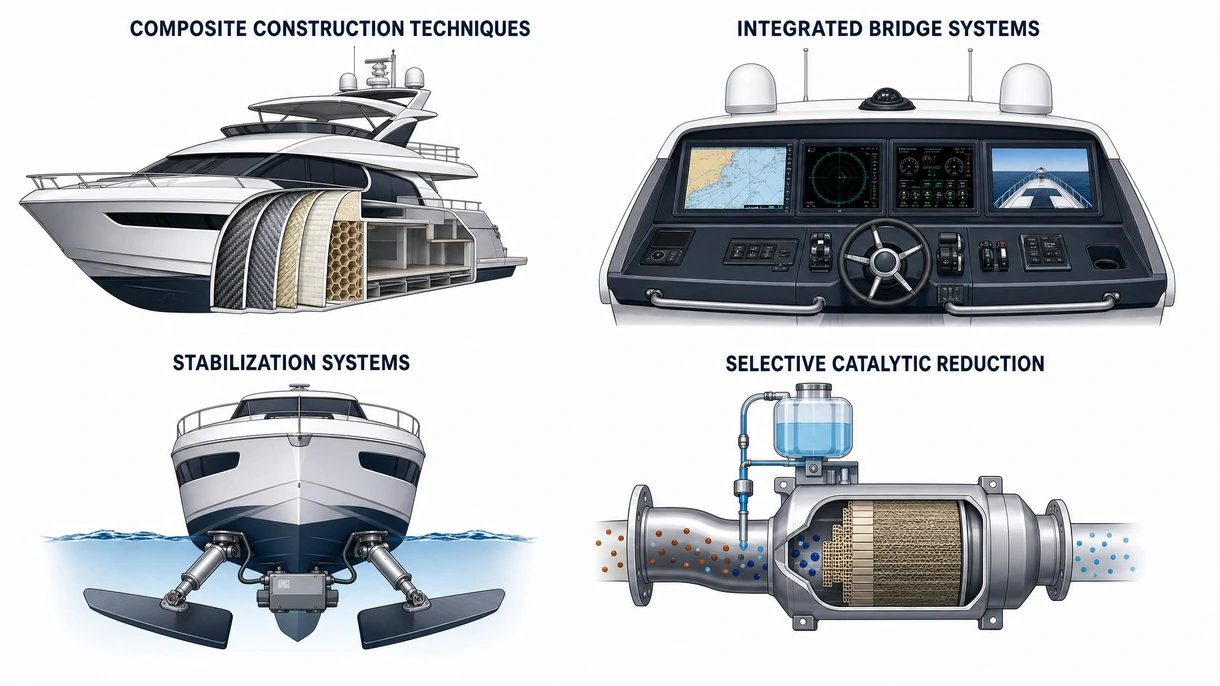
Composite construction techniques
Vacuum-infused carbon fiber versus traditional glass reinforced plastic provides superior stiffness to weight ratios essential for minimizing top-heavy moment of inertia on bridge decks. Carbon reduces displacement and fuel consumption but significantly increases initial shipyard capital expenditure and requires specialized composite repair expertise during maintenance cycles.
Integrated bridge systems
Modular glass cockpit electronics versus decentralized analog clusters consolidate engine telemetry and navigation data into unified multi-function display interfaces for enhanced control. Integration improves situational awareness and simplifies helm aesthetics though system wide software vulnerabilities and higher replacement costs present significant long term operational risks.
Stabilization systems
Gyroscopic stabilizers versus active fin systems provide roll reduction at zero speed or underway through high speed internal kinetic rotors and precession control. Gyros eliminate external drag and hull penetrations but occupy significant machinery space and require high peak electrical power loads for initial spooling.
Selective catalytic reduction
Urea based exhaust treatment versus traditional filtration significantly reduces nitrogen oxide emissions to meet stringent international maritime organization tier three environmental compliance standards. Implementing these systems reduces environmental impact and ensures port access but requires dedicated tankage for chemical reagents and increases machinery weight.
6 expert tips
Prioritize carbon fiber reinforcement in the upper structure to lower the center of gravity and improve dynamic stability.
Conduct comprehensive sea trials at maximum displacement to verify the efficiency of the stabilization systems in heavy swells.
Evaluate the accessibility of engine room maintenance points to ensure long term operational efficiency and lower recurring service costs.
Select modular electronics suites that allow for hardware upgrades without requiring major structural modifications to the command console.
Assess the thermal insulation of the superstructure to minimize heating and cooling power consumption and improve overall energy efficiency.
Verify that the vessel fuel filtration systems meet international standards for diverse bunkering quality found in remote marinas.
Always verify the technical certification to ensure compliance with local building safety standards and long-term durability.
Innovations and Trends
Waste heat recovery units convert engine thermal output into electrical power to supplement onboard battery bank charging cycles.
Real time sensor data feeds predictive algorithms to schedule component replacements before structural or mechanical failure occurs.
Retractable hydrofoils lift the hull to decrease drag resulting in significantly higher cruise speeds and reduced fuel burn.
Machine vision and proximity sensors automate berthing maneuvers to prevent hull damage in congested Mediterranean and American ports.
*Prices are pre-tax. They exclude delivery charges and customs duties and do not include additional charges for installation or activation options. Prices are indicative only and may vary by country, with changes to the cost of raw materials and exchange rates.
About NauticExpo
NauticExpo is a marketplace that offers B2B players a complete experience, from product sourcing to purchase. NauticExpo is an entity of VirtualExpo Group.
Are you a buyer?
Are you a supplier?