
- Home page
- buying guide
- folding propeller
folding propeller
folding propeller: A technical guide

4 Criteria to choose your folding propeller
Drag reduction efficiency
Minimizing resistance under sail optimizes speed and maneuverability, directly impacting racing performance and fuel economy during engine-off passages.
Thrust and reverse authority
Robust blade opening mechanisms ensure reliable stopping power and stern-way control, crucial for safe harbor maneuvers in heavy conditions.
Mechanical synchronization reliability
Internal gearing prevents independent blade movement, ensuring balanced centrifugal force and reducing vibrational fatigue on the drivetrain and bearings.
Material corrosion resistance
Nickel-aluminum-bronze alloys provide superior structural integrity and longevity against galvanic action in high-salinity European and North American waters.
Available technologies and advantages
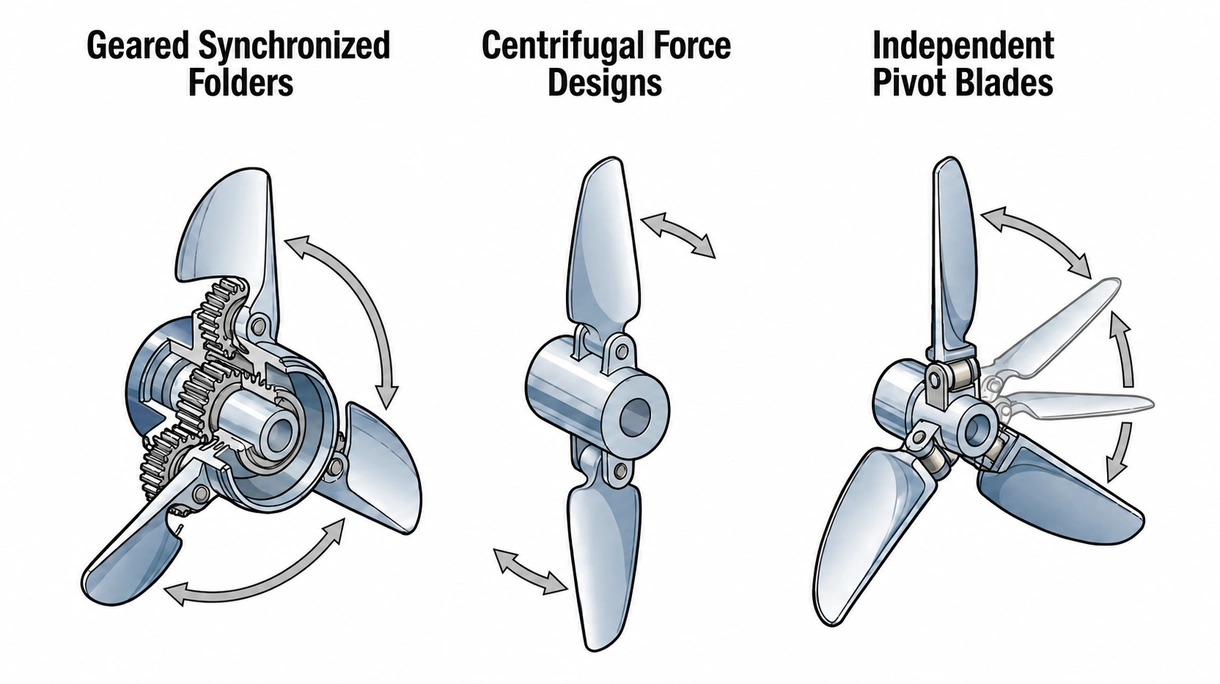
Geared Synchronized Folders
Synchronized systems utilize internal teeth to ensure blades open simultaneously, providing superior balance compared to centrifugal-only designs used on smaller vessels. These offer high reliability and consistent thrust but carry higher manufacturing costs and require strict maintenance of the internal gear mechanism.
Centrifugal Force Designs
Simplified pivot mechanisms rely on rotational inertia to deploy blades, offering a lighter alternative for smaller sailing fleets and coastal cruisers. They are cost-effective and easy to service though they lack the reverse-gear bite and synchronization precision of advanced geared alternatives.
Independent Pivot Blades
Low-friction hinges allow blades to fold individually based on water flow, reducing drag to the absolute minimum for high-performance racing. While providing the lowest drag coefficient, they risk uneven deployment and increased vibration, requiring expert calibration and frequent underwater inspections.
6 expert tips
Prioritize nickel-aluminum-bronze alloys to ensure structural resilience against cavitation and galvanic corrosion in varied maritime environments and temperatures.
Evaluate the shaft diameter and taper compatibility to prevent installation delays during scheduled shipyard maintenance periods or vessel retrofitting.
Select three-blade configurations for larger displacement hulls to provide necessary surface area for effective thrust in heavy sea states.
Assess the availability of replaceable sacrificial anodes to protect the hub assembly from accelerated electrolytic damage in crowded marinas.
Calculate the specific pitch requirements based on engine power curves to maximize fuel efficiency and prevent thermal engine overloading. Always verify the technical certification to ensure compliance with local building safety standards and long-term durability.
Innovations and Trends
Reduce biofouling adhesion to maintain peak efficiency levels and lower underwater cleaning frequencies for commercial fleet operators.
Utilizing carbon-reinforced polymers reduces rotational mass, improving engine response times and decreasing overall shaft vibration levels.
Integrated sensors track blade deployment cycles to predict mechanical fatigue, optimizing maintenance schedules for global charter fleet management.
New manufacturing processes reduce carbon footprints, aligning with EU maritime sustainability directives and upcoming North American environmental standards.
*Prices are pre-tax. They exclude delivery charges and customs duties and do not include additional charges for installation or activation options. Prices are indicative only and may vary by country, with changes to the cost of raw materials and exchange rates.
About NauticExpo
NauticExpo is a marketplace that offers B2B players a complete experience, from product sourcing to purchase. NauticExpo is an entity of VirtualExpo Group.
Are you a buyer?
Are you a supplier?