
- Home page
- buying guide
- inflatable boat
inflatable boat
inflatable boat: A technical guide
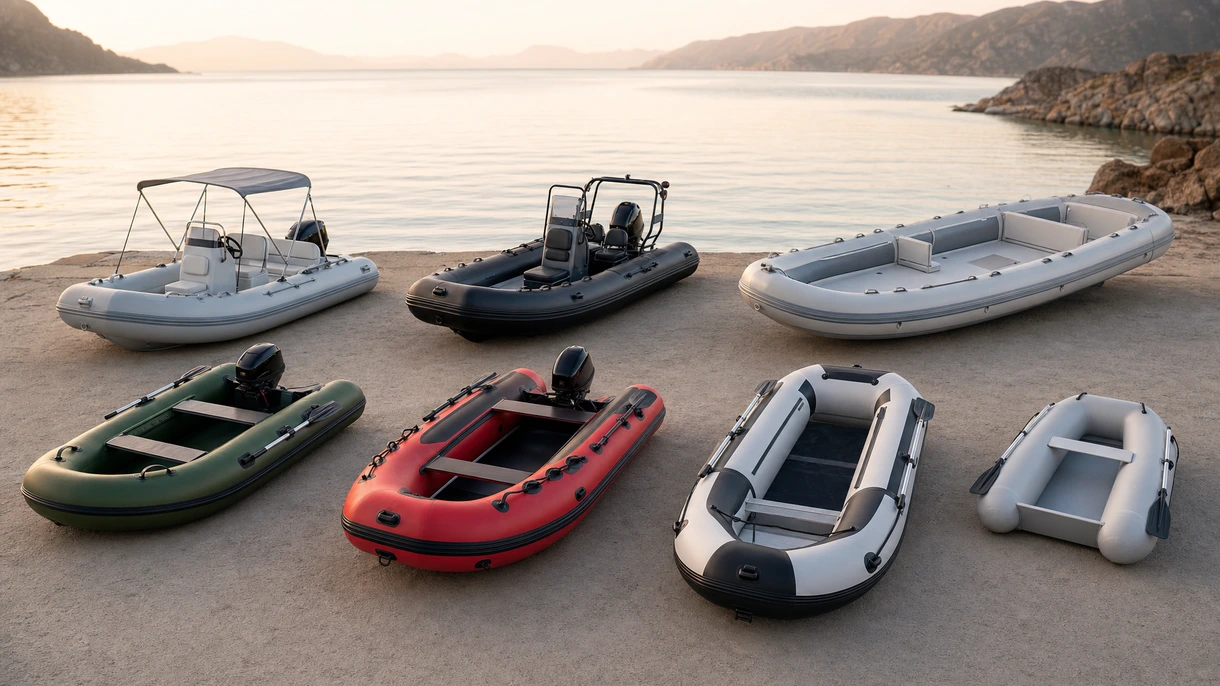
4 Criteria to choose your inflatable boat
Hypalon Fabric Durability
High UV and chemical resistance is essential for professional fleet longevity in Mediterranean and Caribbean tropical maritime environments.
Multi-Chamber Pressure Integrity
Redundant buoyancy compartments ensure vessel stability and crew safety during punctures during offshore transfers or technical harbor operations.
Deck Load Capacity
Precise payload ratios allow shipyards to optimize tender weights while maintaining operational efficiency for heavy marine equipment.
Engine Integration Compatibility
Strategic alignment between transom reinforcement and outboard torque specifications prevents structural fatigue during high-speed nautical interception or towing.
Available technologies and advantages
Rigid Inflatable Boats
Combining deep hulls with inflatable collars, these vessels offer superior hydrodynamics and stability compared to fully soft-bottomed platforms in rough seas.
Rigid Inflatable Boats
These platforms provide high-speed performance and load capacity but require significant deck space and specialized maintenance for hull repairs.
Foldable Inflatable Boats
Utilizing interlocking floorboards and pressurized keels, these units maximize storage efficiency on mother ships without sacrificing essential hull rigidity.
Foldable Inflatable Boats
Foldable designs offer lower weight and rapid deployment but lack the offshore tracking capabilities and impact resistance of fiberglass-hulled vessels.
6 expert tips
should be prioritized to ensure compliance with international maritime safety standards and protect long-term commercial asset value.
tubes must be selected to withstand extreme UV exposure and chemical abrasion during intensive daily commercial port operations.
costs should be evaluated by factoring in tube replacement accessibility and localized technical support for specific valve systems.
reinforcement specifications must be verified against maximum outboard weight ratings to prevent structural stress during high-speed transit.
protocols should be audited to ensure thermal bonding or cold-glue seam integrity matches specific regional climate temperature fluctuations. Always verify the technical certification to ensure compliance with local building safety standards and long-term durability.
Innovations and Trends
Adoption of thermoplastic polyurethane reduces environmental impact while offering superior puncture resistance compared to traditional polymer or rubberized materials.
New hull designs specifically reduce hydrodynamic drag to extend the operational range of integrated electric outboard motor systems.
Implementation of modular sensor arrays allows inflatable tenders to perform automated harbor patrolling and ship-to-shore logistics tasks safely.
Digital sensors now provide real-time tube pressure data to fleet managers to prevent overpressure damage from thermal expansion.
*Prices are pre-tax. They exclude delivery charges and customs duties and do not include additional charges for installation or activation options. Prices are indicative only and may vary by country, with changes to the cost of raw materials and exchange rates.
About NauticExpo
NauticExpo is a marketplace that offers B2B players a complete experience, from product sourcing to purchase. NauticExpo is an entity of VirtualExpo Group.
Are you a buyer?
Are you a supplier?