
- Home page
- buying guide
- recreational sailing dinghy
recreational sailing dinghy
recreational sailing dinghy: A technical guide

4 Criteria to choose your recreational sailing dinghy
Hull material durability
Resilience against frequent beaching and UV degradation ensures long-term operational viability for sailing schools and fleet rental operators.
Rigging simplicity efficiency
Simplified mast and sail configurations reduce rigging time and minimize technical failure risks for inexperienced or student sailors.
Volume displacement ratio
Proper buoyancy distribution ensures stability during maneuvers while maintaining high performance characteristics for diverse sailor weight ranges.
Life-cycle maintenance costs
Standardized hardware and repairable materials decrease long-term overhead for organizations managing large volumes of multi-purpose recreational small craft.
Available technologies and advantages
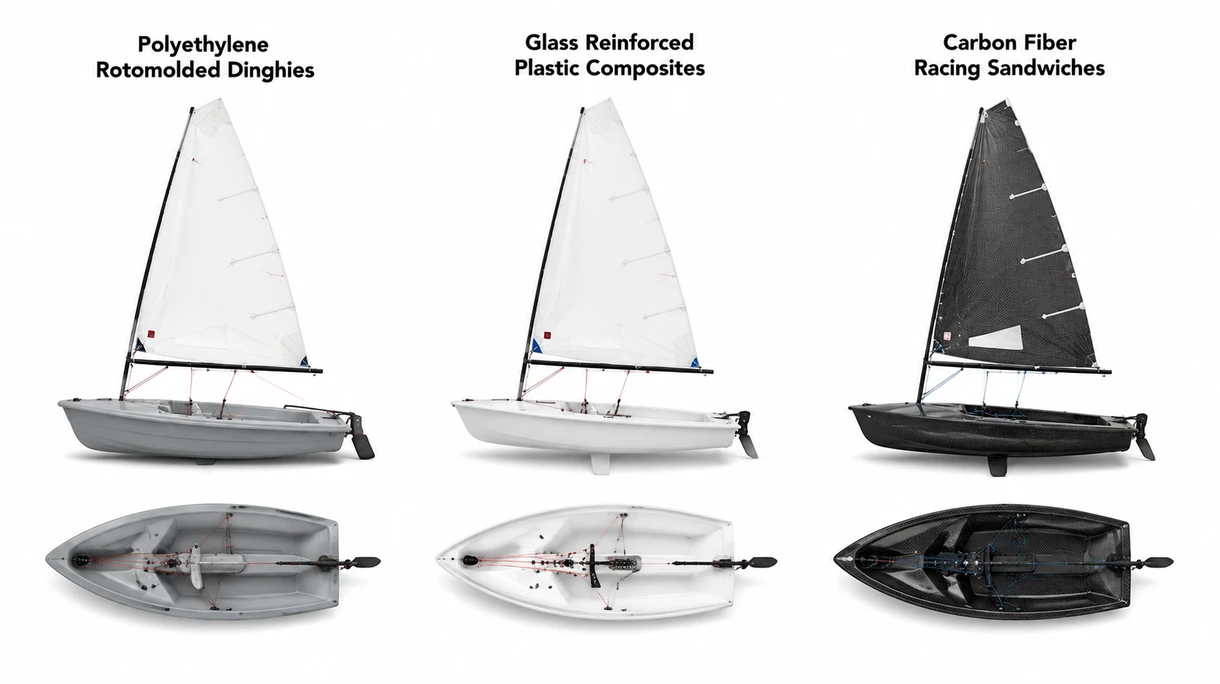
Polyethylene Rotomolded Dinghies
Rotomolding creates seamless hulls resistant to impact and abrasion, which is ideal for high-traffic training centers or rugged rocky shoreline environments. Advantages: indestructible and cost-effective. Limitations: heavier than composites. Trade-off: extreme durability over peak speed.
Glass Reinforced Plastic Composites
Hand-laid glass-reinforced plastic offers superior stiffness-to-weight ratios, allowing for refined hull shapes and significantly higher racing performance during professional training. Advantages: speed and aesthetics. Limitations: osmotic blistering risk. Trade-off: high performance over impact ruggedness.
Carbon Fiber Racing Sandwiches
Vacuum-infused carbon fiber provides ultimate rigidity and lightness for foiling or racing applications demanding extreme precision and elite nautical speed. Advantages: unmatched performance metrics. Limitations: high cost and fragility. Trade-off: elite speed over general affordability.
6 expert tips
Prioritize rotomolded polyethylene hulls for high-turnover rental fleets to minimize seasonal repair costs and maximize asset operational uptime.
Evaluate the availability of standardized replacement rigging components to ensure rapid maintenance during peak summer sailing school sessions.
Verify that hardware mounting points are reinforced with backing plates to prevent stress fractures during heavy structural loading.
Select versatile sail plans that accommodate different wind ranges to extend the daily operational window for student training.
Assess stackability and storage footprint efficiency to optimize precious boatyard space during the off-season winter storage period.
Always verify the technical certification to ensure compliance with local maritime safety standards and long-term durability.
Innovations and Trends
Foiling attachments for recreational hulls significantly increase top speeds and provide a modern high-tech appeal for new sailors.
Fully recyclable resins allow shipyards to meet circular economy requirements while maintaining structural integrity for heavy nautical use.
Nesting geometry reduces logistics costs for international distributors and optimizes storage space in restricted urban marina environments.
Integrated wireless sensors provide real-time mast stress data to prevent rig failure and assist instructors in remote coaching.
*Prices are pre-tax. They exclude delivery charges and customs duties and do not include additional charges for installation or activation options. Prices are indicative only and may vary by country, with changes to the cost of raw materials and exchange rates.
About NauticExpo
NauticExpo is a marketplace that offers B2B players a complete experience, from product sourcing to purchase. NauticExpo is an entity of VirtualExpo Group.
Are you a buyer?
Are you a supplier?