
- Home page
- buying guide
- sport catamaran
sport catamaran
sport catamaran: A technical guide
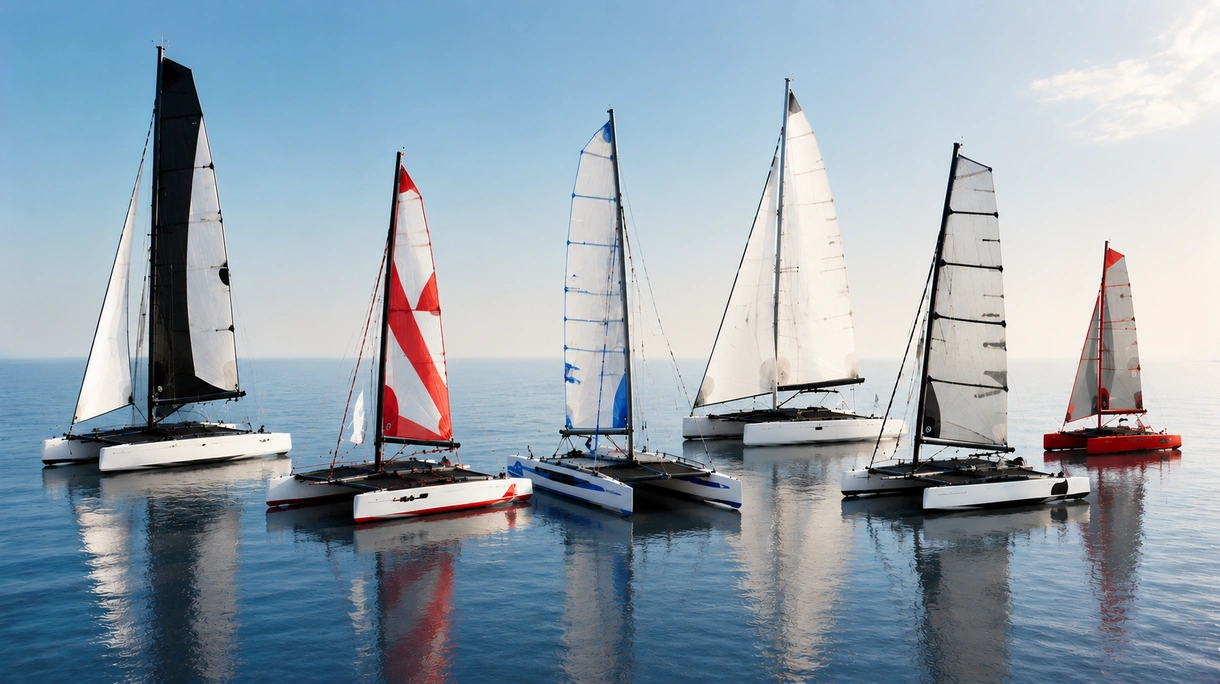
4 Criteria to choose your sport catamaran
Power weight ratio optimization
Critical for achieving target speeds while maintaining structural integrity under high dynamic loads in offshore racing conditions.
Structural composite stiffness
High modulus carbon fiber ensures minimal hull torsion, preserving sail shape and hydrofoil alignment during high speed maneuvers.
Hydrofoil lift efficiency
Advanced foil profiles reduce drag and provide early flight, directly impacting average velocity and race performance metrics.
Launch and recovery ergonomics
Efficient deck layouts and lightweight rigging systems minimize turnaround time and labor costs for professional racing syndicates.
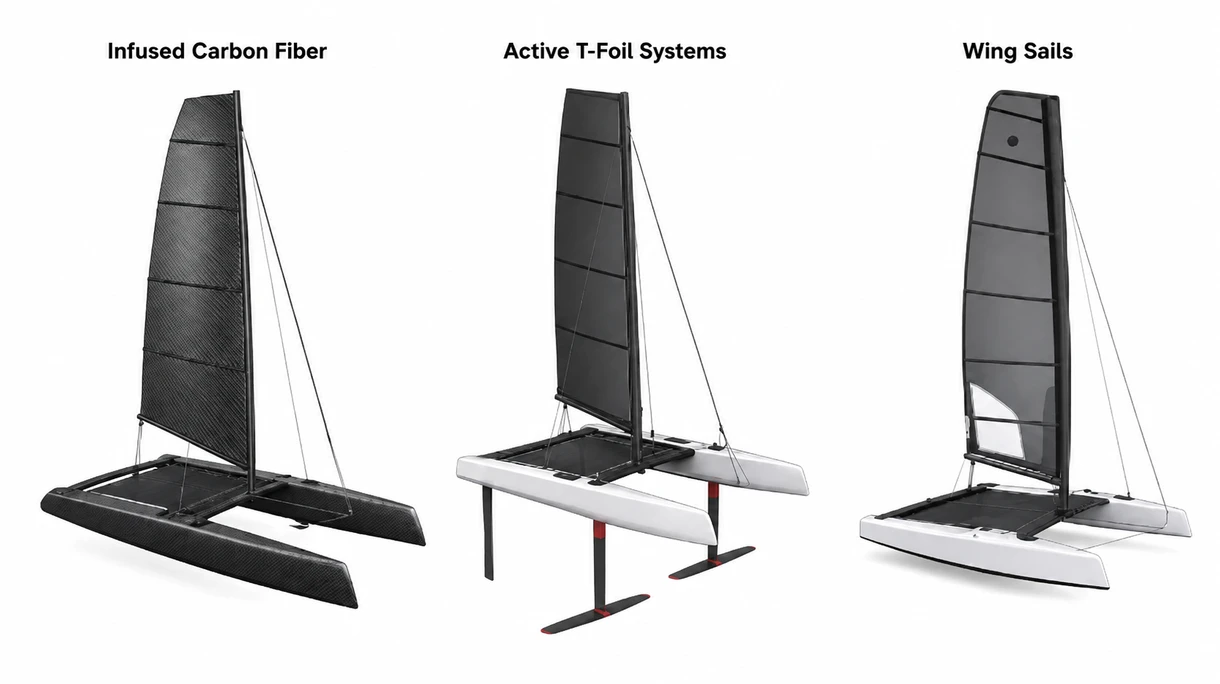
Available technologies and advantages
Infused Carbon Fiber
Vacuum infusion provides superior resin to fiber ratios compared to hand layup, maximizing structural rigidity while significantly reducing overall hull weight. This technology offers unmatched performance but requires precise environmental controls and higher initial material investment compared to glass.
Active T-Foil Systems
Automated foil adjustment systems utilize ultrasonic sensors to maintain flight height, offering greater stability than passive foil designs. While increasing complexity and maintenance requirements, they allow for sustained high speeds in varied sea states and conditions.
Rigid Wing Sails
Wing sails offer higher lift to drag ratios than traditional soft sails, significantly improving upwind performance and speed efficiency. The operational trade off involves complex stowage requirements and the necessity for specialized shore crews during rigging and de rigging.
6 expert tips
Prioritize carbon fiber hulls with ultrasound inspection records to ensure structural integrity and long term resale value for fleet operators.
Mandate comprehensive sea trials in varied sea states to validate hydrofoil transition speeds and peak performance under load.
Review the availability of specialized shipyard technicians within your primary operating region to minimize downtime for technical repairs.
Analyze the total cost of ownership including specialized rigging maintenance and annual foil servicing requirements before final acquisition.
Verify that all deck hardware meets minimum safe working load specifications for professional racing to prevent catastrophic equipment failure.
Always verify the technical certification to ensure compliance with local building safety standards and long term durability.
Innovations and Trends
Implementation of flax fiber and bio based resins reduces the environmental footprint while maintaining competitive structural strength characteristics.
Real time structural stress monitoring via embedded sensors provides predictive maintenance data to reduce operational downtime and repair costs.
New foil geometries allow for full retraction, enabling access to shallower marinas and simplified dry docking for transport.
Transitioning to thermoplastic materials allows for end of life hull recycling, aligning with new European maritime circular economy regulations.
*Prices are pre-tax. They exclude delivery charges and customs duties and do not include additional charges for installation or activation options. Prices are indicative only and may vary by country, with changes to the cost of raw materials and exchange rates.
About NauticExpo
NauticExpo is a marketplace that offers B2B players a complete experience, from product sourcing to purchase. NauticExpo is an entity of VirtualExpo Group.
Are you a buyer?
Are you a supplier?