
- Home page
- buying guide
- 2-cabin express cruiser
2-cabin express cruiser
2-cabin express cruiser: A technical guide
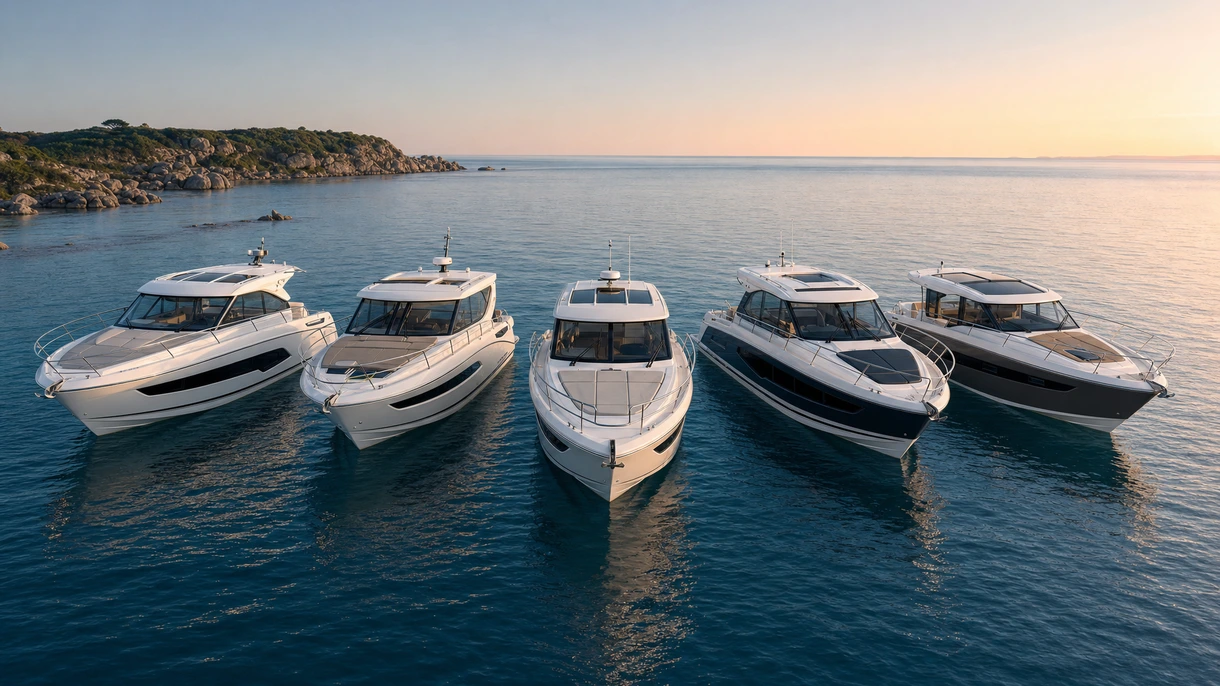
4 Criteria to choose your 2-cabin express cruiser
Optimized hull hydrodynamic efficiency
Efficient hull forms reduce fuel consumption and extend operational range during high-speed coastal transits for private and commercial use.
Dual cabin spatial ergonomics
Maximizing volume within two separate cabins ensures crew privacy and guest comfort during extended multi-day offshore charter operations.
Propulsion system operational reliability
High-performance propulsion systems must minimize downtime to maintain tight seasonal schedules and reduce lifecycle total maintenance costs.
Market brand resale value
Selecting established builders ensures better long-term capital recovery and easier fleet liquidation in competitive international brokerage markets.
Available technologies and advantages
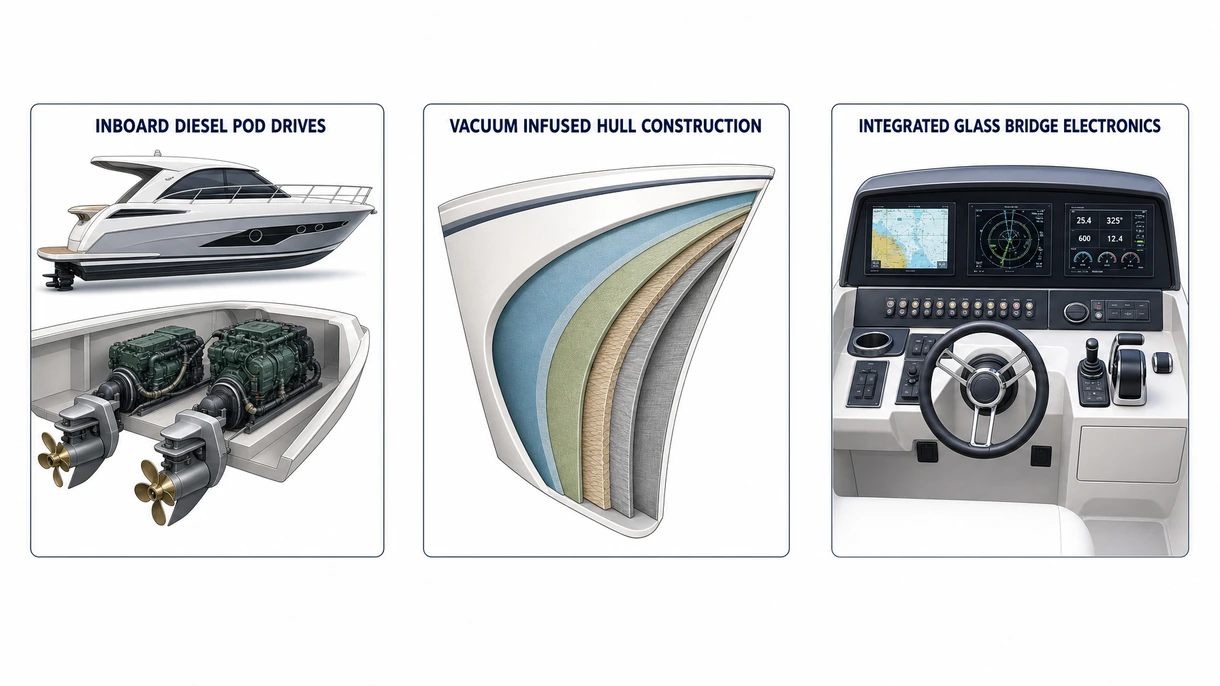
Inboard diesel pod drives
Pod drives offer superior maneuverability and fuel efficiency compared to traditional shafts, though they require higher specialized maintenance and proprietary spare parts. Advantages include precision joystick docking and increased internal volume, but trade-offs involve higher initial acquisition costs and mechanical complexity.
Vacuum infused hull construction
Vacuum infusion techniques result in lighter, stronger structures than hand-laid fiberglass, providing significantly better power-to-weight ratios and structural hull consistency. Enhanced durability reduces long-term maintenance needs, yet the process increases initial production costs and requires highly skilled shipyard labor.
Integrated glass bridge electronics
Integrated glass bridge systems consolidate navigation and engine data more effectively than modular gauges, enhancing situational awareness for professional vessel operators. Simplified interfaces reduce crew training time, although complete reliance on digital screens presents risks during total electrical power failure.
6 expert tips
Prioritize vessels featuring dual-source power redundancy to ensure passenger safety during critical engine failures in offshore environments.
Evaluate the accessibility of internal mechanical systems to decrease long-term labor costs during routine service and winterization procedures.
Select hull designs optimized for fuel efficiency at cruising speeds to maximize operational profit margins for charter fleets.
Confirm that helm electronics integrate seamlessly with existing fleet management software for real-time tracking and maintenance diagnostics.
Audit the insulation quality of engine compartments to maintain high levels of on-board guest comfort during high-speed transits.
Always verify the technical certification to ensure compliance with local building safety standards and long-term durability.
Innovations and Trends
Zero-emission propulsion systems are emerging to meet strict environmental regulations in protected European marine zones and harbors.
Retractable hydrofoils reduce drag significantly, allowing cruisers to maintain higher speeds while decreasing fuel consumption by thirty percent.
Advanced sensor arrays automate berthing maneuvers, reducing the risk of hull damage and lowering crew training requirements.
New recyclable resins improve the environmental footprint of boat building while maintaining structural integrity for offshore conditions.
*Prices are pre-tax. They exclude delivery charges and customs duties and do not include additional charges for installation or activation options. Prices are indicative only and may vary by country, with changes to the cost of raw materials and exchange rates.
About NauticExpo
NauticExpo is a marketplace that offers B2B players a complete experience, from product sourcing to purchase. NauticExpo is an entity of VirtualExpo Group.
Are you a buyer?
Are you a supplier?