
- Home page
- buying guide
- bay boat
bay boat
bay boat: A technical guide
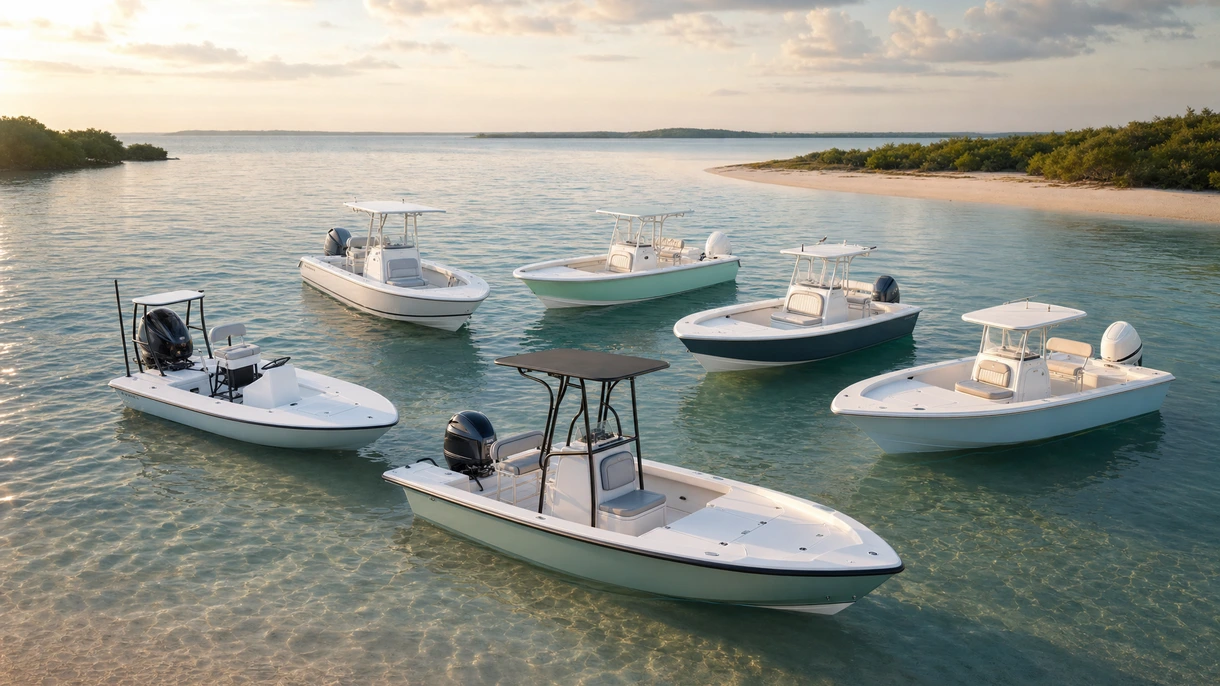
4 Criteria to choose your bay boat
Shallow Water Draft Performance
Hull design must facilitate navigation in minimal depths while maintaining stability during high-speed transit across demanding coastal basins.
Hull Structural Deadrise Optimization
Optimal deadrise angles balance shallow water capabilities with the structural rigidity required for moderate offshore chop during coastal transits.
Deck Layout Operational Efficiency
Layouts must maximize usable surface area for professional gear while ensuring drainage systems handle heavy wash-down and extreme weather.
Propulsion Power Weight Ratio
High-horsepower outboard systems must provide significant power-to-weight ratios to ensure rapid deployment and fuel efficiency for long-range fleet operations.
Available technologies and advantages
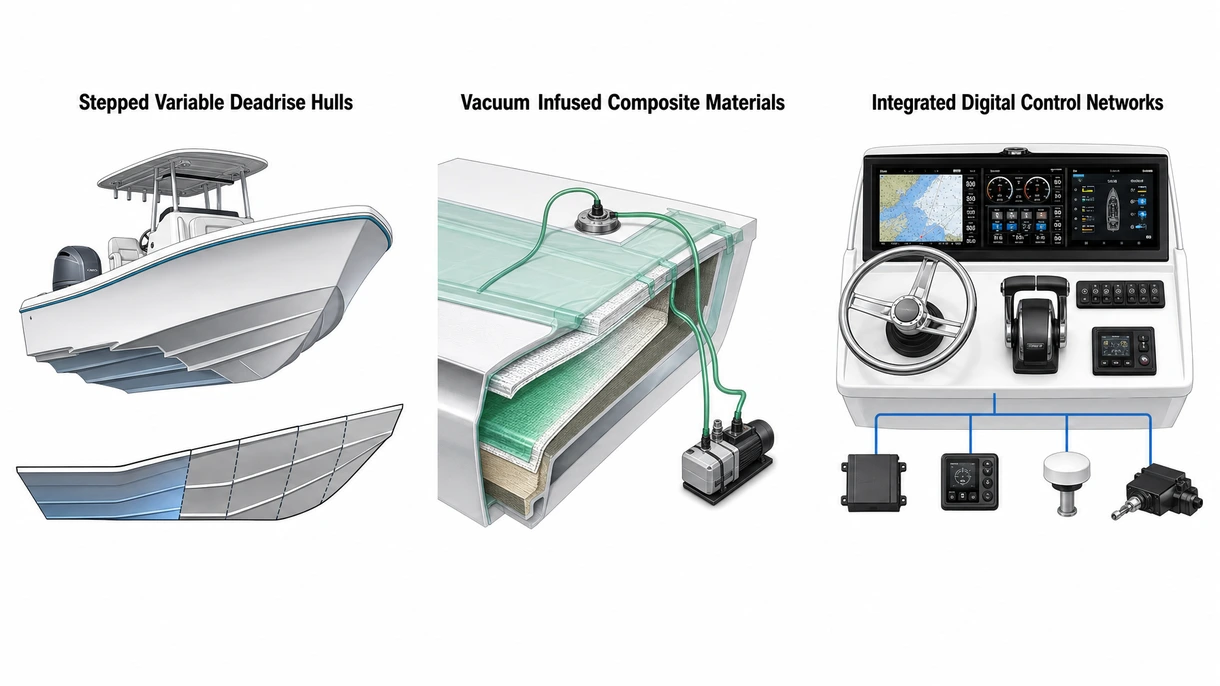
Stepped Variable Deadrise Hulls
Variable deadrise hulls provide superior lift and reduced drag compared to traditional flat-bottom designs used in older coastal vessels. This design optimizes fuel economy significantly. The main advantage is improved speed, but the trade-off involves limited stability at rest and a requirement for active trim management during operation.
Vacuum Infused Composite Materials
Vacuum infusion creates a higher glass-to-resin ratio than hand-laid fiberglass, resulting in a lighter and significantly stronger hull structure for professional use. Enhanced durability and weight savings improve performance, yet higher initial production costs and specialized repair requirements present clear operational financial constraints.
Integrated Digital Control Networks
Integrated networking replaces traditional fuse panels with centralized digital control for all onboard pumps, lighting, and specialized navigation equipment for fleet monitoring. Digital systems simplify maintenance through remote diagnostics, though they require specialized technical staff for complex electrical troubleshooting and expensive software updates.
6 expert tips
Prioritize hulls with vacuum-infused lamination to ensure maximum structural integrity and weight reduction for long-term fleet fuel efficiency.
Select propulsion systems with integrated digital steering to improve vessel maneuverability and reduce maintenance overhead for professional marine operators.
Specify self-bailing cockpits with oversized scuppers to maintain safety and operational readiness during heavy sea states or wash-down procedures.
Analyze the total cost of ownership by evaluating hull warranty terms alongside local engine service network availability and performance.
Ensure helm ergonomics support multi-screen glass cockpit displays to enhance situational awareness during complex coastal navigation and professional missions.
Always verify the technical certification to ensure compliance with local building safety standards and long-term durability for intense usage.
Innovations and Trends
Hybrid electric outboards provide silent low-speed maneuvering in sensitive coastal zones while meeting tightening environmental regulations for maritime fleets.
Advanced carbon fiber reinforcements reduce hull weight significantly, increasing top speeds and overall operational range capabilities for professional users.
Autonomous shallow-water sonar mapping integration allows operators to navigate shifting coastal sandbars with precision and reduced risk of grounding.
Circular economy resin systems are entering production cycles to meet future European decommissioning mandates and reduce environmental impact footprints.
*Prices are pre-tax. They exclude delivery charges and customs duties and do not include additional charges for installation or activation options. Prices are indicative only and may vary by country, with changes to the cost of raw materials and exchange rates.
About NauticExpo
NauticExpo is a marketplace that offers B2B players a complete experience, from product sourcing to purchase. NauticExpo is an entity of VirtualExpo Group.
Are you a buyer?
Are you a supplier?