
- Home page
- buying guide
- pilot boat
pilot boat
pilot boat: A technical guide
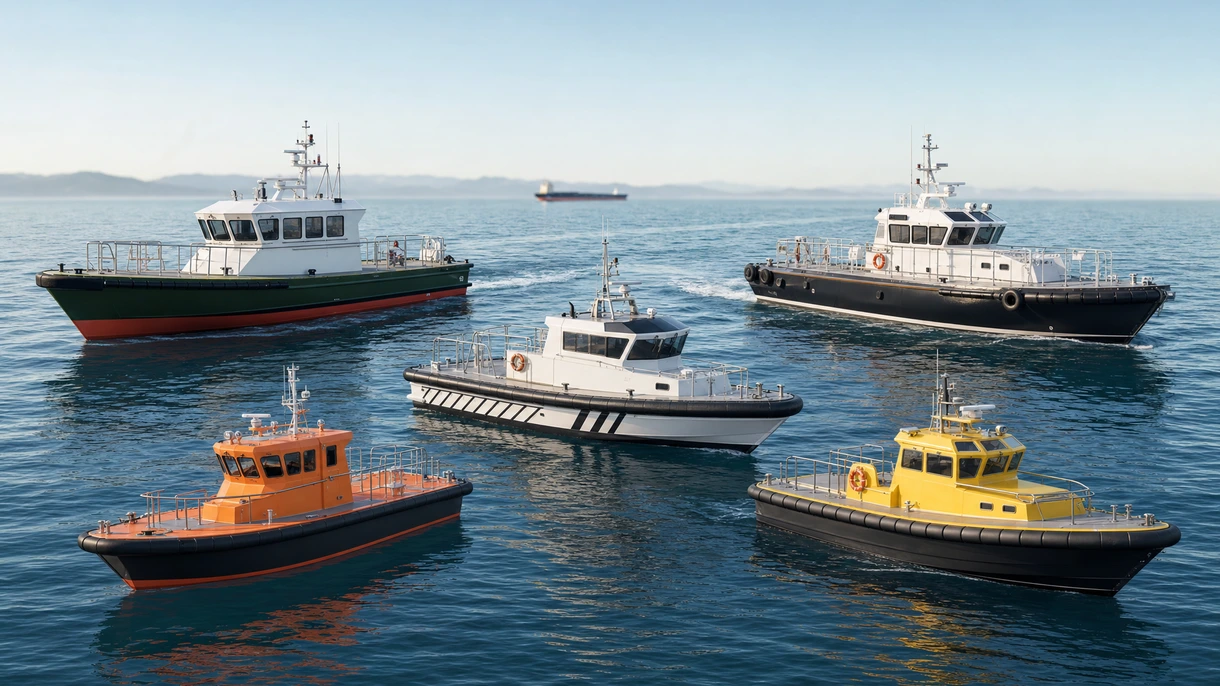
4 Criteria to choose your pilot boat
Hull Seakeeping and Stability
Critical for safe pilot boarding operations in high sea states while maintaining a stable platform during vessel approaches.
Impact Resistance and Fendering
Heavy-duty fender systems protect the hull structural integrity during repeated high-energy contact with commercial ships in rough waters.
Propulsion Reliability and Redundancy
Twin-engine configurations ensure maneuvering safety and mission continuity if one powertrain fails during hazardous ship-to-ship transfers at sea.
Ergonomic Deck Safety Design
Wide side decks and secure handrails minimize falls overboard, providing safe passage for pilots during boarding and disembarking.
Available technologies and advantages
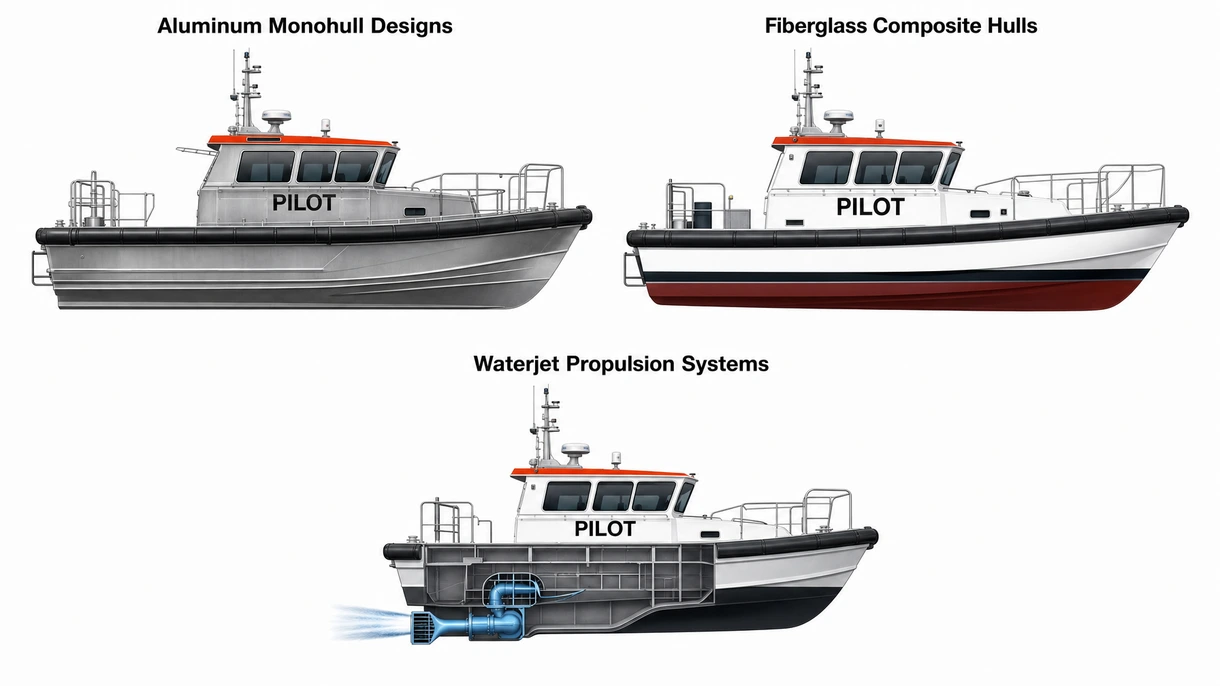
Aluminum Monohull Designs
These vessels provide lightweight high-speed performance and corrosion resistance, though they offer less deck space than catamarans during operations. Advantages include durability; limitations include noise.
Fiberglass Composite Hulls
These hulls offer superior vibration damping and hull smoothness but require intensive maintenance for impact damage in harsh environments. Advantages involve weight; trade-offs involve fragility.
Waterjet Propulsion Systems
These systems allow shallow draft operations and precise station-keeping without exposed propellers, though they lose efficiency at lower cruising speeds. Advantages include safety; limitations involve maintenance.
6 expert tips
Verify the technical certification to ensure compliance with local building safety standards and long-term durability of the hull structure.
Specify high-visibility bridge glazing with overhead windows to maintain contact during close-quarters boarding maneuvers under flared ship hulls.
Prioritize shock-mitigating seating to reduce crew fatigue and prevent long-term musculoskeletal injuries during sustained high-speed transits in rough conditions.
Select heavy-duty polyurethane fendering over rubber alternatives to maximize energy absorption and reduce structural stress on the hull.
Integrate a dedicated rescue platform at the transom to ensure rapid recovery of personnel in man-overboard emergency scenarios.
Implement integrated monitoring systems for real-time engine diagnostics to reduce unplanned downtime and optimize maintenance schedules for operators.
Innovations and Trends
Hybrid-electric propulsion systems reduce fuel consumption and port emissions while complying with upcoming Tier IV environmental regulatory standards.
Foil-assisted hull designs increase vessel speed and reduce vertical accelerations, improving crew comfort and operational weather windows.
Self-righting hull geometry ensures the vessel returns to an upright position after capsize, dramatically increasing crew survival probabilities.
Advanced thermal imaging integration enhances nighttime navigation and pilot identification, reducing collision risks during hazardous low-visibility transfer operations.
*Prices are pre-tax. They exclude delivery charges and customs duties and do not include additional charges for installation or activation options. Prices are indicative only and may vary by country, with changes to the cost of raw materials and exchange rates.
About NauticExpo
NauticExpo is a marketplace that offers B2B players a complete experience, from product sourcing to purchase. NauticExpo is an entity of VirtualExpo Group.
Are you a buyer?
Are you a supplier?