


{{product.productLabel}} {{product.model}}
{{#if product.featureValues}}{{product.productPrice.formattedPrice}} {{#if product.productPrice.priceType === "PRICE_RANGE" }} - {{product.productPrice.formattedPriceMax}} {{/if}}
{{#each product.specData:i}}
{{name}}: {{value}}
{{#i!=(product.specData.length-1)}}
{{/end}}
{{/each}}
{{{product.idpText}}}
{{product.productLabel}} {{product.model}}
{{#if product.featureValues}}{{product.productPrice.formattedPrice}} {{#if product.productPrice.priceType === "PRICE_RANGE" }} - {{product.productPrice.formattedPriceMax}} {{/if}}
{{#each product.specData:i}}
{{name}}: {{value}}
{{#i!=(product.specData.length-1)}}
{{/end}}
{{/each}}
{{{product.idpText}}}
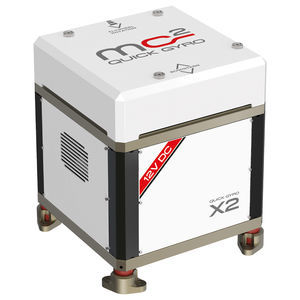

Rated speed: 4,800 rpm
Power output: 700, 400, 650 W
... MC2 Quick Gyro stabilizers can reduce boat roll up to 95%, are very effective at speed as well as at anchor. The range is conceived to meet any kind of requirement, ranging from the smallest boat (day ...
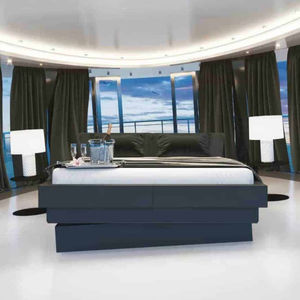

... Available in all sizes, and will be customized to match your preferences, for refit or for newbuildings. Even for Racing Yachts or Sailing yachts – neutralizing 40 degree roll or more! ...
Stable Onboard
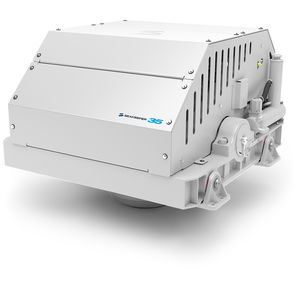

Rated speed: 5,150 rpm
Spool up time to rated RPM: 76 min
Spool up time to stabilization: 58 min
... Stabilization Small & Lightweight Seakeeper weighs only a small fraction of the boat's displacement Eliminate Boat Roll Eliminate up to 95% of boat roll and the danger, fatigue, anxiety, and seasickness that go ...
SeaKeeper
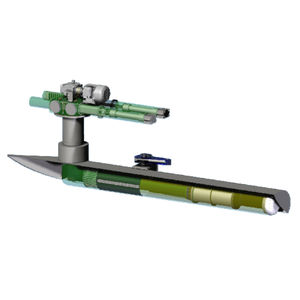

... A stabilizer hull unit is the energy transfer device in Quantum’s rotor stabilizer systems. The hull unit is installed in the turn of the bilge with its main shaft penetrating through the vessel’s hull to connect to ...
Quantum Marine Engineering
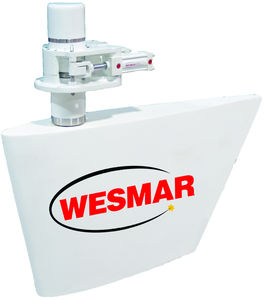

... engineers are constantly adding to the features of its products and the DSP5000 Wave Smart Stabilizer series is a giant step forward for digital roll fin stabilizer systems. The new DSP500 uses a new integrated processor ...
Wesmar

Rated speed: max 9500.0 rpm
Torque output: 15,500 Nm
Spool up time to rated RPM: 55 min
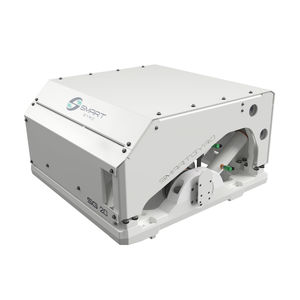
... Smartgyro SG20 is the gyro stabilizer of choice for boats from 45-55 ft. Ideal for both new builds and refit installations, the stabilizer can be fully serviced on-board the vessel without the need to ...
Smartgyro S.r.l.
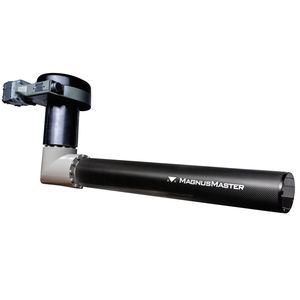

... cruising and semi-displacement yachts up to 30 metres You cannot compare the MagnusMaster with other conventional stabilisation systems due to its technical innovation and better results. This latest generation of rotor stabilisers ...
DMS HOLLAND

Rated speed: 9,900 rpm
Torque output: 2,000 Nm
Spool up time to stabilization: 20 min
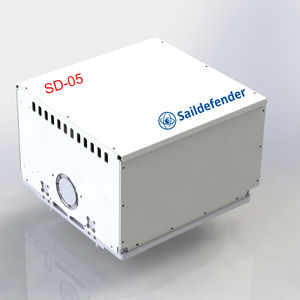
... Anti-roll Gyro Stabilizer For yachts, survey/pilot/research/working ships/vessels For ships/vessels of several thousand tons 6000 Hours Maintenance-free Time Saildefender eliminates up to 95% of boat ...
Saildefender
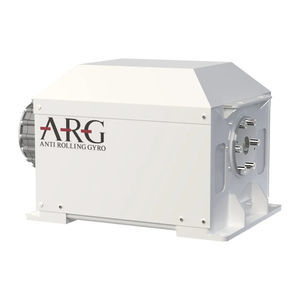

Rated speed: max 4900.0 rpm
Torque output: 4,500 Nm
Spool up time to rated RPM: 30 min
... The newest model in the ARG line-up. ARG's high durability, easy maintenance and simple operation are all included in a smaller footprint. Runs on 12V/24V batteries. Power consumption can be lowered by switching to "Eco-mode". The smallest size ...
TOHMEI Industries Co., Ltd.
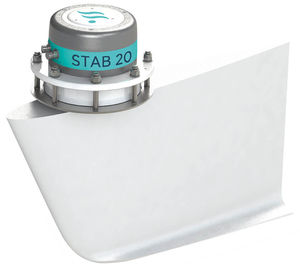

Input voltage: 200, 240 V
Length: 996 mm
Width: 160 mm
... STAB 20 is the smallest electric fin stabilizer on the market. Ideal for yachts between 12 m (40 ft) and 18 m (60 ft), thanks to its compact size and low power absorption. A game changer for your yacht! ...
Waveless
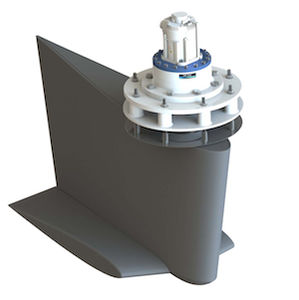

... powered by our user friendly new TRACLink control system. The eTRAC Electric Stabilizer offers an AC electric alternative to hydraulic stabilizers. TRAC’s electric stabilizer actuators are ideally ...
ABT-TRAC
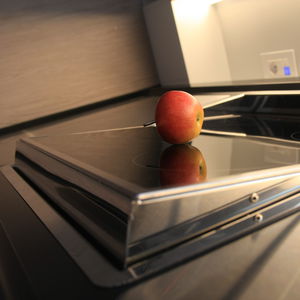

... Flat is the only motorized gimbal stabilizer in the world: it keeps the cooktop horizontal with heeling angle up to 25° (30°- 35° optional). Its compact design e the flush-mount installation make it easily embeddable with the design ...
Balance Srl
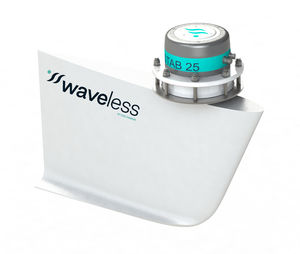

... the leader in stabilization, now available for your yacht. Waveless STAB is the new generation of electric fin stabilizers: fast, ultra compact, low noise, low power absorption, top quality. For yacht ...
CMC Marine
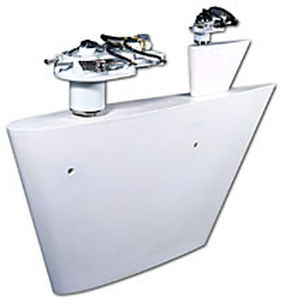

... aggravating the vessel’s natural tendency to roll. A rolling boat does not operate at maximum efficiency and over a long course, steers a zigzag track. With the advanced NAIAD active roll stabilizer system, a vessel ...
NAIAD DYNAMICS
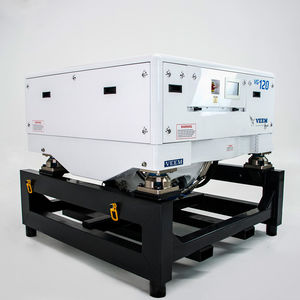

... The VEEM Gyro 120SD is the most advanced and powerful stabilizer available for smaller super yachts and small commercial work boats. As a single unit installation, it is suitable for vessels with displacement between ...
VEEM Propellers
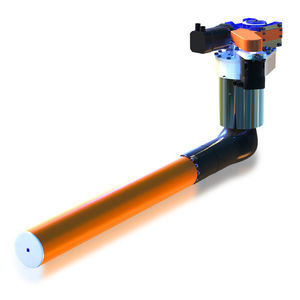

... The RotorSwing yacht stabilizer has been developed by RotorSwing Holland. The system workings are based on the Magnus effect, and are suitable for yachts up to 35 meters in length. Many yacht ...
RotorSwing Holland B.V.
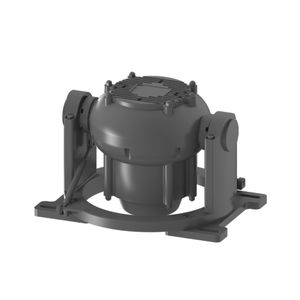

Rated speed: 8,000 rpm
Torque output: 600 Nm
Spool up time to rated RPM: 14.7 min
... Orbit Gyro is a small-sized anti-roll gyro stabilizer for small motorboat & yacht manufacturers. ...
Orbit Gyro
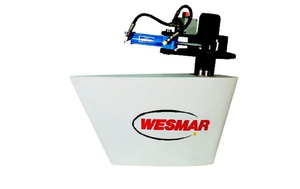
A yacht stabilizer system consists of equipment designed to reduce the vessel's rolling.
ApplicationsToday, almost every luxury yacht features such a system. NauticExpo defines yachts as craft over 15 meters long.
TechnologiesA stabilizer functions in one of two ways:
- The fin system uses a horizontal blade extending perpendicularly from the hull. A computer adjusts its position in response to vessel motion, the hydrodynamic effect countering rolling. Most can be retracted when not needed, for example once the boat reaches a certain speed.
- The Magnus effect system uses a rotating tube oriented perpendicularly to the hull. The tube's rotations damp rolling by creating a Magnus effect, a pressure difference between the upper and lower parts of the tube, much like imparting topspin to a tennis ball.
Stabilizers are usually driven by an electric or hydraulic motor. Energy consumption is high, requiring use of a generator set.
The yacht's architecture and especially its weight will govern choice of system.
the best suppliers