


{{product.productLabel}} {{product.model}}
{{#if product.featureValues}}{{product.productPrice.formattedPrice}} {{#if product.productPrice.priceType === "PRICE_RANGE" }} - {{product.productPrice.formattedPriceMax}} {{/if}}
{{#each product.specData:i}}
{{name}}: {{value}}
{{#i!=(product.specData.length-1)}}
{{/end}}
{{/each}}
{{{product.idpText}}}
{{product.productLabel}} {{product.model}}
{{#if product.featureValues}}{{product.productPrice.formattedPrice}} {{#if product.productPrice.priceType === "PRICE_RANGE" }} - {{product.productPrice.formattedPriceMax}} {{/if}}
{{#each product.specData:i}}
{{name}}: {{value}}
{{#i!=(product.specData.length-1)}}
{{/end}}
{{/each}}
{{{product.idpText}}}
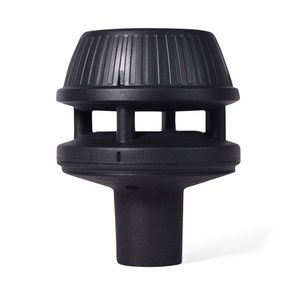

Power source: 24, 5 V
Overall length: 77 mm - 77 mm
Overall width: 77 mm - 77 mm
... anemometers designed for accurate wind measurement in harsh environments. Weighing only 170g, these compact wind sensors are equipped with Acu-Res technology as standard, enabling wind ...
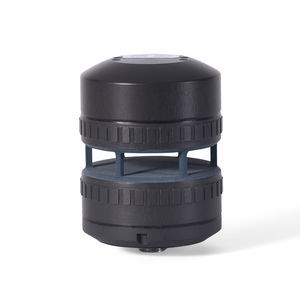
Power source: 9, 24 V
Overall length: 55 mm - 55 mm
Overall width: 55 mm - 55 mm
... operating down to -40C and throughout severe icing events.
The FT7 series
wind
sensors are subjected to over 30 independent environmental tests. These
sensors are highly resistant to corrosion, ...
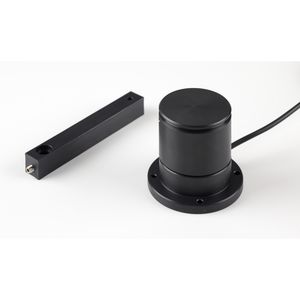

Power source: 10 V - 16 V
... and 100% reliability of the wind vane nke has developed this new waterproof sensor for the measurement of rotating masts and rudder angles. CHARACTERISTICS Consumption: 15mA Waterproof protection: ...
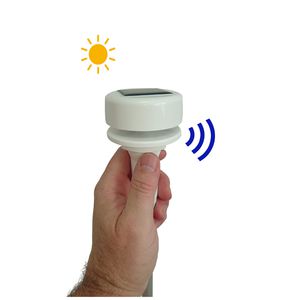

... Wireless ultrasonic wind vane-anemometer. This version is optimal for installations where cable routing is difficult. The CV7SF2 wireless wind sensor features a 16Hz wind ...
LCJ Capteurs
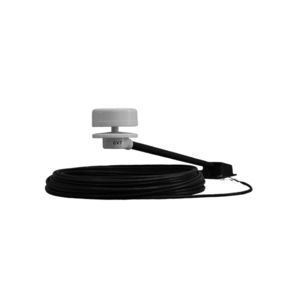
Power source: 12 V
... SERVER terminal 15 Measurement range: Wind speed: 0.15 to 40 m/s Wind angle: 0 to 359° Temperature: -15°C (without icing) to +55°C Measurement sensitivity: Wind speed: 0.15 m/s Wind ...
LCJ Capteurs

Power source: 12 V
... the CV7-C is an ultrasonic high speed wind vane- wind speed indicator. It is designed for offshore racing and operates twice as fast as the CV7 and CV7-V models. It is mounted on a carbon pole in order ...
LCJ Capteurs

Power source: 12 V
... HR-OEM ultrasonic wind sensor is designed for racing boats. The calculation of the wind speed and wind angle reaches 120 Hz with a 38400 baud transmission speed in NMEA0183-HS®. The ...
LCJ Capteurs
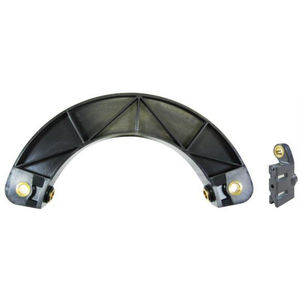
Power source: 12 V
... Combination of CV7 ultrasonic wind sensor and RM-CANBUS calculator – NMEA2000® interface for rotating mast, compatible with SMART position sensor. The CV7 ultrasonic wind sensor ...
LCJ Capteurs
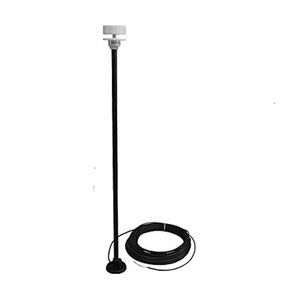
Power source: 12 V
... Combination of the CV7-C wind vane-anemometer for racing and the RM-CANBUS calculator – NMEA2000® interface for rotating mast, compatible with the SMART position sensor. Set of racing instrument that ...
LCJ Capteurs

Power source: 6 V - 14 V
... CV7SF2-WindyPlug is the ultrasonic wireless wind vane/anemometer which is working at all times of day and night, equipped with the WindyPlug interface. The CV7SF2-WindyPlug is the wireless ultrasonic wind ...
LCJ Capteurs

Power source: 9 V - 16 V
... old NEXUS NX2 / SILVA / FI30 wind sensor with the CV7-C and its integration with your existing system. Combined with the SIL option, the CV7-C wind sensor for racing can replace your ...
LCJ Capteurs
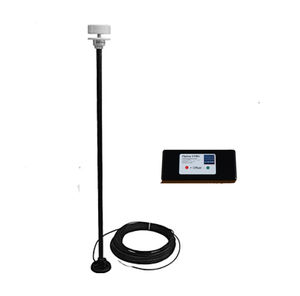
Power source: 9 V - 16 V
... long carbon arm enables the CV7-C sensor to measure wind far from interference from the mast and the sails. SPECIFICATIONS Cabling: 4 wires: – Blue: 0V Measurement range: Wind speed: 0.25 ...
LCJ Capteurs

Power source: 9 V - 16 V
... Pack that includes the CV7-C offshore racing wind sensor and the WindyPlug. The WindyPlug enables the wind sensor to be connected to your NMEA2000® network. The CV7-C is a high–speed ...
LCJ Capteurs
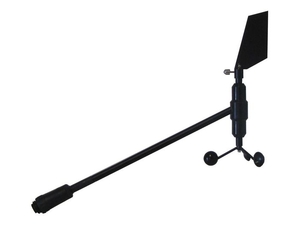
A wind vane transducer measures wind direction. Most are also anemometers, indicating wind speed, as well.
ApplicationsThese devices are indispensable for analyzing wind characteristics aboard a vessel. They are particularly useful when racing, since the boat's movement through the water creates an apparent wind, masking true wind speed and direction.
TechnologiesThere are both ultrasound and mechanical transducers. In the latter, the wind orients a vane, which transmits its position relative to north or with respect to the boat's heading, the lubber line. Most also have rotating cups to indicate wind speed. The moving parts make these devices more fragile than sonic sensors. Wireless models eliminate the cable between the transducer and the readout.
How to chooseWhile ultrasound technology is still relatively expensive, it avoids the use of exposed mechanical elements in a harsh environment and the inconvenient maintenance of mast-head units. Replacement sensors should be checked for compatibility with the existing system. Some sensors are designed to withstand extreme conditions.
the best suppliers