


{{product.productLabel}} {{product.model}}
{{#if product.featureValues}}{{product.productPrice.formattedPrice}} {{#if product.productPrice.priceType === "PRICE_RANGE" }} - {{product.productPrice.formattedPriceMax}} {{/if}}
{{#each product.specData:i}}
{{name}}: {{value}}
{{#i!=(product.specData.length-1)}}
{{/end}}
{{/each}}
{{{product.idpText}}}
{{product.productLabel}} {{product.model}}
{{#if product.featureValues}}{{product.productPrice.formattedPrice}} {{#if product.productPrice.priceType === "PRICE_RANGE" }} - {{product.productPrice.formattedPriceMax}} {{/if}}
{{#each product.specData:i}}
{{name}}: {{value}}
{{#i!=(product.specData.length-1)}}
{{/end}}
{{/each}}
{{{product.idpText}}}
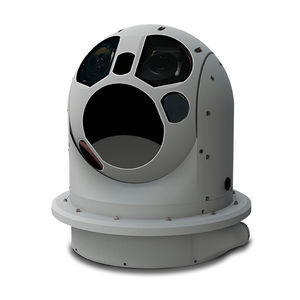

... that would otherwise reduce detection ability. Multiple-Tile, All Payloads View all payloads at once, including external video input from another system in the air, on the water or ground with multi-tile management options. New ...
FLIR Systems, Inc.
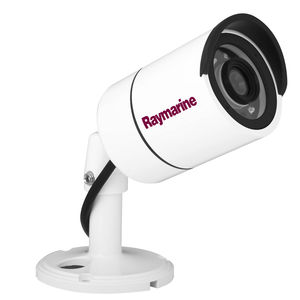

Height: 214 mm
Weight: 700 g
... CAM210 Day and Night IP Bullet Camera HIGH-DEFINITION MARINE CAMERA The CAM210 is a ruggedized network video camera for Axiom chartplotters. Featuring a high-definition image sensor ...


... Eaton’s Crouse-Hinds series HERNIS EX270 Ex Dome Camera Range offers high speed pan and tilt movement and endless rotation with minimal delay. Explosion-protected and compact in design, EX270 cameras are a great choice ...
Eaton


Field of view: 10 ° - 64 °
Focal length: 5 mm - 58 mm
Zoom: 12 unit
... indoor and outside. Similar to the zoom camera, all control data is over video. With four preset camera positions, this camera is helpful when maneuvring and during ship crane or dredging ...
Alphatron Marine
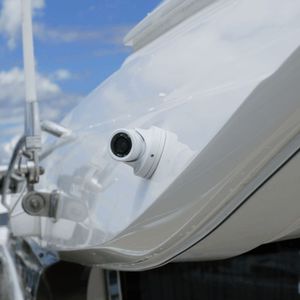

... low light conditions the camera switches from colour to monochrome. The size of the camera makes It ideal as a docking camera, back-up camera or engine room camera. ...
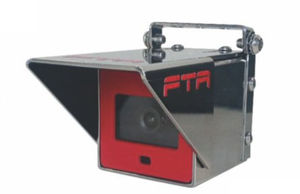

Field of view: 14 ° - 170 °
Height: 60 mm
Width: 60 mm
... - Coaxial camera (connection via coax, network cable, fiber optic or wireless) - Horizontal or vertical display without any technical manipulation - Ultra Low-Light Sony Starvis Sensor - 1 integrated IR laser led (up to 30m) - automatic ...
FTA B.V.
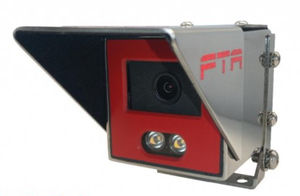
Field of view: 14 ° - 170 °
Height: 60 mm
Width: 60 mm
... steel full-color
camera with fixed lens angle and visible auxiliary white illumination
Key features
- Supports classic analog CVBS (960H) and Full HD outputs (AHD, TVI, CVI, 1080P)
- Coaxial camera
FTA B.V.
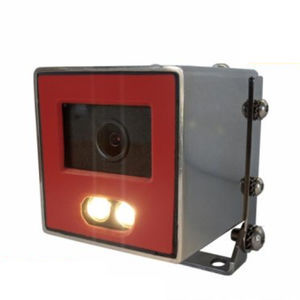
Field of view: 14 ° - 170 °
Height: 60 mm
Width: 60 mm
... Stainless steel Full Color network (IP) camera with fixed focus lens and visible additional lightning. Horizontal or vertical display without any technical manipulation - 5MP at 25fps - Sony Starvis Advanced Low Light Color Sensor - ...
FTA B.V.
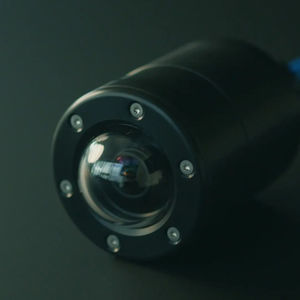

... A durable, compact, and light-sensitive underwater video camera specifically developed for monitoring fish feeding in aquaculture. The GroCamera provides the fish farmer with an indispensable tool for monitoring and evaluating ...
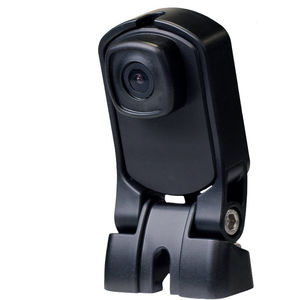

Field of view: 120, 90, 180, 60, 30 °
Height: 100 mm
Width: 55 mm
... Product description
The Orlaco EMOS
camera is a compact Ethernet
camera for vehicle and machinery vision systems. It delivers real-time HD images to assist operators with situational awareness and can be integrated ...
Orlaco Vision Systems by Stoneridge
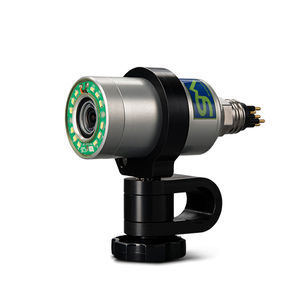

Field of view: 92 °
Weight: 200 g
... the Auxiliary Camera. All aspects of the camera are pressure tested to 600 metres. The entire unit is serviceable by SEAMOR or an authorized dealer. In contrast to other companies’ cameras which cannot ...
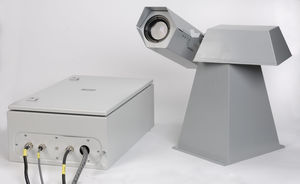

... light camera has also been extensively proven in US Navy service as part of the Amphib Low Light Surveillance System (ALLSS). As well as the standard analogue CVBS interface an advanced IP option is also available; the ONVIF compliant ...
IMENCO AS


... resolution and digital noise reduction. The camera outputs a standard NTSC or PAL signal compatible with many displays and capture cards. This camera works great with the Fathom-S Tether Interface Boards for clear ...
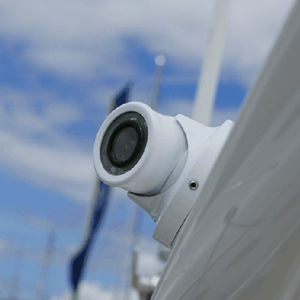

Weight: 200 g
Operating temperature: -30 °C - 60 °C
... , the camera switches from color to monochrome in low light conditions. Because the camera is so small, feature-rich and robust - with an IP66 protection class, it is ideal as a docking camera, rear view ...
Böning Automationstechnologie GmbH & Co. KG
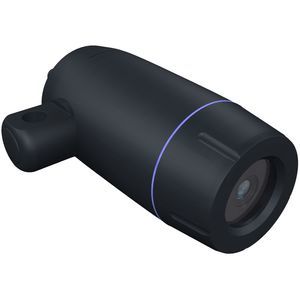

Focal length: 3 mm - 12 mm
Zoom: 2.5 unit
Height: 105 mm
... HATTELAND® SeaHawk IP Camera from Hatteland Technology is the perfect IP camera solution with full HD resolution at 30fps. The camera housing is constructed in sturdy POM material. 2.5x OpticalZoom, PoE ...
Hatteland Display AS
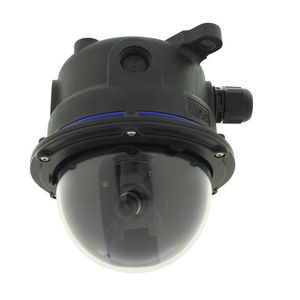

... Features Operational areasOutdoor VideoDigital (DVB/HDTV) Pan/TiltFixed MaterialPBT Protection classIP68 Temp. range min-25 °C Temp. range max55 °C ...
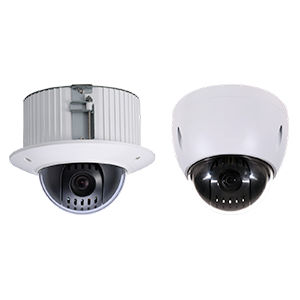

... The IP dome cameras have a Pan, Tilt and Zoom function so the crew can e.g. adjust the viewing area and zoom-in through the Mega-Guard Operator Workstation. The compact cameras can be installed inside the ceiling, on ...
Praxis Automation Technology
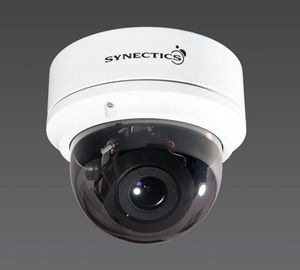

... The Synectics 2MP Low Light IP Vandal Resistant Dome Camera is tough and powerful, with IP66 and IK10 ratings guaranteeing optimum performance under challenging conditions. ...
Synectics Industrial Systems
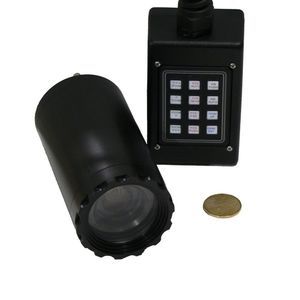

Zoom: 40 unit
Weight: 476 g
... Shark Marines second-generation underwater zoom camera, the SV-DSP-ZOOM2, is a high performance, digital signal processing colour camera with multiple controllable features. It utilizes a 1/4-type Exview HAD CCD to produce ...
Shark Marine Technologies
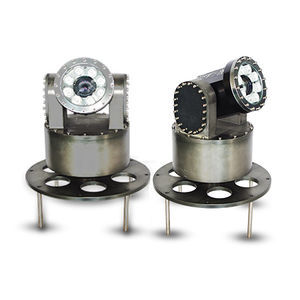

Zoom: 18 unit
Signal / noise: 50 dB
Rotation: 360 °
... HD Infrared Intelligent Underwater Network Surveillance Camera adopts the smart design,can achieve 360 degree horizontal rotation,90 degree vertical rotation and 18 times optical zoom.It can not only connect the host computer and display ...
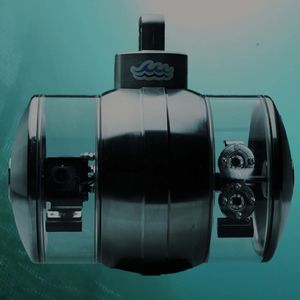

... DTPod Underwater Camera Inspection and monitoring drop camera for underwater inspections and permanent installations, providing high-resolution video to the surface. Durable, self-cleaning underwater ...
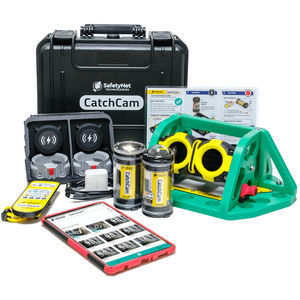

Field of view: 75 °
Focal length: 3 mm
Width: 64 mm
... . Easy Video Management Organise and view videos on the CatchCam App. CatchCam App Features: Simple setup Easy camera setup and video management is made possible with the CatchCam ...
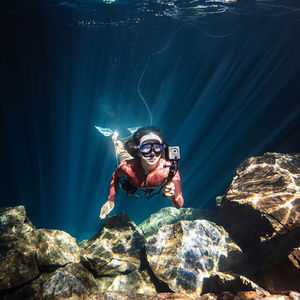

Field of view: 108 °
Height: 69 mm
Width: 53 mm
... Underwater HD Video Transmission Caméra REAL-TIME VIDEO TRANSMISSION ADVOCATE Real-time image transmission Underwater HD live.streanning Mobile Phone Remote Wireless Reception Rea卜time Underwater ...


Lens: 4 mm - 38 mm
Zoom: 30 unit
Weight: 1,800 g
... The Argus HD Camera sends realtime, uncompressed and high resolution video to surface. Topside remote control gives you full control with camera zoom, focus and brightness. Camera housing ...
Argus Remote Systems AS
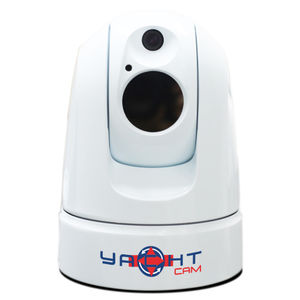

... continuous thermal images. Yacht Cam includes Black and White/Gray. Auto Flip When the camera tilts downward and goes just beyond the vertical angle, the camera image rotates 180°. ...


Field of view: 140 °
Lens: 3 mm
Depth: 58 mm
... models that support composite video inputs. When set to TVI, the 735 will provide hi-definition real time video which can be viewed on MFD’s via our CMAC systems or fed to a TV via our IRIS995 TVI~HDMI convertor. The ...
Iris Innovations Limited
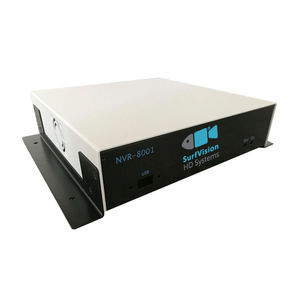

... Video Recorder and Video Camera Systems The SV-CAM-B is Seatronx high definition marine grade bullet camera. This compact but tough camera is made from marine grade ...
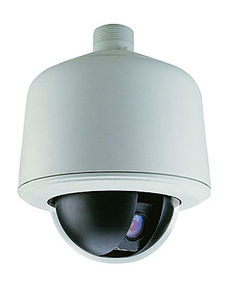
A video monitoring camera permits recorded surveillance of a specified zone. The many different types include interior and exterior models, cameras in a protective housing, night-vision and wireless versions. Some combine two or more of these features, e.g., a housed night-vision camera.
ApplicationsSince the implementation of the Ship and Port Facility Security Code (ISPS Code), these devices have become important elements of marine surveillance. Security personnel on large passenger liners make frequent use of such cameras.
TechnologiesA network of cameras records continuously, sending images to a computer or data recorder for detection of unusual incidents. It can be monitored aboard ship or remotely via the Internet.
How to chooseSelection will depend on the characteristics of the area to be monitored, including interior or exterior installation, and surveillance zone lighting. Another factor is camera resolution. In the case of Internet control, vessel speed and satellite communications capabilities must be taken into account.
- Constant monitoring
- Difficult installation on some vessels
the best suppliers