|
|
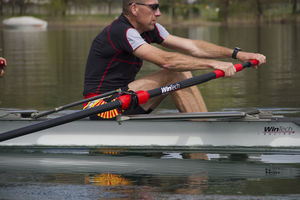
The high modulus sculls that we introduced starting in 2001 were the RX, APEX-X, BBX and the REX. This scull model type was offered to provide a scull that was light but had a balance point to fit the skill level and preference of each customer. The high modulus sculls are overall the lightest weight sculls offered on the market today and provide the best overall "swing weight" characteristics. On the recovery, lower "swing weight" results in far less energy usage and is especially helpful in reducing fatigue as the stroke rating goes up.
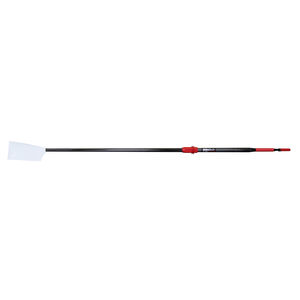
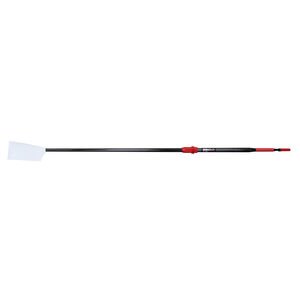
High Modulus Adjustable Length Sculls that come in adjustable length, your choice of 3 handle sizes, 3 grip types, the four blade types with the choice of three weights to tune the oar balance, with 3 levels of shaft stiffness and choice of average length/inboard with adjustment of +/- 5cm.
|
|
|
|
|
|
|
Fixed Length Sculls: The Dreher Fixed Length Sculls are an option for the quality and cost conscious rowing consumer. These sculling oars are produced with no options. Their specifications have the greatest appeal to the greatest segment of the sculling population. Many scullers have little idea as to what grip to get or what handle size, rig or stiffness is required. We have designed a high quality Dreher carbon sculling oar with no frills. We offer a shorter black nylon sleeve with green and red buttons instead of the longer adjustable length sleeves. In addition, only the popular BB2198 asymmetrical hatchet blade shape is offered direct from the factory. The shaft is less stiff and has a circular design. The oar length is 289 cm with an 88 cm inboard at mid-sleeve. This oar should appeal to all scullers except for the top scullers, who generally like the ability to customize their sculls. These oars are especially suited to those individuals who are not interested in multiple choices and who most closely fit the norm.
|
|
|
Empacher Ultralight, 100% Carbon-Fibre.
|
|
|
The Hatchet blade is designed for powerful rowers who want no slip at the entry. This style is used by many competitive rowers. The larger sized blade uses a shorter shaft and has a very stiff feel for optimal power transfer.
|
|
|
The Deltor blade design is our most popular and is particularly well suited for open water conditions. This small blade produces as much thrust as traditional larger blades. The pointed blade tip aids in feathering, making this oar very easy to use, even in windy and rough conditions.
|
|
|
The Macon blade is the traditional spoon “tulip” profile. The originals were hand carved from wood. The Alden Macon updates this design with a race-proven shape offering excellent balance and a solid feel through the stroke.
|
|
|
The adjustable competition with the choice of three handle sizes, three blade types (Apex, Apex-R and BB2198), 3 shaft levels of stiffness, choice of average oar length/inboard with +/- 5 cm of adjustment, with three handle sizes and multiple grip and color options.
|
|
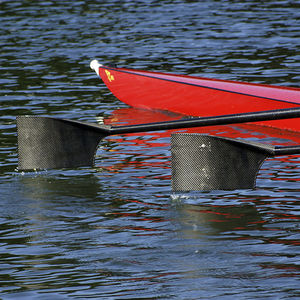
The theory of a smooth faced blade causing less disturbance to the flow of water over the front face of the blade seemed to us to be in direct contradiction to basic hydrodynamic theory. Potential gains in hydrodynamic lift could be achieved if the back, not the front face of the blade, is free of impediments to the smooth movement of water in the direction of flow. It is not the front, but the back of the blade with its longer curved surface that accelerates the water flow and should provide a lifting force as the blade traverses out to the 90 degree stall position and back again during each stroke. By making the back surface "smooth" with the spine, or shaft attaching ridge parallel to the water flow, the blade would be more efficient and easier to handle.
|
|
|
All shafts are autoclave-cured at high temperature and pressure for maximum strength and durability. All the major components are made from prepreg carbon or, in the case of the blades, sandwich core construction of prepreg carbon and specially formulated syntactic foam to produce the highest quality parts with the desired strength, weight, weight distribution, durability and surface finish.
|
|
... see all the products in the category
Oars
|
|
|
|
|
|
We have designed our sculling handles with comfort and ease of use as our highest priority. Selecting a handle that is correct for you is necessary to achieve the best performance. A handle that is too small will cause trouble in the rough water and may turn in the rower's hand uncontrollably. A handle that is too big will fatigue the rower's forearms and also result in excessive wrist movement feathering the oar. All our sculling handles come fitted with our injection moulded thermoplastic grips. These second-generation grips have gained universal acceptance since their release and all include an anti-bacterial agent to stop the growth of bacteria and fungus. From the initial work that we have done, there seems to be a strong correlation between hand size (measured from the base of the thumb and the tip of the fingers) and preferred grip size. We have collected enough data so that we are now able to print a simple chart relating hand size to grip size for sculling and rowing. This will enable coaches to order the most suitable handles, particularly for school rowers.
Sculling Oars can be fitted with either Carbon adjustable handles or fixed wooden handles.
|
|
|
|
|
|
|
Slick Sculling Blade -
The Slick Sculling Blade in normally assembled with a 40mm hook. A smaller blade is available for women and schoolgirls who want slightly lighter load at the catch. Slick Blades are available on all shafts.
The Slick Blade is the latest CAD CAM computer generated design that supersedes all other blade shapes. The Slick Blade is now available with closed edges, which improves the blades durability and overall performance.
The Slick Blade has no ridgeline so there is less splash at the catch. The low volume blade enters the water quickly and quietly and floats low in the water. The longitudinal curvature is perpendicular to the tip and so is in line with the flow of water. It has a constant pitch across the tip and all lines parallel to the tip.
The gentle asymmetric curvature of the blade assures a clean release from the water with every stroke. Slick Blades are visibly cleaner than other blades.The Slick Blade does not exhibit any negative tendencies during recovery or in bad weather. Since the Slick Blades introduction it has been extremely successful at all levels of rowing.
|
|
Rowing Handles Rowing come with fixed wooden handles or adjustable carbon handles.
We have designed our rowing handles with comfort and ease of use as our highest priority. Selecting a handle that is correct for you is necessary to achieve the best performance. A handle that is too small will cause trouble in the rough water and may turn in the rower’s hand uncontrollably. A handle that is too big will fatigue the rower’s forearms and also result in excessive wrist movement feathering the oar.
|
|
|
|
|
|
|
Slick Rowing Blade –
Slick OarThe Slick Rowing Blade is normally assembled with a 70mm hook. This provides enough load for the strongest crews but the asymmetric curvature of the blade makes it extremely clean in and out of the water. The blade can be reduced in size for women and schoolgirls. The Slick Rowing Blade is available on all shafts.The Slick Rowing Blade is the latest CAD CAM computer generated design that supersedes all other blade shapes. The Slick Blade is now available with closed edges, which improves the blades durability and overall performance.
The Slick Blade has no ridgeline so there is less splash at the catch. The low volume blade enters the water quickly and quietly and floats low in the water. The longitudinal curvature is perpendicular to the tip and so is in line with the flow of water. It has a constant pitch across the tip and all lines parallel to the tip.
The gentle asymmetric curvature of the blade assures a clean release from the water with every stroke. Slick Blades are visibly cleaner than other blades.The Slick Blade does not exhibit any negative tendencies during recovery or in bad weather. Since the Slick Blades introduction it has been extremely successful at all levels of rowing.
|
|
|
Have you lost a seat overboard or do you have a problem with seat comfort? The Dreher Carbon seats have the same comfortable seat top, but an increased strength to weight ratio. As a result the seats weigh less and therefore have improved durability. The new medium seat top design can accommodate a track width of 16.5-23 cm. The old medium seat design can accommodate a track width of 23-28 cm. The large seat top design can take a track width of 23-30 cm. The seats are made with three size of aluminum seat seat supports (1.75 cm, 2.25 cm or 3.25 cm). The nylon seat support comes only in low height (1.75 cm).
|
|
Dreher Adjustable Carbon Foot stretchers are designed to custom fit almost any sculling or sweep boat from a single to an eight. We have offer families of foot stretchers with multiple plate options.
Three unique carbon foot stretcher designs provide every possible solution for light weight, stiffness, and shoe compatibility with a full range of adjustment. Dreher adjustable carbon foot stretchers in various configurations are now being used by several first tier manufacturers in North America and Europe as original equipment. These unique light weight foot stretcher designs are, durable and strong while providing excellent energy transfer. The foot stretchers are adjustable three ways: fore and aft, up and down and angle inclination. All models have shoe splay adjustability except the Tubular style. The 2006 foot plate has the greatest range of adjustability. All models have different widths of shoe placement. The Tubular and 2004 foot plates come in an angled option.
|
|
|
|