


{{product.productLabel}} {{product.model}}
{{#if product.featureValues}}{{product.productPrice.formattedPrice}} {{#if product.productPrice.priceType === "PRICE_RANGE" }} - {{product.productPrice.formattedPriceMax}} {{/if}}
{{#each product.specData:i}}
{{name}}: {{value}}
{{#i!=(product.specData.length-1)}}
{{/end}}
{{/each}}
{{{product.idpText}}}
{{product.productLabel}} {{product.model}}
{{#if product.featureValues}}{{product.productPrice.formattedPrice}} {{#if product.productPrice.priceType === "PRICE_RANGE" }} - {{product.productPrice.formattedPriceMax}} {{/if}}
{{#each product.specData:i}}
{{name}}: {{value}}
{{#i!=(product.specData.length-1)}}
{{/end}}
{{/each}}
{{{product.idpText}}}
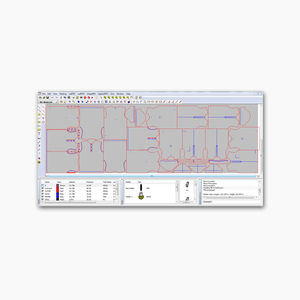

... Eastman’s operating control software is a dynamic, all-inclusive platform that makes it effortless to operate Eastman’s automated cutting system. Included with your system investment, cutPRO makes it easy to import files in many formats ...
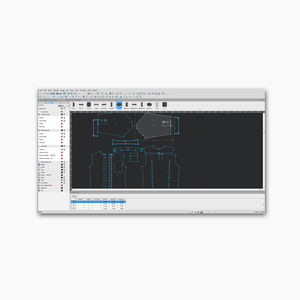
... Eastman’s patternPRO design and nesting software is a comprehensive set of tools to help you design pattern pieces from the start with the program’s drafting and editing tools, or even edit and finalize your existing digital patterns, ...
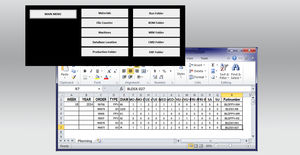
Once Imported the items to be cut can be sorted by material, color and thickness, this allows the user to select, for example, all 2mm Blue Vinyl material from multiple orders to run them in a single run, thus, saving time on organizing and separating ...


... cargo and ballast monitoring software that acts as the eyes and ears of seafarers, allowing constant monitoring of all the critical parameters of liquid cargo tanks. What Is It? CargoBoss is a user-friendly software ...


... Out now! Your Multifunction Displays Companion ALWAYS CONNECTED Raymarine App is your digital companion for Raymarine marine electronics and connected boating. Transform your mobile device into a remote Axiom display. Connect and monitor your boat ...
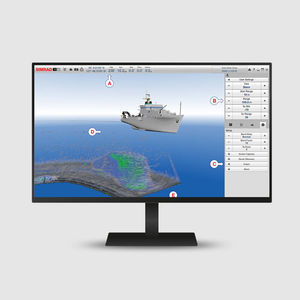

... from ME70 and MS70 Current software version We recommend that you always keep your system updated with the latest software version. All applicable information related to this software release can ...
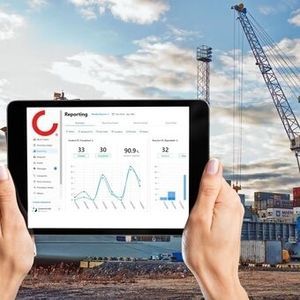

... and digital tools such as remote support and predictive services Operational advancement port services such as maintenance software provision and consultancy, maintenance outsourcing and equipment fleet management Port services at ...
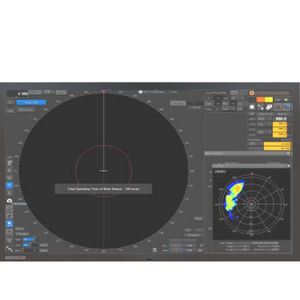

... start falling overboard. JRC’s navigational radar JMR-7200/9200 has the Wave Analysis function that is easily available by a software upgrade. The JRC Radar Wave Analysis function is developed to measure wave height, direction and ...
Alphatron Marine


... A direct connection with your FPT engine. Engine information and support through your smartphone. THE PERFECT APP FOR YOUR ENGINE MyFPT is an app with a quick and easy setup: just type your engine serial number and all your main engine information ...


... Product Overview
MoorControl is a central
software platform for monitoring and controlling mooring and berthing systems. Designed for port operators and vessel crews, the platform consolidates signals from Straatman equipment ...

... ul>
Product categories
- UTILITY SUPPLY PEDESTALS (integration with software)
- PAYMENT AND ACCESS (payment and access management via software)
Documentation
Technical specification ...
... Overview
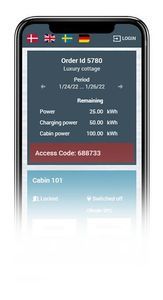
TALLYWEB is an online payment portal and utility payment flagship developed from over 30 years of experience. It is designed to make daily management easier for harbor masters, camping site managers and their customers by enabling online ...
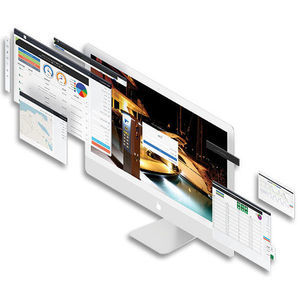

... Bilingual interface (Greek & English)
Software ...
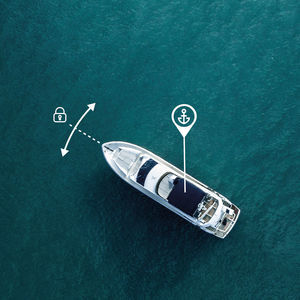

... Navigation Software Safer, Smarter, and Easier Boating. Nearly 20% of boating incidents occur during low-speed manoeuvres, often in harbours where wind, current, and limited space make control difficult. The BlueNav Smart Navigation ...
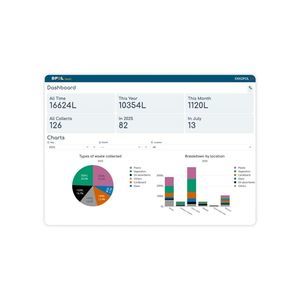

... Web app to monitor waste collection performance and CSR reporting for marinas. Compatible with DPOL® and other collection systems. DPOL® Impakt is a web application, available on all operating systems, designed to record and monitor waste collected ...
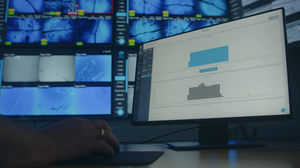

... GroVision is a software for controlling and monitoring the farm site. It gives fish farmers the ability to optimise the feeding process and minimise feed wastage with the help of cameras, sensors and a remotely controlled feeding system. Qualities ...
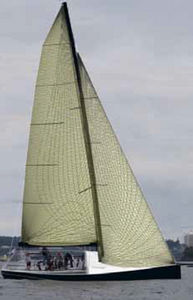

... AzureProject is the leading solution for the design of sails and fiber layouts. It offers highly intuitive tools to easily create, validate and modify any type of sail and fiber layout. It includes the ability to design: hull (mono - multihull or import ...
SMAR Azure

... Improving quality and productivity starts with AzureDesign, the robust 3D software program that provides all of the tools necessary to design top quality mainsails, genoas and spinnakers (symmetric and asymmetric) in less time. Designer ...
SMAR Azure

... AzureLite is a 3D software program, which not only provides all of the tools necessary to design top quality mainsails, genoas and spinnakers (symmetric and asymmetric) but in significantly less time. AzureLite is user-friendly, easy ...
SMAR Azure
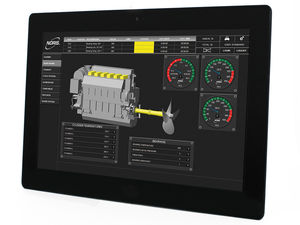

... intuitive visualisation software Intuitive visualisation software with comprehensive standard function templates Can be used flexibly thanks to web-based interface Easy to adapt to customer requirements Based ...
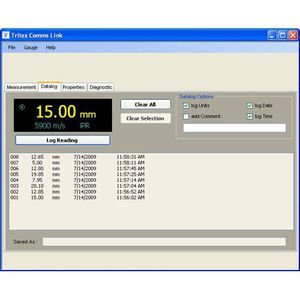

... Communicator software is a dedicated datalogging software for use with all gauges in the Tritex range which have datalogging capabilities. It also streams live measurements from a number of gauges in the range. Tritex ...


From ship to shore, IVY®, VAF Instruments’ solution for Propulsion Performance Management, revolutionizes data analytics. It provides powerful insight, fleet and ship performance visualization and relevant KPIs through the user-friendly IVY® dashboard. ...

... rapidly becoming scarce and expensive if not obsolete. A system failure can be very costly. Apart from having a modern user interface and advanced system capabilities our system is based on standard PC components giving our customers ...
Kockum Sonics


... The new IPE IMES Performace Evaluation Software designed for 2- and 4-stroke diesel engines loads cylinder pressure data from EPM-XP directly and gives a quick and very reliable view on many operational aspects. Furthermore it recommends ...
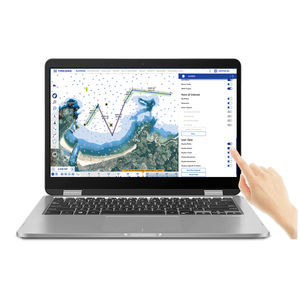

... TIMEZERO software has two main objectives: Supreme control and comfort. Discover in this section how TIMEZERO software caters to your needs no matter your marine navigation type. Make the most of your marine navigation ...
MaxSea International

... NMEA Reader Software The Actisense team have developed powerful software tools to enable customers to view and diagnose any potential network problems quickly and easily. NMEA Reader can be used with the NGT-1 NMEA ...
Actisense
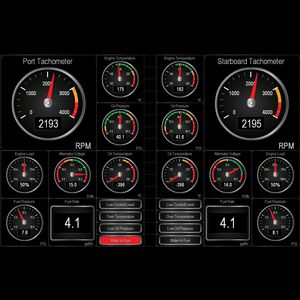

... are interested in monitoring your vessel’s systems while underway or remotely from your home or office, Maretron’s N2KView® software displays the information you need including engines, generators, tanks, rudders, navigation instruments, ...
Maretron
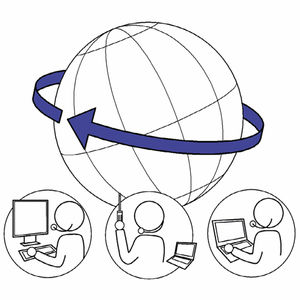

... The AHD-Com software allows simultaneous communication with several participants in different locations by multiple video conferences based on “Videoconferencing over IP”. Product Features Worldwide multiple video conferences with ...


... CTMS is a total system package for container terminals. With the industry knowledge and expertise in terminal management, MES has been contributing to major terminal operators since 1973. MES could deliver flexible, easy-to-use and reliable systems whenever ...
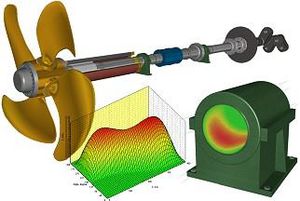

... train calculations. The ShaftDesigner software uses a base model to calculate shaft alignment, whirling vibration, bending (lateral) vibration, axial vibration and torsional vibration. The ShaftDesigner software's ...
the best suppliers